
Bushehr
Intro
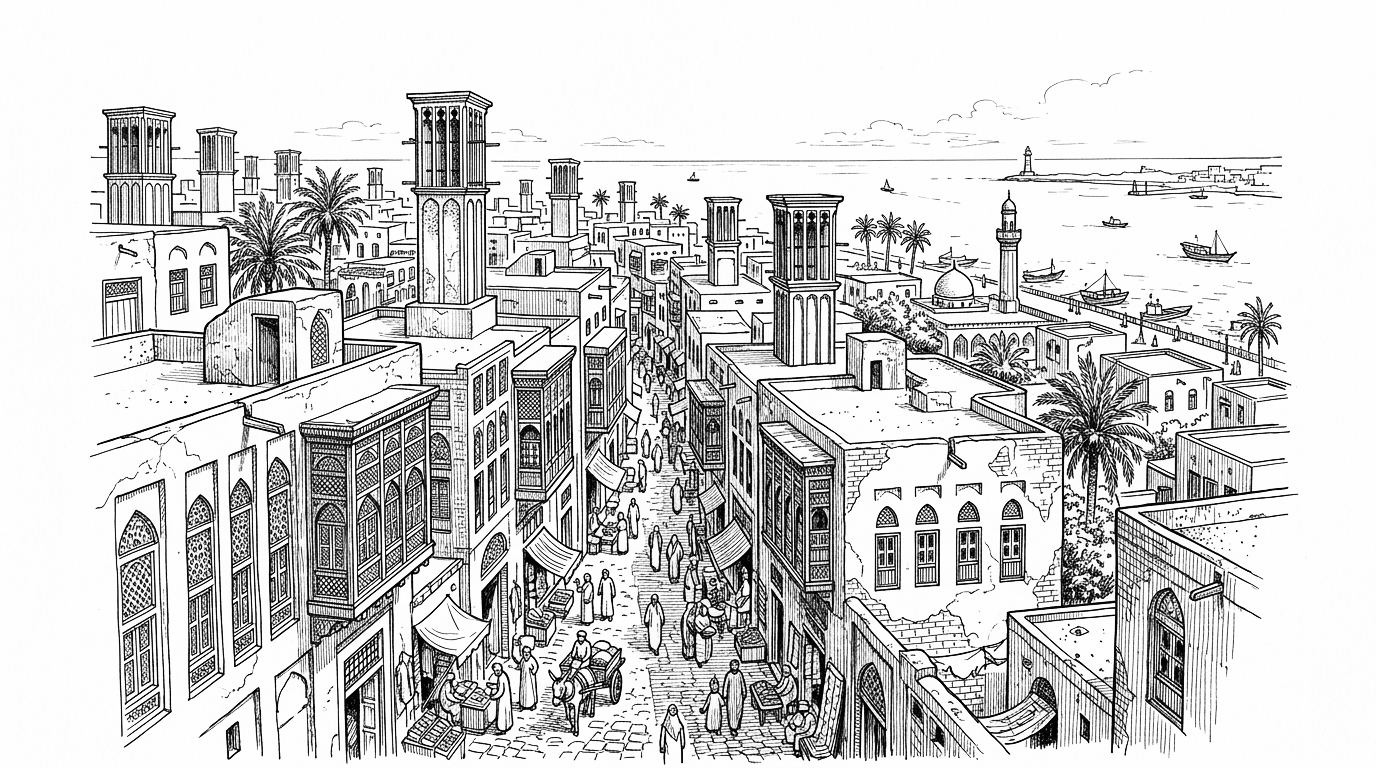
Located on the Persian Gulf coast, Bushehr combines maritime access with energy and security relevance. Its port facilities and proximity to offshore gas fields integrate it into Iran’s southern energy architecture.
Background
Bushehr’s modern strategic value rose with energy infrastructure development in the Gulf. Soviet and later Russian involvement in the Bushehr Nuclear Power Plant elevated the city’s international profile and security sensitivity.
History
Bushehr’s history as a Gulf port traces back through the Safavid and Qajar periods, when it served as a key maritime trading node linking inland Persia to Indian Ocean commerce. In the nineteenth century it acquired political significance as the main site of British naval and diplomatic activity in the Persian Gulf.
The twentieth century brought modernisation and a growing nuclear dimension. In the 1970s the Shah’s government contracted West Germany to construct a nuclear power plant at the site south of the city, but work halted after the revolution and the reactor buildings were severely damaged during Iraqi air strikes. Russian engineers eventually completed the plant under a 1992 agreement, and Bushehr Nuclear Power Plant came online in 2011, making it Iran’s only operational civilian reactor.
Present Day
Today Bushehr supports nuclear power operations, regional ports, and energy logistics. The city is closely monitored due to nuclear safety, sanctions dynamics, and its role within Iran’s southern defense perimeter.
Future Outlook
Map
Articles

Why Iran Is Running Out of Water
Iran’s water crisis is driven by groundwater depletion, inefficient agriculture, and climate stress.

Iran’s Retaliation in Cold War Mode
How Tehran could turn confrontation in the Gulf into a strategic cost trap.
Event Timeline
Israeli Strikes in Tehran Killing Larijani
On the night of 16-17 March 2026, Israeli airstrikes in the Tehran area killed Ali Larijani (Secretary of the Supreme National Security Council and de facto leader) and Gholamreza Soleimani (commander of Iran’s internal Basij militia).

Nationalisation of Iranian Oil and the Mossadegh Crisis
From 1951 to 1953, Iran nationalized its oil industry under Prime Minister Mossadegh, leading to an international crisis and the eventual 1953 coup.

Iran Hostage Crisis
In 1979, Iranian students seized the U.S. Embassy in Tehran, holding 52 Americans hostage for 444 days and transforming U.S.-Iran relations.


Iranian Revolution
In 1979, a mass movement removed the Pahlavi monarchy and established the Islamic Republic, redefining Iran’s political and ideological system.

Reform Movement and the Khatami Presidency
From 1997 to 2005, Iran experienced a reform era focused on civic openness, political participation, and institutional debate.

The Green Movement
In 2009, large-scale protests challenged the presidential election outcome, marking one of the most significant political mobilizations since 1979.
Collapse of the Safavid Order and Afghan Conquest of Isfahan
In 1722, Afghan forces from Kandahar captured Isfahan, ending effective Safavid rule and opening a prolonged phase of political fragmentation across Iran.


