
Bandar Imam Khomeini
Intro
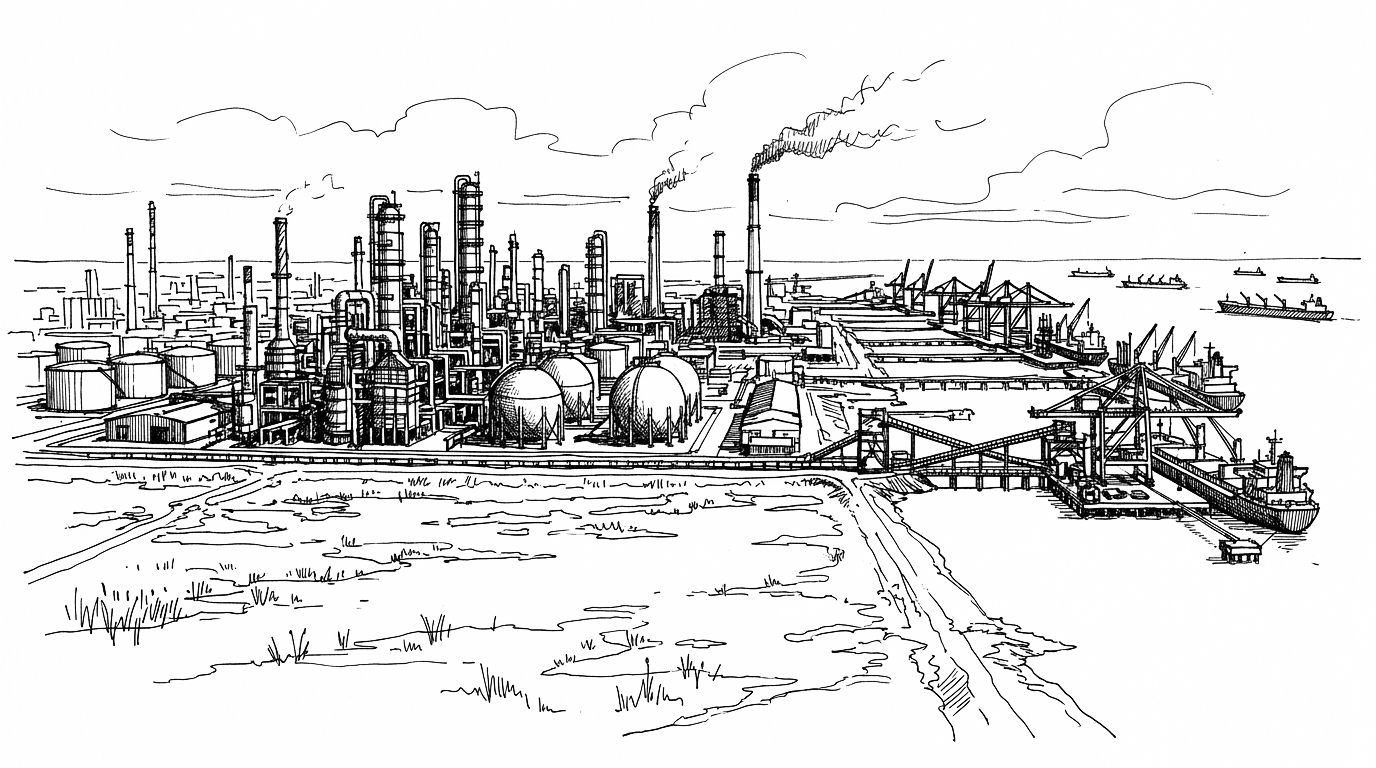
Located in Khuzestan province near the Iraqi border, Bandar Imam Khomeini anchors Iran’s largest port complex for bulk goods, grain, petrochemicals, and industrial exports. It functions as a strategic interface between inland production zones and maritime routes.
Background
Developed as part of Iran’s 20th-century oil and industrial expansion, the port was designed to handle large volumes of raw materials and energy-related cargo. Its rail and road links connect directly to Khuzestan’s oil fields and industrial centers.
History
The port was developed in the 1960s as Shahpur Port, part of Pahlavi-era ambitions to build modern deep-water infrastructure on the northern Persian Gulf coast. During the Iran-Iraq War its position near the Shatt al-Arab made it strategically exposed and it sustained damage from Iraqi attacks.
After the war, reconstruction expanded port capacity and the development of the Imam Khomeini Special Economic Zone integrated it into petrochemical export supply chains. Today the port handles a significant share of Iran’s petrochemical exports.
Present Day
Today Bandar Imam Khomeini handles a substantial share of Iran’s non-container maritime trade. Its role in energy exports and food imports makes it a critical economic asset and a high-value strategic vulnerability in any Gulf conflict.
Future Outlook
Map
Articles

Why Iran Is Running Out of Water
Iran’s water crisis is driven by groundwater depletion, inefficient agriculture, and climate stress.

Iran’s Retaliation in Cold War Mode
How Tehran could turn confrontation in the Gulf into a strategic cost trap.
Event Timeline
Israeli Strikes in Tehran Killing Larijani
On the night of 16-17 March 2026, Israeli airstrikes in the Tehran area killed Ali Larijani (Secretary of the Supreme National Security Council and de facto leader) and Gholamreza Soleimani (commander of Iran’s internal Basij militia).

Nationalisation of Iranian Oil and the Mossadegh Crisis
From 1951 to 1953, Iran nationalized its oil industry under Prime Minister Mossadegh, leading to an international crisis and the eventual 1953 coup.

Iran Hostage Crisis
In 1979, Iranian students seized the U.S. Embassy in Tehran, holding 52 Americans hostage for 444 days and transforming U.S.-Iran relations.


Iranian Revolution
In 1979, a mass movement removed the Pahlavi monarchy and established the Islamic Republic, redefining Iran’s political and ideological system.

Reform Movement and the Khatami Presidency
From 1997 to 2005, Iran experienced a reform era focused on civic openness, political participation, and institutional debate.

The Green Movement
In 2009, large-scale protests challenged the presidential election outcome, marking one of the most significant political mobilizations since 1979.
Collapse of the Safavid Order and Afghan Conquest of Isfahan
In 1722, Afghan forces from Kandahar captured Isfahan, ending effective Safavid rule and opening a prolonged phase of political fragmentation across Iran.


