
Kerman
Intro
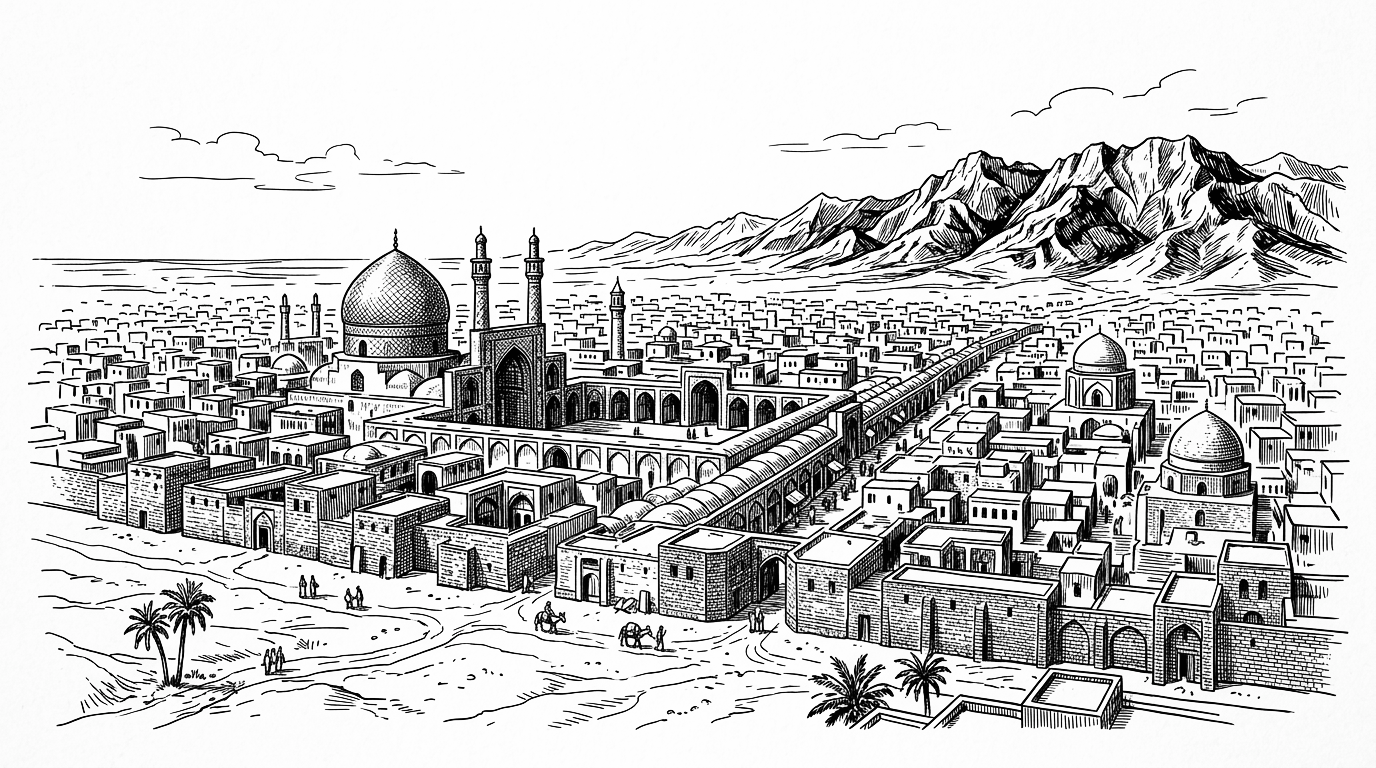
Situated on the central Iranian plateau, Kerman serves as the principal urban centre of southeastern Iran. Its position places it along internal trade and logistics routes connecting central Iran with the southeast and the Persian Gulf hinterland.
Background
Kerman’s geographic position historically placed it on desert caravan routes linking the Persian interior to the Indian Ocean trade system. Agricultural production, mining, and regional trade reinforced its role as a regional hub.
History
Kerman’s recorded history extends to the Sassanid period when it was a regional centre on the southeastern plateau. Through the medieval Islamic era the city prospered on the trade routes crossing toward Central Asia and India, renowned for its carpets. The city changed hands among the Buyids, Seljuks, Mongols, and Timurids.
During the twentieth century Kerman’s economy was transformed by the development of the Sarcheshmeh copper complex, one of the world’s largest copper deposits, which brought heavy industry to what had been a craft and agricultural economy. Water stress from severe aquifer depletion across the southeastern plateau has become a structural challenge threatening the long-term habitability of the surrounding region.
Present Day
Today Kerman is an industrial and educational centre with strong mining, agriculture, and manufacturing sectors. Its regional role is reinforced by transportation infrastructure connecting the Iranian plateau to southeastern provinces.
Future Outlook
Map
Articles

Why Iran Is Running Out of Water
Iran’s water crisis is driven by groundwater depletion, inefficient agriculture, and climate stress.

Iran’s Retaliation in Cold War Mode
How Tehran could turn confrontation in the Gulf into a strategic cost trap.
Event Timeline
Israeli Strikes in Tehran Killing Larijani
On the night of 16-17 March 2026, Israeli airstrikes in the Tehran area killed Ali Larijani (Secretary of the Supreme National Security Council and de facto leader) and Gholamreza Soleimani (commander of Iran’s internal Basij militia).

Nationalisation of Iranian Oil and the Mossadegh Crisis
From 1951 to 1953, Iran nationalized its oil industry under Prime Minister Mossadegh, leading to an international crisis and the eventual 1953 coup.

Iran Hostage Crisis
In 1979, Iranian students seized the U.S. Embassy in Tehran, holding 52 Americans hostage for 444 days and transforming U.S.-Iran relations.


Iranian Revolution
In 1979, a mass movement removed the Pahlavi monarchy and established the Islamic Republic, redefining Iran’s political and ideological system.

Reform Movement and the Khatami Presidency
From 1997 to 2005, Iran experienced a reform era focused on civic openness, political participation, and institutional debate.

The Green Movement
In 2009, large-scale protests challenged the presidential election outcome, marking one of the most significant political mobilizations since 1979.
Collapse of the Safavid Order and Afghan Conquest of Isfahan
In 1722, Afghan forces from Kandahar captured Isfahan, ending effective Safavid rule and opening a prolonged phase of political fragmentation across Iran.


