
Qom
Intro
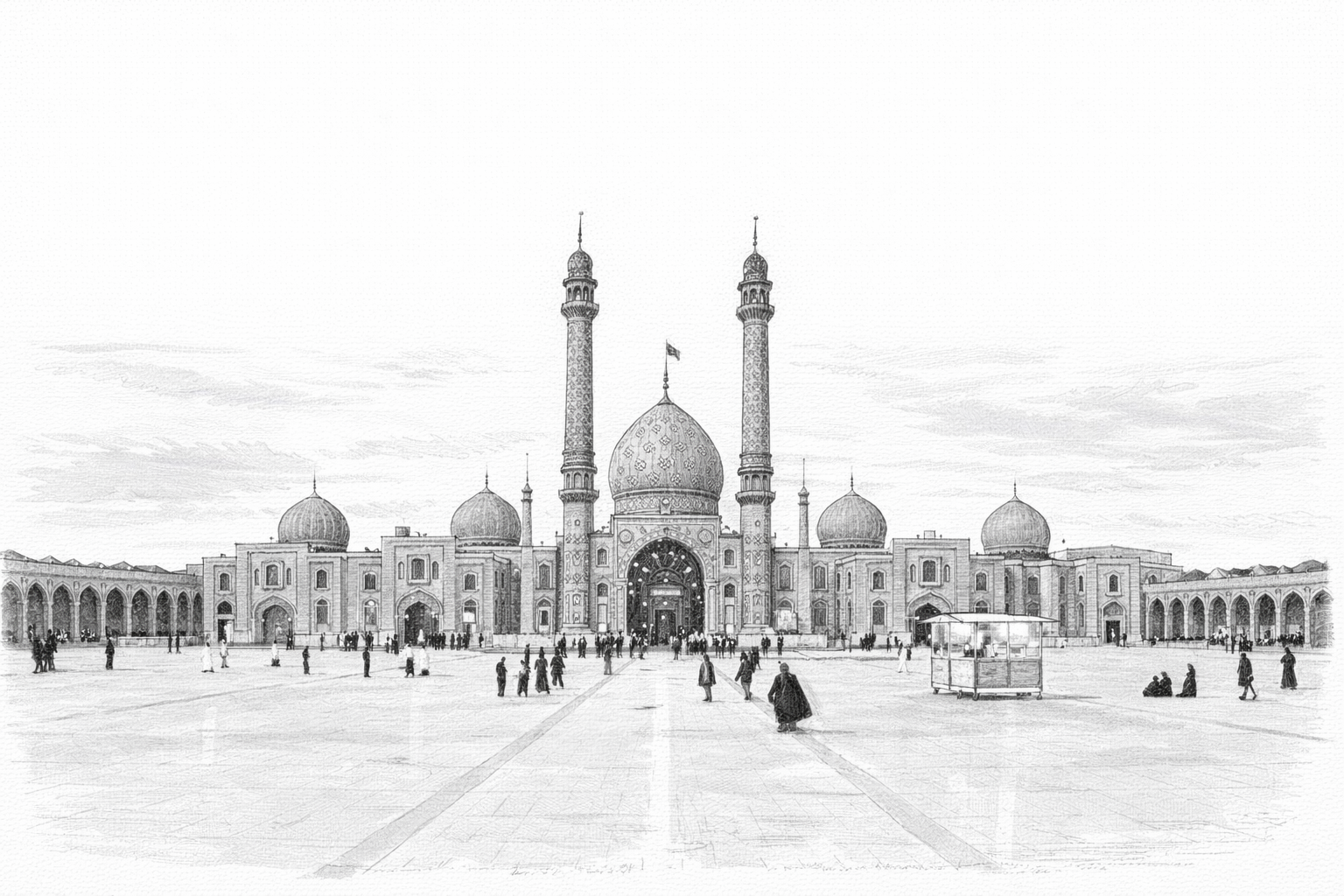
Situated on the central plateau south of Tehran, Qom has grown into one of the most important cities for Shia religious scholarship. Its seminaries attract students from Iran and abroad, forming networks that contribute to shaping religious discourse and political thought.
Background
Qom’s strategic significance increased during the 20th century, particularly with the rise of clerical activism leading up to the 1979 Revolution. Its proximity to Tehran enhances its political influence, linking clerical networks to national decision-making processes.
History
Historically a regional pilgrimage site, Qom expanded in prominence during the Safavid era. In the modern period, it became the intellectual centre of the clerical establishment. Several major figures of the 1979 Revolution have deep associations with Qom, and its institutions continue to influence Iran’s sociopolitical landscape.
Present Day
Qom remains a focal point for religious education and policymaking. Its demographic growth, expanding seminaries, and institutional networks sustain its role as a key axis of influence within the Islamic Republic.
Future Outlook
Map
Articles

Why Iran Is Running Out of Water
Iran’s water crisis is driven by groundwater depletion, inefficient agriculture, and climate stress.

Iran’s Retaliation in Cold War Mode
How Tehran could turn confrontation in the Gulf into a strategic cost trap.
Event Timeline
Israeli Strikes in Tehran Killing Larijani
On the night of 16-17 March 2026, Israeli airstrikes in the Tehran area killed Ali Larijani (Secretary of the Supreme National Security Council and de facto leader) and Gholamreza Soleimani (commander of Iran’s internal Basij militia).

Nationalisation of Iranian Oil and the Mossadegh Crisis
From 1951 to 1953, Iran nationalized its oil industry under Prime Minister Mossadegh, leading to an international crisis and the eventual 1953 coup.

Iran Hostage Crisis
In 1979, Iranian students seized the U.S. Embassy in Tehran, holding 52 Americans hostage for 444 days and transforming U.S.-Iran relations.


Iranian Revolution
In 1979, a mass movement removed the Pahlavi monarchy and established the Islamic Republic, redefining Iran’s political and ideological system.

Reform Movement and the Khatami Presidency
From 1997 to 2005, Iran experienced a reform era focused on civic openness, political participation, and institutional debate.

The Green Movement
In 2009, large-scale protests challenged the presidential election outcome, marking one of the most significant political mobilizations since 1979.
Collapse of the Safavid Order and Afghan Conquest of Isfahan
In 1722, Afghan forces from Kandahar captured Isfahan, ending effective Safavid rule and opening a prolonged phase of political fragmentation across Iran.


