
Ahvaz
Intro
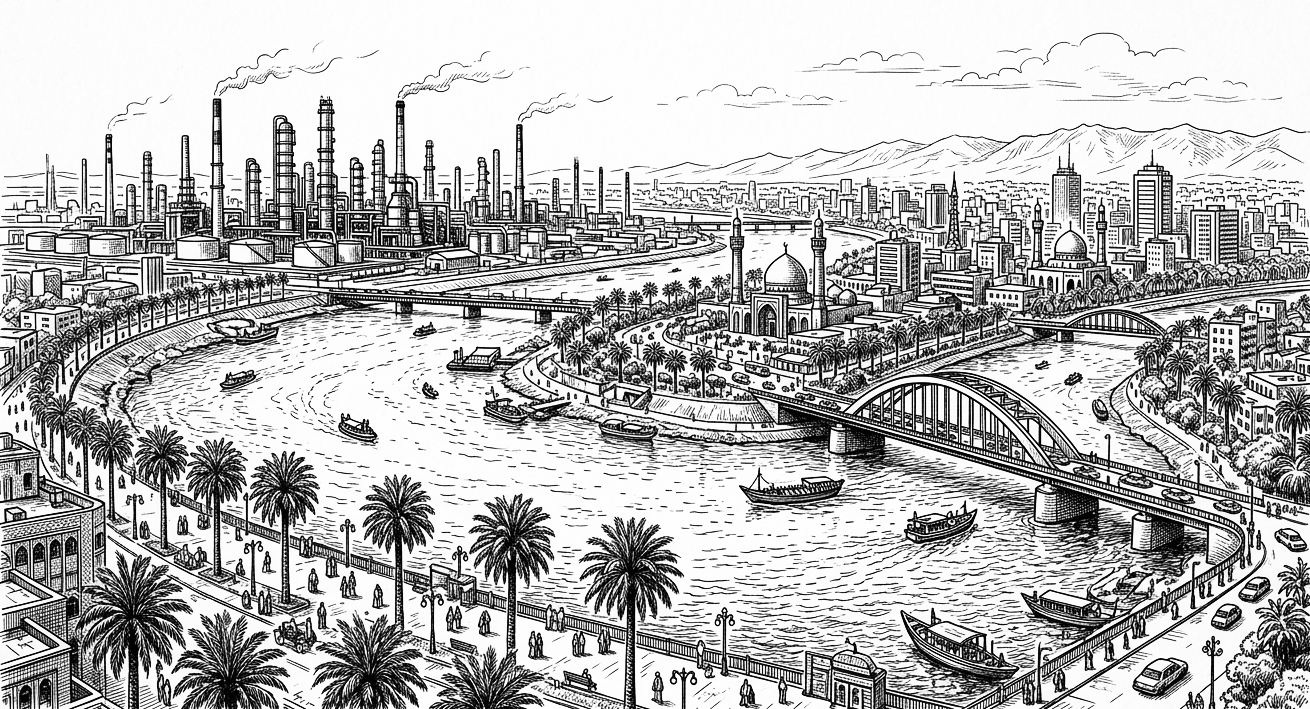
Ahvaz sits on the Karun River in southwestern Iran, close to the Iraqi border and the northern edge of the Persian Gulf basin. Its location places it at the intersection of Iran’s energy heartland, Arab-populated regions, and historic invasion corridors from Mesopotamia.
Background
The city’s modern importance stems from the discovery and exploitation of oil in Khuzestan in the early 20th century. British-era petroleum development transformed Ahvaz from a regional town into an industrial hub linked to Abadan, Khorramshahr, and offshore export routes.
History
Ahvaz’s urban character was shaped primarily by oil. Though the wider Khuzestan region saw Elamite and Persian settlement from antiquity, the modern city emerged in the late nineteenth and early twentieth centuries as oil extraction transformed the alluvial plain. The discovery of petroleum in Khuzestan brought pipelines, refineries, and a rapidly expanding workforce that turned Ahvaz into the province’s industrial capital and the centre of Iran’s energy economy in the southwest.
During the Iran-Iraq War from 1980 to 1988, Ahvaz was a front-line city subjected to repeated Iraqi bombardment and ground advances that brought fighting to its outskirts. The city’s Arab population and proximity to the border made Khuzestan a primary target of Saddam Hussein’s attempts to annex the province. Post-war reconstruction rebuilt industrial capacity and deepened Ahvaz’s role as the command centre of Iranian oil operations in the region.
Present Day
Today Ahvaz hosts major oilfields, refineries, pipelines, and IRGC-linked infrastructure. It remains socially and politically sensitive due to economic inequality, environmental stress, and ethnic Arab grievances, making it a recurrent focal point for unrest.
Future Outlook
Map
Articles
No results found.
Event Timeline
No results found.


