
Ahvaz
Intro
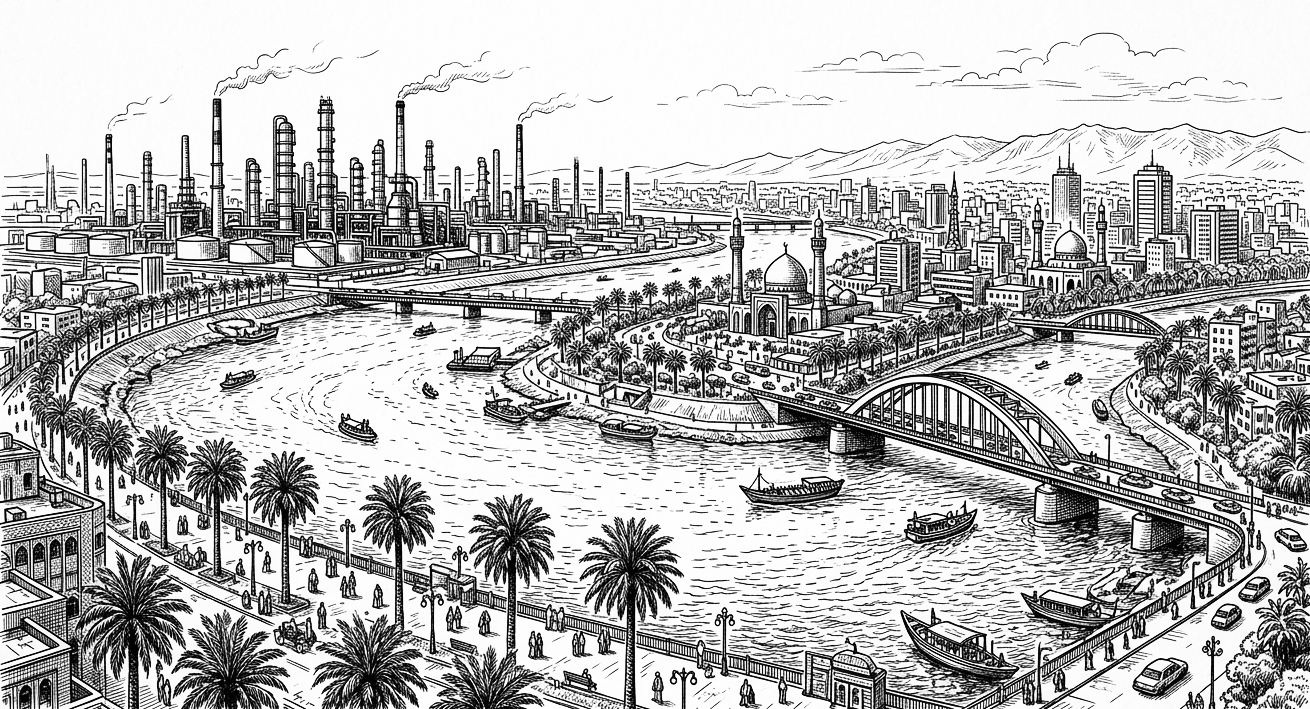
Ahvaz sits on the Karun River in southwestern Iran, close to the Iraqi border and the northern edge of the Persian Gulf basin. Its location places it at the intersection of Iran’s energy heartland, Arab-populated regions, and historic invasion corridors from Mesopotamia.
Background
The city’s modern importance stems from the discovery and exploitation of oil in Khuzestan in the early 20th century. British-era petroleum development transformed Ahvaz from a regional town into an industrial hub linked to Abadan, Khorramshahr, and offshore export routes.
History
Ahvaz’s urban character was shaped primarily by oil. Though the wider Khuzestan region saw Elamite and Persian settlement from antiquity, the modern city emerged in the late nineteenth and early twentieth centuries as oil extraction transformed the alluvial plain. The discovery of petroleum in Khuzestan brought pipelines, refineries, and a rapidly expanding workforce that turned Ahvaz into the province’s industrial capital and the centre of Iran’s energy economy in the southwest.
During the Iran-Iraq War from 1980 to 1988, Ahvaz was a front-line city subjected to repeated Iraqi bombardment and ground advances that brought fighting to its outskirts. The city’s Arab population and proximity to the border made Khuzestan a primary target of Saddam Hussein’s attempts to annex the province. Post-war reconstruction rebuilt industrial capacity and deepened Ahvaz’s role as the command centre of Iranian oil operations in the region.
Present Day
Today Ahvaz hosts major oilfields, refineries, pipelines, and IRGC-linked infrastructure. It remains socially and politically sensitive due to economic inequality, environmental stress, and ethnic Arab grievances, making it a recurrent focal point for unrest.
Future Outlook
Map
Articles

Closing the Strait of Hormuz: The Card Iran Holds — and What Holding It Cost
And there is no prediction on who’s winning this “Card Game,” is it?

The Cost of War: Hunting Mice with an Elephant
“An elephant which kills a rat is not a hero.” — How Iran’s asymmetric cost trap turned America’s strategic power into a financial liability.

Why Iran Is Running Out of Water
Iran’s water crisis is driven by groundwater depletion, inefficient agriculture, and climate stress.

Iran’s Retaliation in Cold War Mode
How Tehran could turn confrontation in the Gulf into a strategic cost trap.
Event Timeline
Israeli Strikes in Tehran Killing Larijani
On the night of 16-17 March 2026, Israeli airstrikes in the Tehran area killed Ali Larijani (Secretary of the Supreme National Security Council and de facto leader) and Gholamreza Soleimani (commander of Iran’s internal Basij militia).

Nationalisation of Iranian Oil and the Mossadegh Crisis
From 1951 to 1953, Iran nationalized its oil industry under Prime Minister Mossadegh, leading to an international crisis and the eventual 1953 coup.

Iran Hostage Crisis
In 1979, Iranian students seized the U.S. Embassy in Tehran, holding 52 Americans hostage for 444 days and transforming U.S.-Iran relations.


Iranian Revolution
In 1979, a mass movement removed the Pahlavi monarchy and established the Islamic Republic, redefining Iran’s political and ideological system.

Reform Movement and the Khatami Presidency
From 1997 to 2005, Iran experienced a reform era focused on civic openness, political participation, and institutional debate.

The Green Movement
In 2009, large-scale protests challenged the presidential election outcome, marking one of the most significant political mobilizations since 1979.
Collapse of the Safavid Order and Afghan Conquest of Isfahan
In 1722, Afghan forces from Kandahar captured Isfahan, ending effective Safavid rule and opening a prolonged phase of political fragmentation across Iran.


