
Tehran
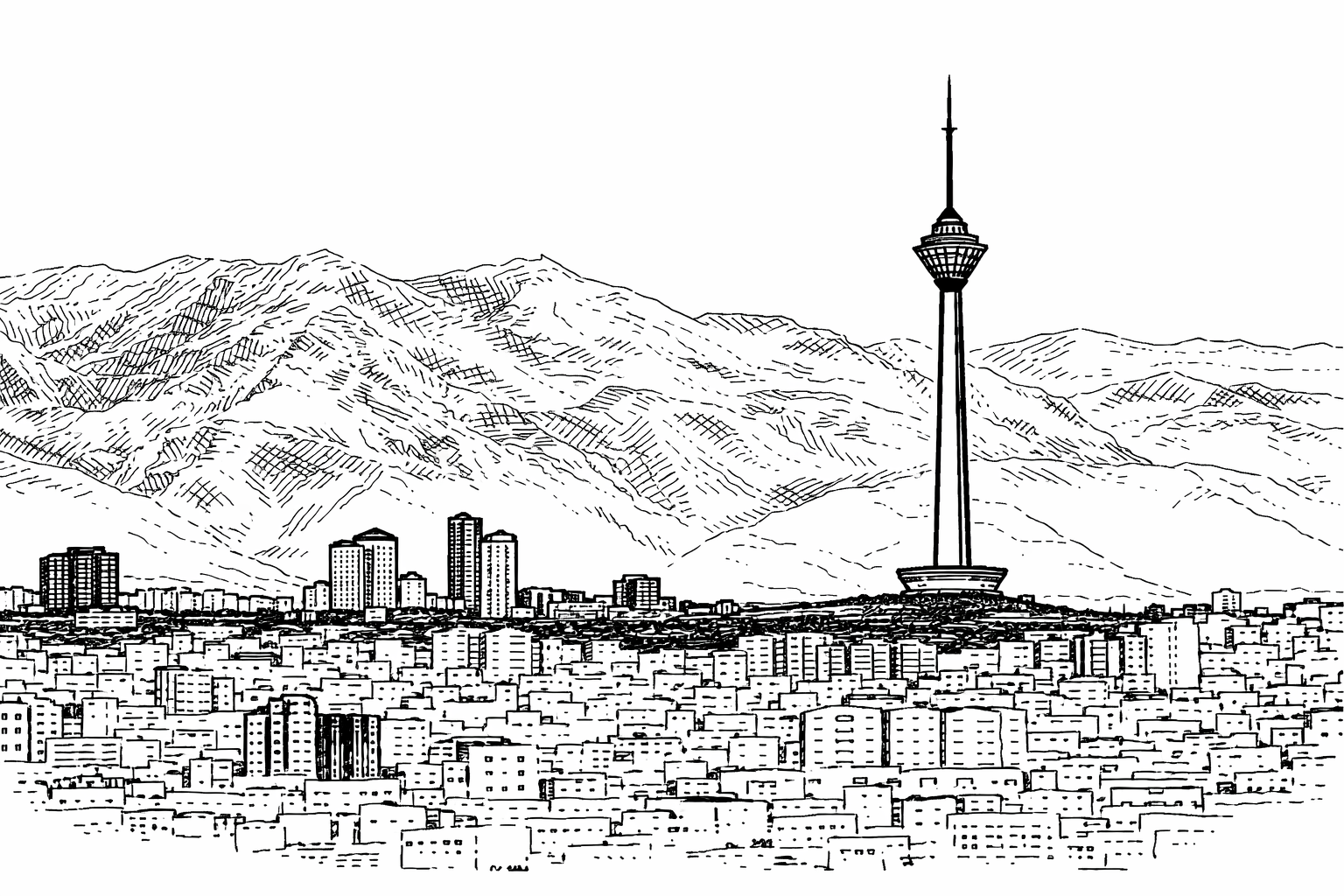
Intro
Tehran became Iran’s capital in 1796 under the Qajar dynasty, chosen for its defensible geography, centrality, and access to major trade routes. Over the centuries, it expanded into the country’s primary hub of political authority, bureaucratic institutions, and national decision-making. Its position on the southern slopes of the Alborz range enables both environmental protection and strategic oversight of surrounding regions.
Background
The city grew steadily during the Qajar period but experienced rapid modernisation under the Pahlavi state, especially from the 1930s onward. Administrative concentration, industrial expansion, and geopolitical centralisation turned Tehran into a dominant urban axis. After 1979, Tehran remained the core of state governance and became a focal point for political mobilisations, policy debates, and social transitions.
History
Tehran’s historical role evolved alongside Iran’s political trajectory: Qajar consolidation, constitutional activism, Pahlavi centralisation, revolutionary mobilisation in 1979, and subsequent reform movements. Its institutions frequently served as arenas for national transformation, making Tehran a central reference point for understanding Iranian state development.
Present Day
Today, Tehran hosts the key organs of the Islamic Republic, major universities, research centres, economic clusters, and cultural institutions. It remains a critical node for transportation, national planning, and digital infrastructure. The city’s demographics, combined with ongoing urbanisation, shape political dynamics and influence national-level discourse.
Future Outlook
Map
Articles

Why Iran Is Running Out of Water
Iran’s water crisis is driven by groundwater depletion, inefficient agriculture, and climate stress.
Event Timeline
Israeli Strikes in Tehran Killing Larijani
On the night of 16-17 March 2026, Israeli airstrikes in the Tehran area killed Ali Larijani (Secretary of the Supreme National Security Council and de facto leader) and Gholamreza Soleimani (commander of Iran’s internal Basij militia).

Nationalisation of Iranian Oil and the Mossadegh Crisis
From 1951 to 1953, Iran nationalized its oil industry under Prime Minister Mossadegh, leading to an international crisis and the eventual 1953 coup.

Iran Hostage Crisis
In 1979, Iranian students seized the U.S. Embassy in Tehran, holding 52 Americans hostage for 444 days and transforming U.S.-Iran relations.

Iranian Revolution
In 1979, a mass movement removed the Pahlavi monarchy and established the Islamic Republic, redefining Iran’s political and ideological system.

Reform Movement and the Khatami Presidency
From 1997 to 2005, Iran experienced a reform era focused on civic openness, political participation, and institutional debate.

The Green Movement
In 2009, large-scale protests challenged the presidential election outcome, marking one of the most significant political mobilizations since 1979.


