
Tehran
Intro
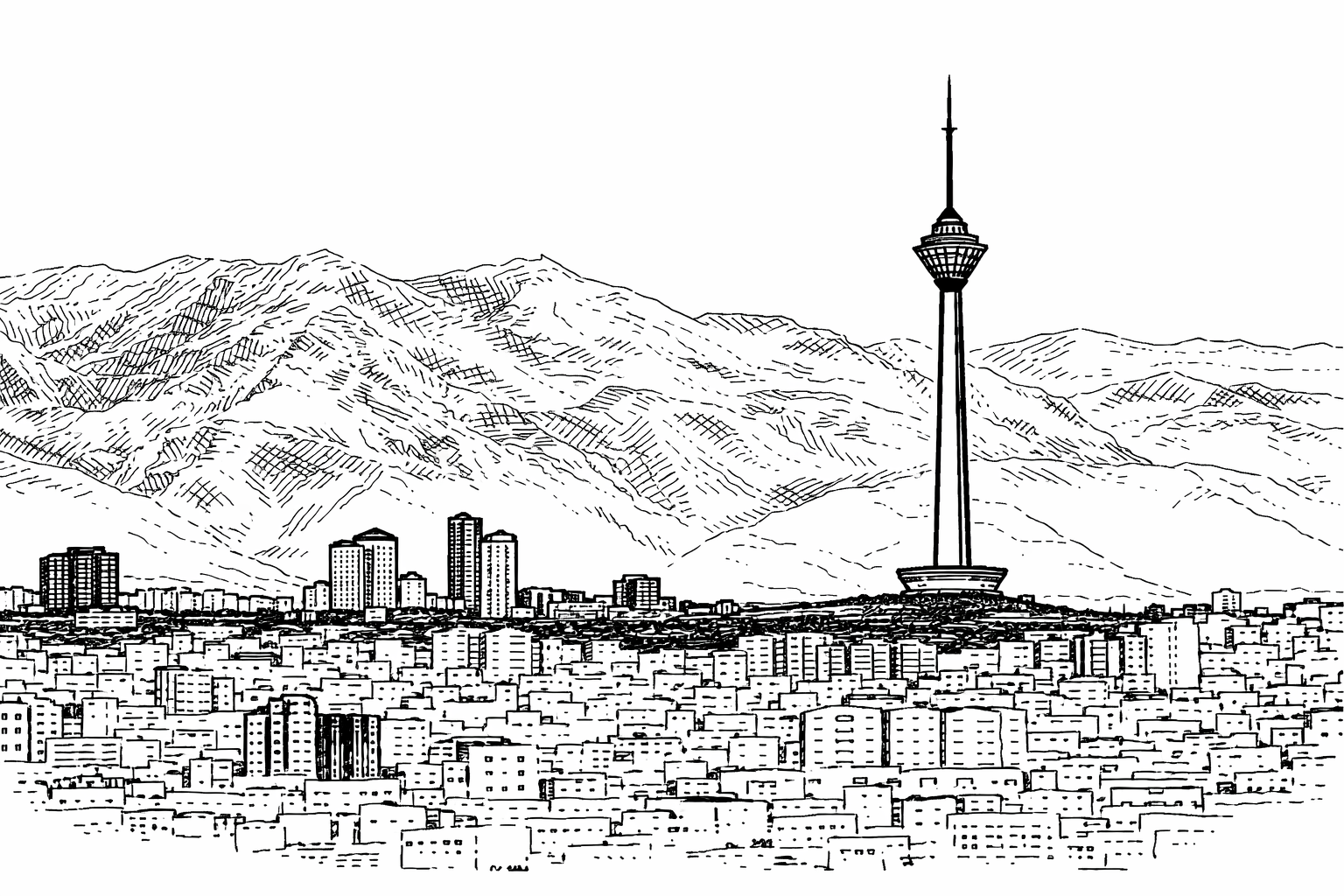
Tehran became Iran’s capital in 1796 under the Qajar dynasty, chosen for its defensible geography, centrality, and access to major trade routes. Over the centuries, it expanded into the country’s primary hub of political authority, bureaucratic institutions, and national decision-making. Its position on the southern slopes of the Alborz range enables both environmental protection and strategic oversight of surrounding regions.
Background
The city grew steadily during the Qajar period but experienced rapid modernisation under the Pahlavi state, especially from the 1930s onward. Administrative concentration, industrial expansion, and geopolitical centralisation turned Tehran into a dominant urban axis. After 1979, Tehran remained the core of state governance and became a focal point for political mobilisations, policy debates, and social transitions.
History
Tehran’s historical role evolved alongside Iran’s political trajectory: Qajar consolidation, constitutional activism, Pahlavi centralisation, revolutionary mobilisation in 1979, and subsequent reform movements. Its institutions frequently served as arenas for national transformation, making Tehran a central reference point for understanding Iranian state development.
Present Day
Today, Tehran hosts the key organs of the Islamic Republic, major universities, research centres, economic clusters, and cultural institutions. It remains a critical node for transportation, national planning, and digital infrastructure. The city’s demographics, combined with ongoing urbanisation, shape political dynamics and influence national-level discourse.
Future Outlook
Map
Articles
No results found.
Event Timeline
No results found.


