
Dasht-e Lut
Intro
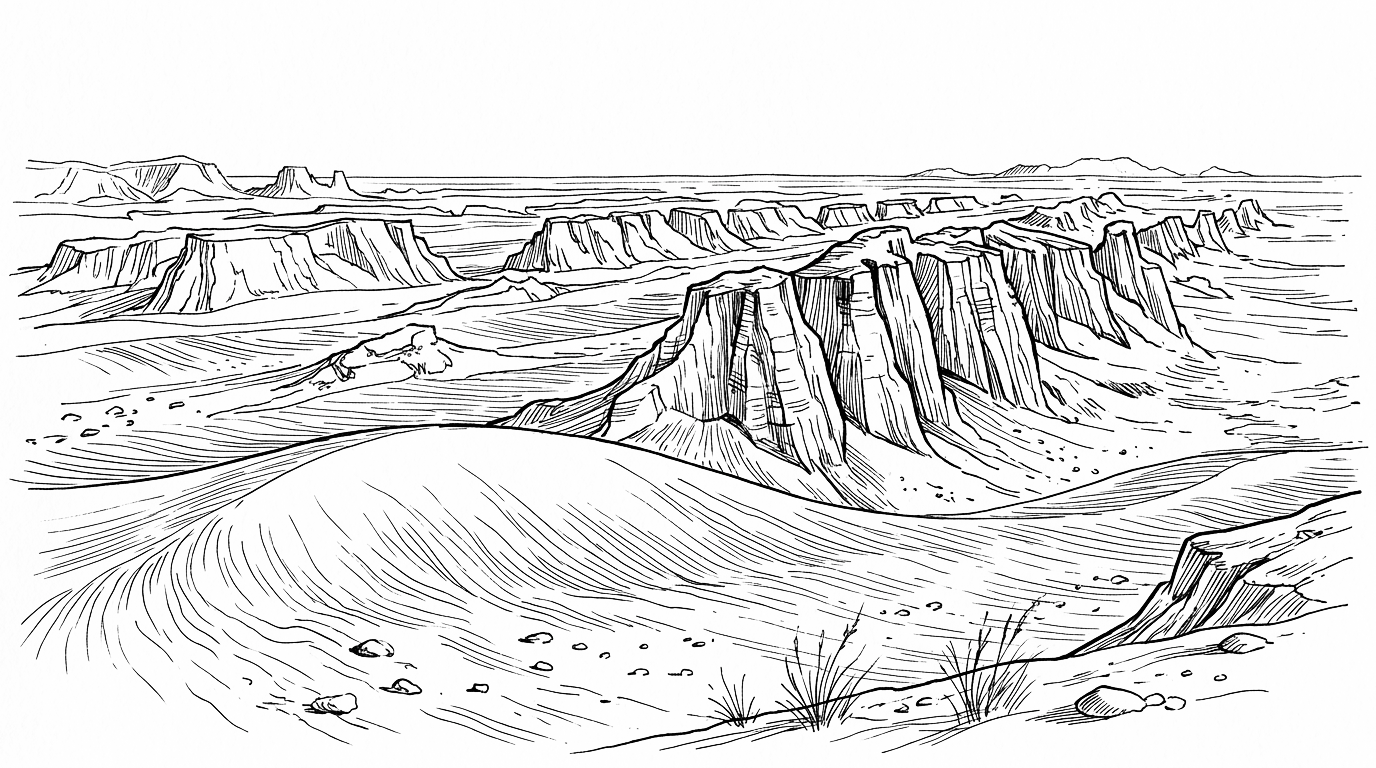
Dasht-e Lut is a large salt flat in southeastern Iran, recognised as a UNESCO World Heritage Site. It is one of the hottest places on Earth with recorded surface temperatures exceeding 70°C. The desert covers approximately 51,800 square kilometres across Kerman and South Khorasan provinces.
Background
History
The Dasht-e Lut, known in Arabic as the Empty Quarter of Iran, has been effectively uninhabited throughout recorded history. Its extreme heat – surface temperatures have been measured at over 70 degrees Celsius in summer, among the highest ever recorded on Earth – made permanent settlement impossible. Ancient trade routes bypassed it entirely. The geological formations of the Lut, including the massive yardang fields known as the Kaluts, were shaped by millions of years of wind erosion acting on soft sedimentary rock, creating some of the most dramatic desert landforms on the planet.
Present Day
The Dasht-e Lut is a UNESCO World Heritage Site recognised for its outstanding geological and geomorphological values. It remains essentially uninhabited. Satellite thermal imaging has identified it as one of the hottest surfaces on Earth. Its extreme environment makes it useful for remote sensing calibration and astrobiological research into life at temperature extremes. The surrounding provinces of Kerman and Sistan-Baluchestan are affected by dust storms originating in the Lut’s dried salt flats.
Future Outlook
Map
Articles

Why Iran Is Running Out of Water
Iran’s water crisis is driven by groundwater depletion, inefficient agriculture, and climate stress.

Iran’s Retaliation in Cold War Mode
How Tehran could turn confrontation in the Gulf into a strategic cost trap.

A European Covenant Draft for Peace in Ukraine
A complementary framework for long-term stability

Empire Thinking on Greenland
Why strategic access is sufficient — and why ownership rhetoric persists


The Hong Kong fire will change China’s Real Estate sector
China’s real estate sector is shaped by deeper pressures than market cycles alone.
Demographics, oversight consistency, due-diligence gaps and investment confidence now intersect in ways that define the sector’s next phase.

Pokrovsk: Logistics, Pressure and the Geometry of the Eastern Front
Pokrovsk has become the most stressed point on the eastern Ukrainian front.

China’s Fourth Plenum — Xi Tightens Control as Party Sets Course for the Next Five Years
Planning the future – the news between the lines.


Books To read for summer 2025
A summer reading list for those tracing the fractures of empire, freedom, and the European condition.
Event Timeline

Polish-Lithuanian Rule over Ukraine
Before Moscow, there was Lublin. The Polish–Lithuanian Commonwealth laid the groundwork for Western Ukrainian identity — and for centuries of contested rule.


