
Hormuz Island
Intro
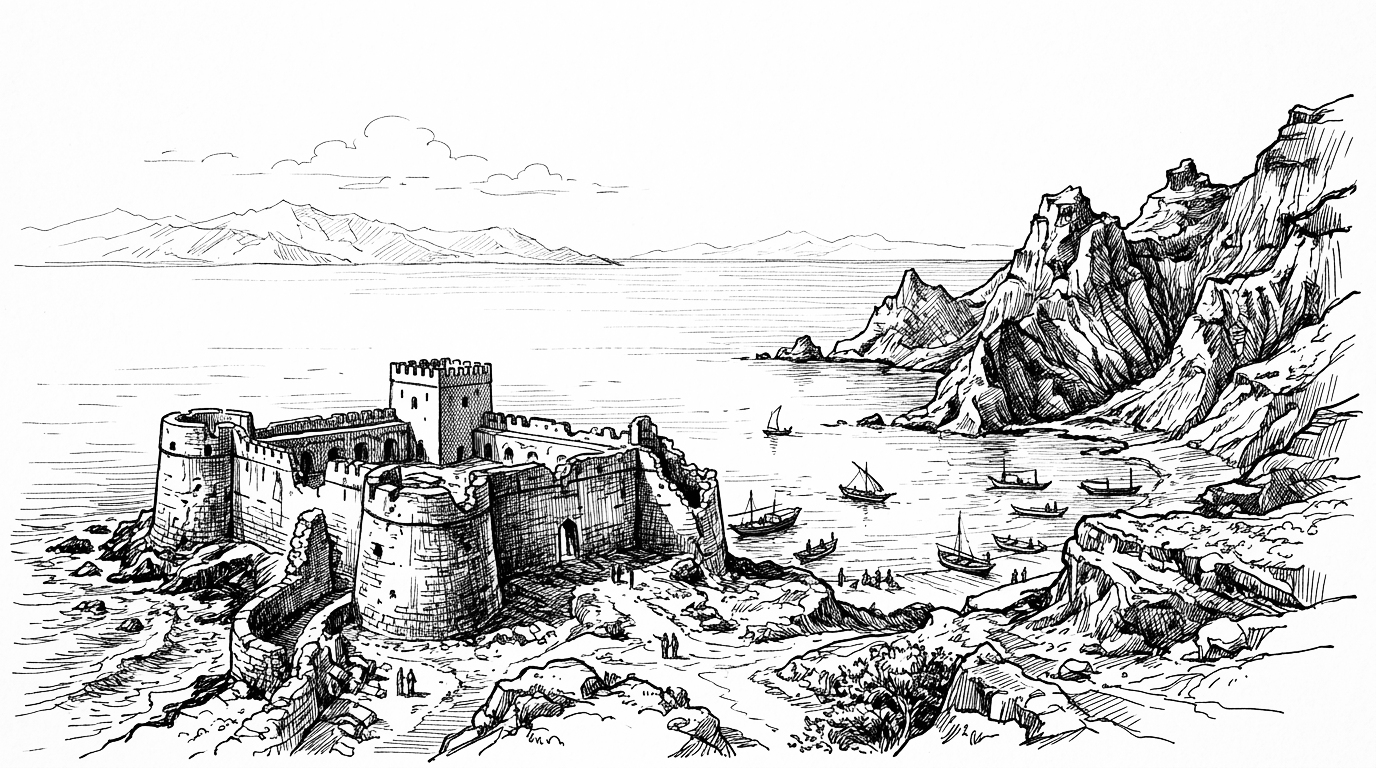
Situated directly at the entrance of the Persian Gulf, Hormuz Island occupies a commanding position over shipping lanes connecting global energy markets with Gulf producers. Its geography gives it relevance far beyond its size or population.
Background
Historically contested due to its position, the island has long been used to project control over maritime traffic. In modern Iranian doctrine, it forms part of a layered coastal and island-based deterrence system in the Strait of Hormuz.
History
Hormuz Island dominated the entrance to the Persian Gulf for centuries and was seized by the Portuguese in 1507 as a strategic base for their Indian Ocean empire. The island became one of the most valuable trading posts in Asia, with merchants from across the Indian Ocean world paying customs to the Portuguese garrison. Shah Abbas I, with English East India Company naval assistance, expelled the Portuguese in 1622 and transferred Gulf trade to the mainland port that became Bandar Abbas.
After this strategic reorientation the island lost commercial significance but retained geographic importance. After 1979 it was integrated into the layered asymmetric maritime defence system Iran has developed to threaten shipping access to the Gulf.
Present Day
Today Hormuz Island hosts military installations, surveillance infrastructure, and limited civilian settlement. It is a key element in Iran’s ability to threaten, monitor, or control transit through the Strait of Hormuz in crisis scenarios.
Future Outlook
Map
Articles


Event Timeline
Israeli Strikes in Tehran Killing Larijani
On the night of 16-17 March 2026, Israeli airstrikes in the Tehran area killed Ali Larijani (Secretary of the Supreme National Security Council and de facto leader) and Gholamreza Soleimani (commander of Iran’s internal Basij militia).

Nationalisation of Iranian Oil and the Mossadegh Crisis
From 1951 to 1953, Iran nationalized its oil industry under Prime Minister Mossadegh, leading to an international crisis and the eventual 1953 coup.

Iran Hostage Crisis
In 1979, Iranian students seized the U.S. Embassy in Tehran, holding 52 Americans hostage for 444 days and transforming U.S.-Iran relations.


Taiping Heavenly Kingdom (Taiping Rebellion)
The Taiping Heavenly Kingdom was a large-scale civil war and rival state that challenged Qing rule, resulting in one of the deadliest conflicts in human history and severely weakening imperial authority.
Proclamation of the People’s Republic of China
On 1 October 1949, Mao Zedong proclaimed the People’s Republic of China in Beijing, marking the establishment of Communist rule on the mainland after civil war victory.
First Five-Year Plan and Socialist Transformation
Between 1953 and 1957, China implemented its First Five-Year Plan, restructuring land, industry, and finance along socialist lines and establishing centralized economic planning.
Great Leap Forward
The Great Leap Forward was a nationwide campaign aimed at rapidly industrializing China through mass mobilization and rural collectivization, resulting in severe economic disruption and widespread famine.
Xinhai Revolution
The Xinhai Revolution overthrew the Qing Dynasty and ended over two millennia of imperial rule, leading to the establishment of the Republic of China.


