
A framework for peace between Europe, Ukraine, and Russia — with dignity
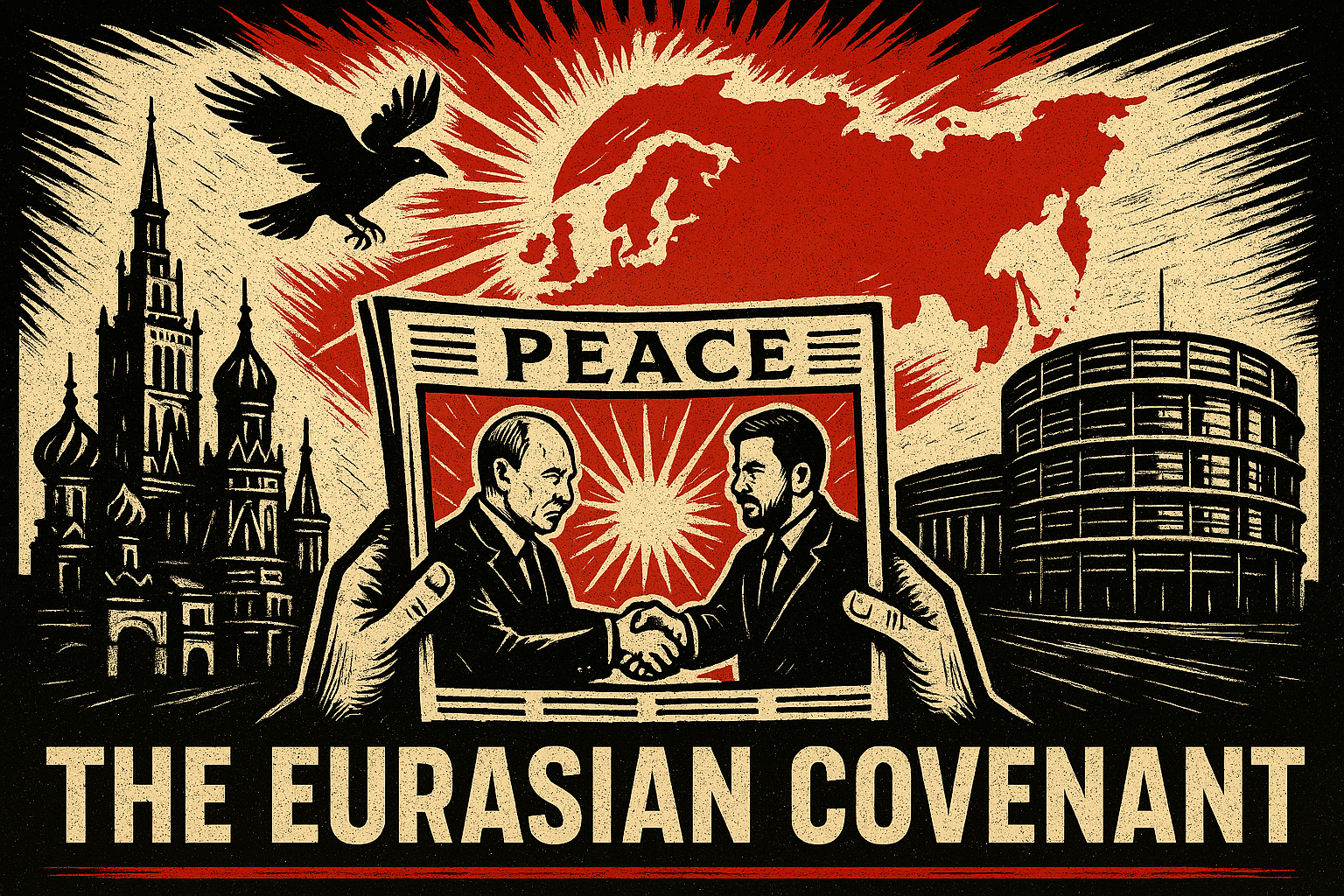
This is not a deal. It is not satire. Nor is this surrender.
It is a proposition — a framework for peace between Europe, Ukraine, and Russia. A Eurasian Covenant rooted in realism, dignity, and the long view of history.
After Munich, after the liveshow with Trump, Vance, and Zelensky, and after the continued instability of the American administration, Europe must act. It is time to prepare for alternatives. Not as a reaction — but as a responsibility.
Our countries share a deep past. We have fought, aligned, betrayed, and rebuilt.
This proposal begins from that shared history — and moves toward a future where different systems can coexist and cooperate.
This is a Plan B for Peace between Ukraine and Russia in Europe.
A history in brief
Our countries have a common history and partially common backgrounds. It might be good to sit and go all the way back from where our cultures came into existence. Wars have been fought, pacts have been made, and broken. Empires came, empires went. And somehow we ended up where we are today. In a situation where people fight – likewise people.
So let us talk:
- On our common history and values. What binds us and what sets us apart;
- What is true and what is assumption. Can we come to a mutual story that shares light on both sides;
- Can we somehow come to an understanding how different governmental systems can coexist and cooperate;
Russia and Ukraine share a common history that goes back to when the Kievan Rus Empire was established with Kyiv as its capital in 882. The common history is also seen in aspects like Language, the Eastern Orthodox faith, culture such as arts, music, poetry and such.
Ukraine
It might be difficult to state when exactly a distinction could be made between Russian and Ukrainian people – much like we see that in Western European countries. It is rather a gradual process that makes these distinct groups. Arguably the Ukrainian identity grew during the period of the Polish-Lithuanian Commonwealth (14th – 17th centuries) where – much of modern Ukraine, were the so called borderlands and Ukrainian people where distinct from Poles and Muscovites.
The Cossack revolts for autonomy in the 17th century and later with rising nationalism in the 19th century, Ukrainian became a national identity. Though did not yet exist as a sovereign state. Divided between the Russian Empire and the Austro-Hungarian Empire until it’s 3 years independence (1918-1921). In WW2 millions fought side-by-side with Russians against Nazi Germany, though others collaborated with, or resisted both Nazis and Soviets. It was heavily devastated, and was soon absorbed into the USSR until it finally achieved independence in 1991.
Ukraine has long been shaped by an internal divide between its rural agricultural base and more urban, often Russian-speaking industrial regions — a legacy of Soviet planning. After independence, corruption and political instability undermined trust in the state, creating vulnerabilities later exploited by foreign influence and oligarchic interests. At the same time, the current Ukrainian government has shown genuine efforts toward reform, transparency, and European integration — despite operating under the pressure of war, instability, and economic hardship.
In the now disputed areas are many ethnic Russians (mainly Crimea) and Russian-speaking Ukrainians. In general it seems genuine that Russian-speaking means they are Russian. That is not the case, but from a historical situation where the Russian language was spoken all over the USSR and partially the Middle East (much like Spain in America and English in the British Commonwealth), and from demographic manipulation. Language does not define loyalty, especially after 2022.
Russia
The Russian Empire has had close ties with Western Europe, specially after Tsar Peter the Great made his journey to transform Russia into a modern state. With maritime, naval industries, water management from The Netherlands, the palace architecture style from Italy, the wide city planning , cuisine and literature from France made St. Petersburg. Also the Royal Families were connected through marriage with the British, French, Dutch crowns.
Russia’s historical contribution to European peace should not be forgotten. In three major conflicts, Russia played a decisive role in preserving or restoring balance: against Napoleon in the early 19th century, against the German Empire in World War I, and at enormous human cost against Nazi Germany in World War II (Think alone of the Battle for Kursk with losses of 800.000 Russians and 200.000 Germans). These sacrifices helped preserve the freedom of many Western European countries. Despite later divisions, these moments reflect a shared interest in defending Europe against tyranny.
Yet after 1945, the shared cause gave way to division. The post-Cold War order created tensions as NATO expanded and mutual distrust deepened. While Eastern European states sought protection, Russia saw encirclement. These conflicting logics were never resolved — only postponed. Now they demand rethinking, not just remembering.
The memory of Russia’s imperial and Soviet past is not untroubled. The repression of dissent under the USSR, the devastating Holodomor famine in Ukraine, and the deep scars left by Stalinist policies still shape perception across the region. The early 2000s — under Vladimir Putin’s first presidency — brought a sense of restoration and order within Russia, but also signaled a return to centralized authority and strategic assertiveness abroad.
America
In these talks it is also good to consider the role of the USA. The Transatlantic bond has been strong from the beginning of the USA’s existence. Obviously due the fact that it were Europeans that settled and colonized the areas we now know as The United States of America and Canada. People came from the United Kingdom, Germany, France, The Netherlands, Sweden and other countries. Lots of europeans have family in America. Like lots of Russians have family in Ukraine.
During the fight for independence it were European countries financing and helping the Independence Movement. The Constitution of the United States leans on the Dutch Act of Abjuration (Declaration of Independence). There is a lot that binds us.
After World War II – the Great Division basically started. The US supported Western European countries tremendously, making economic stabilization and growth possible where otherwise it would have taken decades to recover.
After the Cold War the US also schemed in Eastern European countries, making vague promises and running expensive projects. This disturbed the Transatlantic bond a bit, mainly for Easter European countries (former USSR satellite states) while Wester European countries still relied heavily on the US.
In 2025 – with President Trump in office again – one start realizing that the Transatlantic Relation will not be the same anymore. That it’s time to realize that it is now a world without a big brother to run to. It is time to become an adult.
Unlike in most European democracies, where the civil service provides long-term policy continuity, U.S. administrations often bring thousands of political appointees with each election. When the presidency changes hands — especially between parties — entire layers of government shift direction. This creates a system where foreign policy is deeply tied to short-term electoral cycles, rather than strategic continuity. As a result, Europe must prepare for a world where American positions may shift every four years, and where long-term commitments can no longer be assumed. That’s not a criticism — it’s a structural reality. And it’s time we plan accordingly.
Europe
Europe is often viewed as the cradle of modern civilization — a legacy that reaches from the Roman Empire through the Renaissance and Enlightenment to today’s technological and institutional frameworks. From shipbuilding and navigation to the printing press, from the rule of law to democracy, and from classical music to semiconductors, Europe’s influence on the modern world is vast.
But alongside that intellectual and technological flourishing came centuries of violence, imperialism, and exploitation. European powers — from Spain and Portugal to the Netherlands, France, Britain, and others — shaped the modern world not only through ideas, but through colonization, war, and conquest.
European history is marked not only by innovation but by blood. The colonization of Africa, the Americas, and Asia led to cultural erasure, slavery, economic extraction, and mass suffering. Entire civilizations were destroyed. Also, the great wars of the 19th and 20th century (such as the Napoleon empire, World War I and World War II) are started by European countries. The scars remain.
From the removal of Native peoples in the Americas, to the Opium Wars in China, to the carving up of Africa, Europe exported both its knowledge and its wars.
From the late 18th century onward, Europe not only expanded across the map — it began to extract from the earth on a scale never seen before. Empires were built not just on territory, but on coal, cotton, copper, and control.
This extractive era laid the foundation for modern geopolitics: a world in which access to resources, supply chains, and strategic dominance became as important as borders themselves.
We must reckon with this legacy not to erase it, but to understand the full arc of Europe’s role — both its light and its shadow.
Geopolitical Reflections: Empires, Rhythm, and the Illusion of Historical Correction
History tends to follow a rhythm: globalism, crisis, imperialism, crisis, nationalism, crisis — and then a restart. Empires rise, they dominate, and they fall. They tend to last around 300 years — from Rome, to the Ottomans, to the British Empire.
Attempts to correct history through force rarely lead to healing. Every attempt to go back — to reclaim lost lands, redress past betrayals, or resurrect old empires — invents new victims, and opens new wounds. New conflicts.
“All empires fall. What matters is what they leave behind: scars, or foundations.”
This is not the time to restore empires. It is time to build something better.
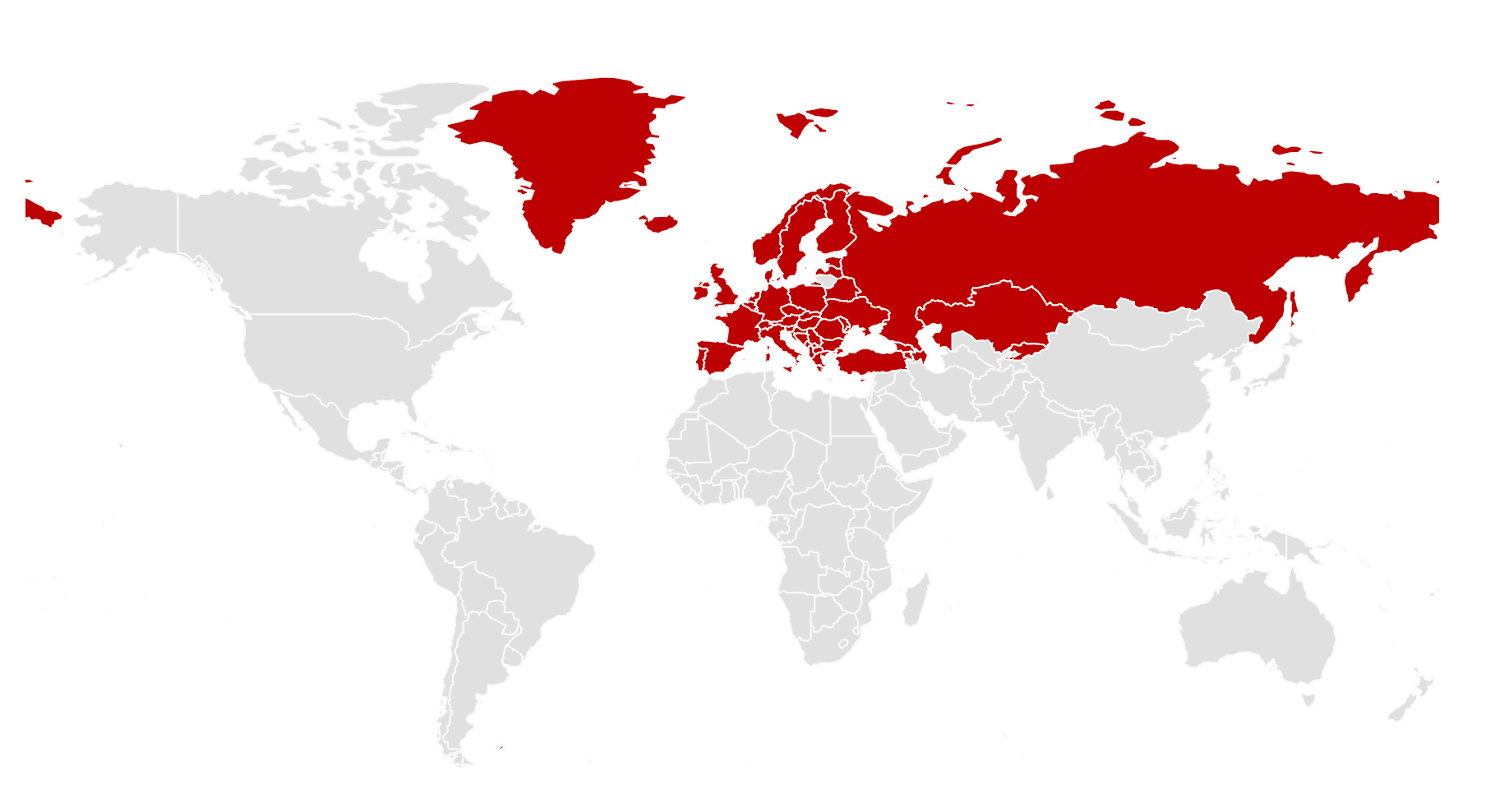
This new situation requires a new theory. It marks the end of American hegemony — not with vengeance, but with maturity. It offers Europe the space to stabilize and reorganize.
Negotiations and Follow-up
Europe must begin to act not as a protectorate, but as an actor.
We are not neutral. But we can be honest. We are not above the conflict. But we can stand apart from the logic of vengeance and offer a path out — grounded in realism, dignity, and a long view of history.
The following proposals are not rigid. They are meant to open doors. To reset perspectives. To begin a path forward over the next 5 to 10 years, with milestones based on verified progress and human dignity.
Let’s draw some possibilities that could open the path forward.
Russia: Withdrawal, investment, restraint.
Ukraine: Healing, rebuilding, bridging.
Europe: Acting, stabilizing, balancing.
No one wins. But everyone can stop losing.
Europe commits to:
- Lifting trade restrictions on Russia in exchange for progress on peace and withdrawal
- Unfreezing Russian state and private assets under specific conditions
- Resuming energy cooperation (gas, wood, oil, critical infrastructure), with environmental and strategic safeguards
- Investing in joint infrastructure (e.g., a revised Nord Stream 2 under EU-Russian governance)
- Exploring new trade possibilities, including flowers, food products, and industrial equipment
Europe must not merely stabilize. It must renew its position as a balancing power, investing in the human and material rebuilding of Ukraine, and offering a post-crisis model of peaceful cooperation.
Europe must stop waiting for the world to fix itself.
It’s time to act — not as a protectorate, but as a power.
⸻
Russia’s Commitments:
- Withdraw all armed forces from Ukraine, including Donbas and other occupied territories (Crimea negotiated separately)
- Accept the possibility of retaining Crimea, but only under the condition of:
- An agreed transactional arrangement (e.g., long-term energy supply contract, or reparative contribution)
- Demilitarization of the region
- Guaranteed minority protections, international oversight, and open access to historical populations
- Participate in the economic reconstruction of Ukraine, matching the EU’s financial effort for at least ten years, with investments in housing, energy, schools, infrastructure, and jobs
- Receive conditional mining rights for rare minerals in Ukraine in return for economic investment and infrastructure co-development — negotiated transparently and overseen internationally
Russia does not lose its position but reorients it: from militarization to strategic partnership.
Addressing Russian Concerns
For any peace agreement to succeed, it must offer all parties a narrative of dignity and strategic gain — especially for Russia, whose leadership faces domestic, constitutional, and ideological constraints. Offering off-ramps is not about validating past aggression, but about avoiding further escalation and creating conditions for future cooperation.
| Argument | Possible Solution Direction |
|---|---|
| Constitution prevents giving up territory | Shift the storyline: Russia gains more from the agreement than it gives up. The result is not territorial loss, but economic gain, security guarantees, and renewed geopolitical standing. |
| “Denazification” narrative / Nazi government | Political transitions happen naturally. Support internationally observed elections in Ukraine with no predetermined outcome, or frame it as a civil reset without military interference. |
| NATO and Western encirclement | Shift NATO toward a European-led structure, with the U.S. in a support role and Russia as a consultative partner — echoing proposals from the early 2000s. |
| Frozen assets are a humiliation | Frame asset unfreezing as a reward for peace, based on measurable progress, with joint oversight boards to prevent misuse and loss of face. |
Ukraine’s Recovery
- The war would end. But the pain remains. Recovery begins not with buildings, but with people. Immediate ceasefire and phased demilitarization
- Recognition that trauma takes generations to heal. Postwar reconciliation must include cultural, educational, and psychological dimensions
- Access to reconstruction funds from both EU and Russia
- Positioning Ukraine as a central bridge economy for Eurasian trade, mineral processing, green energy, and transit infrastructure
- Open investment zones with international guarantees
- Ukraine should receive full-scale rebuilding support from both Europe and Russia. With access to reconstruction funds from both EU and Russia
- Its agriculture, minerals, and skilled workforce must be leveraged to build lasting prosperity.
- A European framework should support open labor mobility, visa-free travel, and long-term investments in education and health. With open door towards full EU-membership
Ukraine is not passive. Ukraine becomes the pivot of a new regional economy
Shared Measures
- No new Iron Curtain: The border between Russia and Ukraine must remain open. Free travel of persons, goods, and services should be promoted — ideally via a Schengen-style agreement, without visas or strict controls.
- Redefine NATO: shift toward a European-led defense structure, with the U.S. in a supporting role and Russia included in a consultative capacity, as once proposed around the year 2000.
- Nuclear deterrence doctrine review:
- Global leaders must clarify the logic and limits of nuclear deterrence
- Establish mutual declarations of non-first-use and initiate dialogue with China, India, and others
- Develop non-nuclear alternatives:
- Fast, precise, hybrid-response forces
- Intelligence cooperation, conflict mediation, de-escalation missions
- Ensure strategic autonomy:
- Strengthen the European Space Agency (ESA) for autonomous satellite navigation
- Build digital and defense independence from U.S.-controlled platforms
- Define a shared Arctic vision:
Establish joint frameworks for ecological protection, shipping routes, and resource zones in the Arctic — where Russia and Europe act as co-stewards, preventing militarization and proving peaceful intent.
This is not a deal to be signed in one night. It is the framework for a generation to rebuild what was broken — not only in buildings and treaties, but in trust. Europe, Russia, and Ukraine all stand at the edge of history. The choice is not who wins. The choice is what we build together next.
Safeguards, Violations, and the Problem of Trust
Trust cannot be assumed — not by history, not by signature, not by good intentions. The problem in past peace efforts was not only broken promises, but the absence of clear consequences when treaties were violated. After Yalta, Potsdam, and Budapest, no joint enforcement framework was created for violations. That mistake must not be repeated.
Any new agreement must include consequences by design, not improvisation.
Key elements to include:
- Clear definitions of violations – Examples: unauthorized military activity, covert interference in elections, breaches of demilitarization, disinformation sabotage
- A joint monitoring body, composed of EU, Ukrainian, Russian, and neutral observers, operating with shared access and equal reporting duties. Russian participation must come with a binding commitment to transparency and acceptance of the group’s authority
- Escalation paths: Violations trigger pre-agreed response stages: from diplomatic warnings to economic measures to reactivation of mutual defense clauses. No ambiguity.
- Shared appeals process: Disputes over violations or gray areas can be referred to a regional dispute resolution forum, or — with agreement — escalated to the International Court of Justice (ICJ) in The Hague.
The goal is not blind trust, but designed accountability. If lying is inevitable, then peace must be built in a way that makes lying harder — and consequences automatic.
This framework is not a single moment, but a sequence.
Implementation would unfold over 5 to 10 years, with phased steps, verification at each stage, and room for adjustment.
What matters is not how fast we move — but that we move with purpose, and without delay.
Perspectives
The following outlines how each party may view the proposal — and what consequences it may carry for the broader global balance.
Russia
Why this is worse than the Trump Deal:
- Russia gains less arial space (1 instead of 4 new provinces) 1
- Also carries the risk of future underlying guerrilla disturbance
- It loses the narrative of total victory – and accepts limits
- No more expansionism towards a Greater Russia trough force; borders become definitive
- The U.S. may become less predictable and more threatening at other borders (Baltic, Arctic, Pacific)
Why this is better:
- A covenant with Europe provides stable, long-term economic growth and mutual respect
- Europe’s system is based on continuity, unlike the shifting U.S. administrations (see note on foreign policy consistency)
- Access to new and reopened markets for energy, raw materials, and infrastructure investment
- Opens space for historical reconciliation and soft-power rebuilding in the post-Soviet sphere
| Framing the Russian Narrative |
|---|
| “Russia helped end the war through wisdom and realism — not conquest. It secured lasting influence, economic revival, and a place at Europe’s table. This was not a retreat, but a redirection.” |
Ukraine
Why this is worse:
- May lose direct U.S. military backing, leading to reduced access to American defense technology and intelligence
- Risks Western disillusionment or pressure from internal factions who expected NATO or stronger security guarantees
Why this is better:
- Preserves sovereignty with less territorial loss than feared
- Gains broad economic rebuilding support from both Europe and Russia
- Becomes a bridge economy at the center of new trade routes — rail, road, minerals, and digital corridors
- Opens the path to future EU membership, framed as a long-term process of alignment, not a bargaining chip
Europe
Why this is worse:
- Risks damaging the historic alliance with the United States, creating fear of abandonment
- No longer protected by NATO’s automatic umbrella, at least in its current form
- Feels exposed to potential U.S. retaliation — economic or political — for stepping out of line
Why this is better:
- Finally acts as a geopolitical power on its own terms
- Gains freedom from U.S. tariffs and extraterritorial rules that limit European trade autonomy
- Can refocus on internal market strength, boosting economic growth through expanded Eurasian trade
- Has the opportunity to rewrite its role in global diplomacy, becoming a mediator rather than a dependent
Consequences for the World Order
Beyond the immediate players, this framework (or whatever framework there will be) might have impact far beyond Europe. The balance of power is shifting — demographically, economically, and strategically. What follows are some of the broader consequences and thoughts and the global order.
Europe
- Gains geopolitical maturity, but faces a shrinking and aging population
- Must act while it still has economic and institutional weight — before demographic decline erodes its global leverage
- Its future as a power will depend on strategic immigration, talent mobility, and technological adaptation
USA
- Will loose influence, increasingly challenged on two fronts: China and Eurasia
- Faces reduced access to Eurasian markets, rising import fees, and declining investment influence
- Risk economic regression by decades if sanctions provoke retaliation
- May be tempted to pursue expansion in Greenland, Iceland, or the Caribbean to reassert strategic control — a destabilizing path with global consequences
China
- Stands to benefit if Europe and Russia stabilize independently of the U.S.
- Gains greater control and access to expanded rail-based Silk Road routes trough Eurasian / China territory
- May have to recalibrate its strategic ambitions if Eurasia no longer plays East vs. West
- Faces a severe demographic crisis: falling birthrates, aging population, and shrinking workforce
- May turn to deeper economic partnerships with India, Vietnam, Thailand, Cambodia to offset these trends
- May push for short- to mid-term strategic gains before demographic decline weakens its long-term position
- Increasing reliance on AI, surveillance, and centralized control to offset labor shortages
Korea & Japan
- Increasingly caught in strategic tension between China and the U.S., yet deepening trade ties with China and regional partners like Australia
- Facing severe demographic decline, with some of the lowest birthrates in the world — posing long-term challenges to workforce, military capacity, and economic stability
- Risk becoming front-line states in a renewed Pacific standoff
- Need to reassess their strategic alignment amid demographic vulnerability and rising regional tension
Indian Subcontinent
- Becomes the world’s largest population center, with a young, growing, and urbanizing workforce
- Holds a key swing position, capable of aligning selectively with the West, China, or a Eurasian bloc
- Could emerge as the economic growth engine of the 2030s–2040s, if it manages internal reform, infrastructure, and governance challenges
- Bangladesh and Sri Lanka likely will follow similar growth curves
- Pakistan’s trajectory remains uncertain, hinging on internal stabilization and regional alignment
Central Asia / Middle East
- Could gain new relevance as corridors of stability or disruption, depending on how the Eurasian framework handles energy, trade, and religious tensions
- Central Asia may align economically with Russia and China, while the Middle East becomes a battleground of influence between Eurasia, the Gulf, and the US
- The long-term key lies in infrastructure, political inclusion, and post-oil economic planning
Africa
- Holds untapped potential as the demographic future of the world
- Stands to benefit from diversified alliances, especially if the U.S. retreats and Europe re-engages without neocolonial dynamics and China changes approach from extracting towards value added-chains
- Could become a decisive actor in mineral supply chains, agricultural innovation, and renewable energy partnerships
South & Latin America
- Present strong opportunities for renewed trade relations, particularly as the U.S. loses regional trust
- Countries like Mexico, Colombia, Brazil, Argentina, and Chile may seek greater independence in economic policy and global partnerships
- Could align with a multipolar trade system that includes Europe, China, and Eurasia
“A new balance of power will not come from war, but from recalibrated needs, shared interests, and mutual restraint.”
This is not a simple peace deal. It is a long-term effort — to stabilize a region. To prevent another generation of war, and to recognize that dignity, not dominance, is the foundation of lasting security.
It will not satisfy every ambition. It will not undo the past. But it offers something more important:
A beginning. A framework. A way forward — before it is too late. Now is not the time for perfect solutions. It is the time for responsible ones.
And if this peace cannot be built — if trust is broken again, or the war continues — then Europe must still act. Not to escalate. But to stand with Ukraine, to defend its sovereignty, and to help rebuild a future that war tries to erase. Responsibility does not disappear when dialogue fails. It grows.