
Naples
Intro
Naples is one of Europe’s oldest continuously inhabited cities. Founded as a Greek settlement and later integrated into the Roman world, it developed into a major Mediterranean port and repeatedly served as the capital of southern Italian realms. The city’s identity is defined less by monumentality than by continuity: a dense urban life sustained across conquest, disaster, and political change.
Background
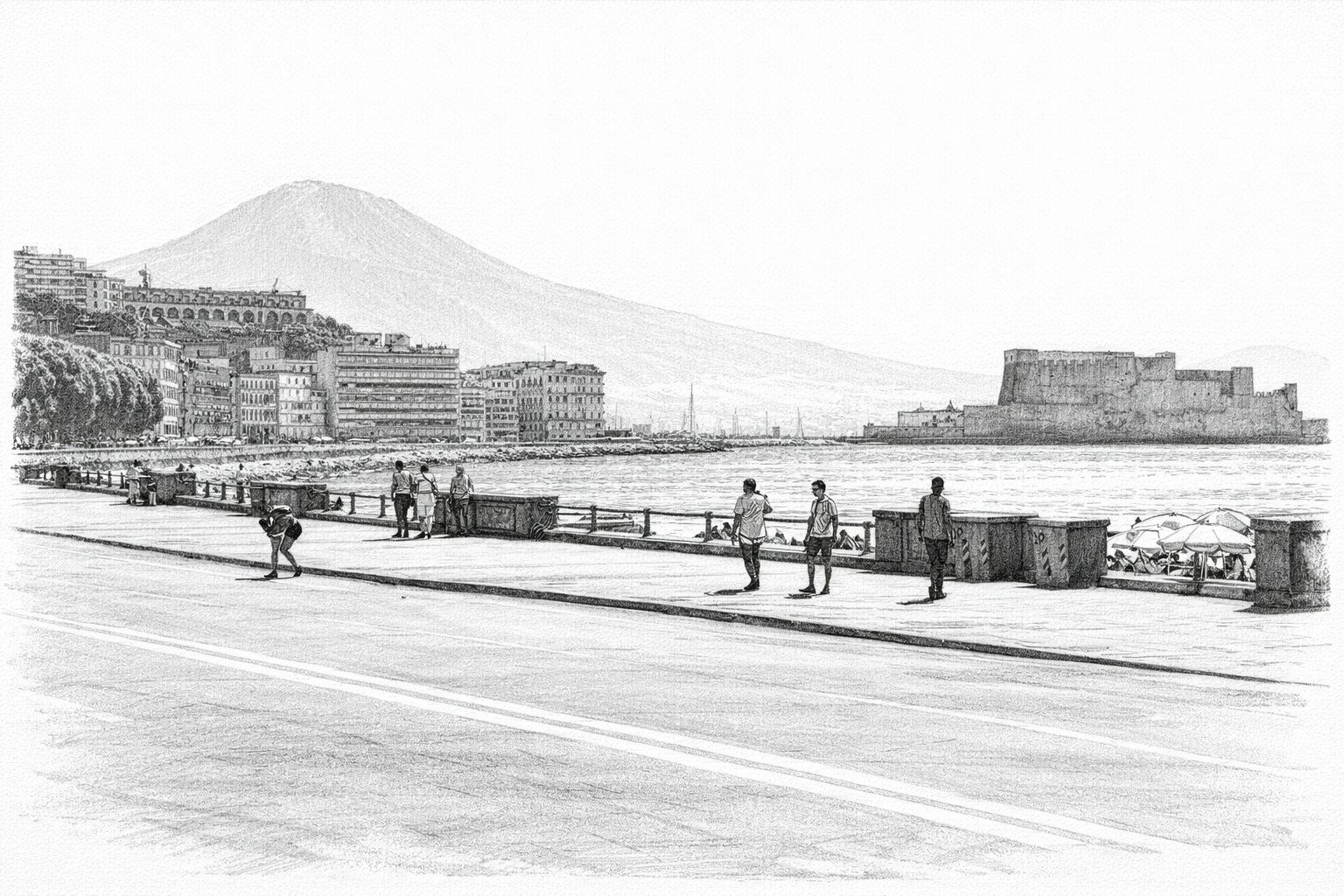
Naples occupies a strategic position on the Bay of Naples, combining maritime accessibility with fertile volcanic hinterlands. This geography enabled long-term settlement but also imposed permanent risk, most visibly embodied by Mount Vesuvius. The city’s development reflects a recurring balance between openness to the Mediterranean and inward-facing civic resilience.
History
Naples originated as Neapolis in the Greek colonial sphere of Magna Graecia, retaining Hellenic cultural traits long after Roman incorporation. Under Rome, it functioned as a cultured provincial city closely tied to elite leisure and education.
After the fall of the Western Roman Empire, Naples passed through Byzantine influence before emerging as a medieval capital. From the Angevin period onward, it became the seat of the Kingdom of Naples and later the Kingdom of the Two Sicilies, governing much of southern Italy from this city.
In the early modern era, Naples grew into one of Europe’s largest cities, ruled by Spanish and later Bourbon dynasties. Following Italian unification, it lost political centrality but retained demographic and cultural weight, entering a prolonged period of tension between marginalization and self-defined identity.
Present Day
Today, Naples is a large metropolitan city balancing heritage, tourism, and structural challenges. It functions as the cultural and demographic heart of southern Italy, with ongoing tensions between historic preservation, social inequality, and external perception. Its port, universities, and cultural production sustain regional relevance, while its global image remains closely tied to its historic depth rather than contemporary political power.
Future Outlook
Map
Articles
No results found.
Event Timeline
No results found.


