
Isfahan
Intro
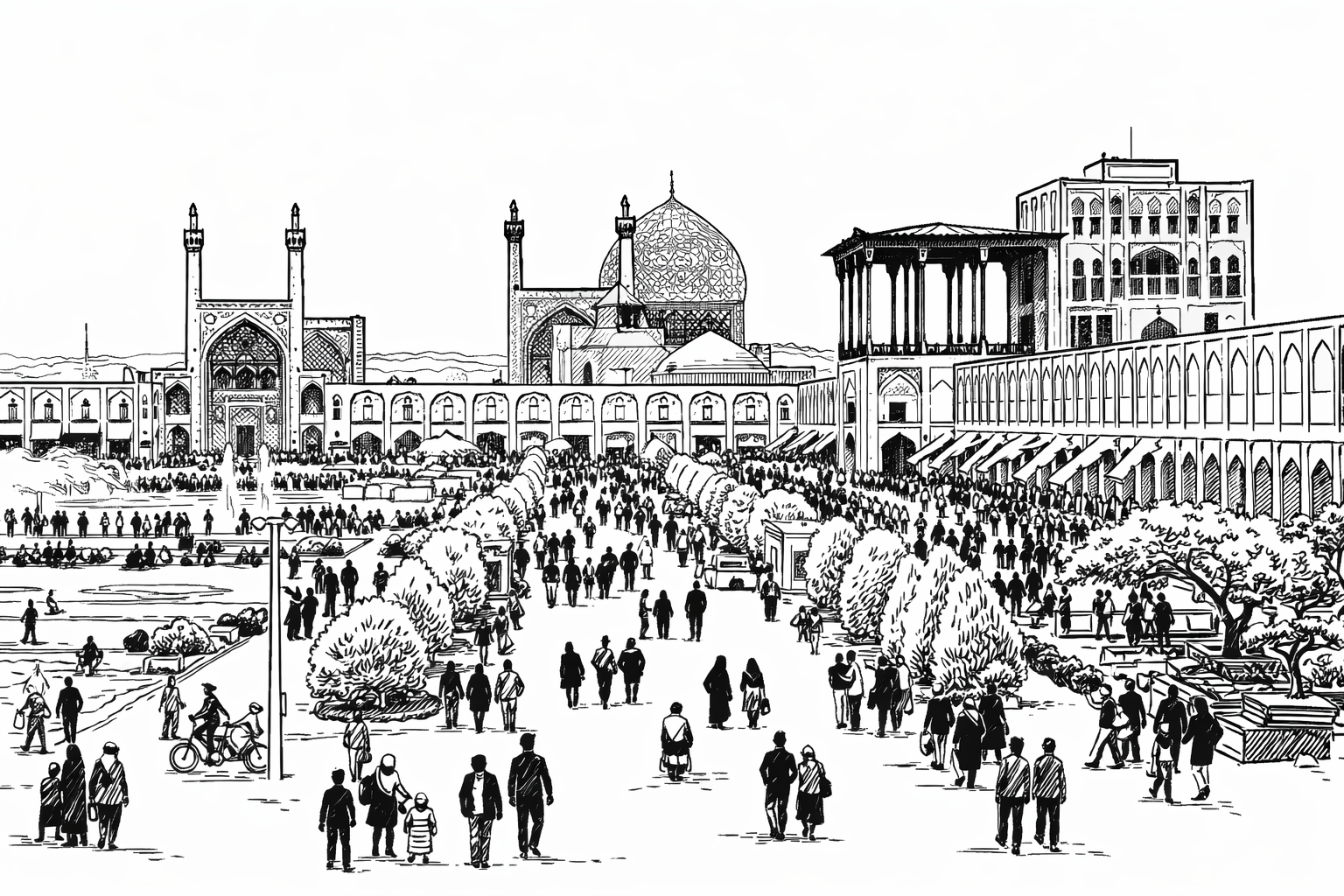
Located on the central plateau, Isfahan emerged as a major political and cultural centre long before the modern era. Its greatest transformation occurred under the Safavids, when it served as the imperial capital and became one of the most important cities in the early modern Islamic world. Strategic position, irrigation systems, and urban planning made it an administrative and logistical centre of empire.
Background
Isfahan’s prominence is tied closely to its geography: fertile plains relative to surrounding regions, access to internal caravan routes, and moderate climate. The Safavid capital relocation to Isfahan under Shah Abbas I initiated a broad urban restructuring, including monumental boulevards, squares, mosques, and administrative complexes. These developments reinforced its role as the heart of political power and cultural creativity.
History
After the Safavid collapse in 1722, the city lost national capital status but remained a key regional urban centre. Through the Qajar and Pahlavi periods, Isfahan retained strategic value due to its economic base, military manufacturing, and connection to central Iranian networks. It played limited but symbolic roles in later political movements.
Present Day
Today, Isfahan is an industrial, cultural, and educational centre. It hosts major steel and aerospace facilities and remains a tourism anchor due to its architectural heritage. Its demographic and economic weight continue to influence internal Iranian dynamics.
Future Outlook
Map
Persons
Locations
No results found.
Points of Interest
No results found.
Articles
No results found.
Event Timeline
Collapse of the Safavid Order and Afghan Conquest of Isfahan
In 1722, Afghan forces from Kandahar captured Isfahan, ending effective Safavid rule and opening a prolonged phase of political fragmentation across Iran.


