
Yazd
Intro
Located deep in Iran’s central plateau, Yazd developed as a self-sustaining city adapted to extreme arid conditions. Its isolation historically provided security, while modern transport links integrate it into national industrial and logistical networks.
Background
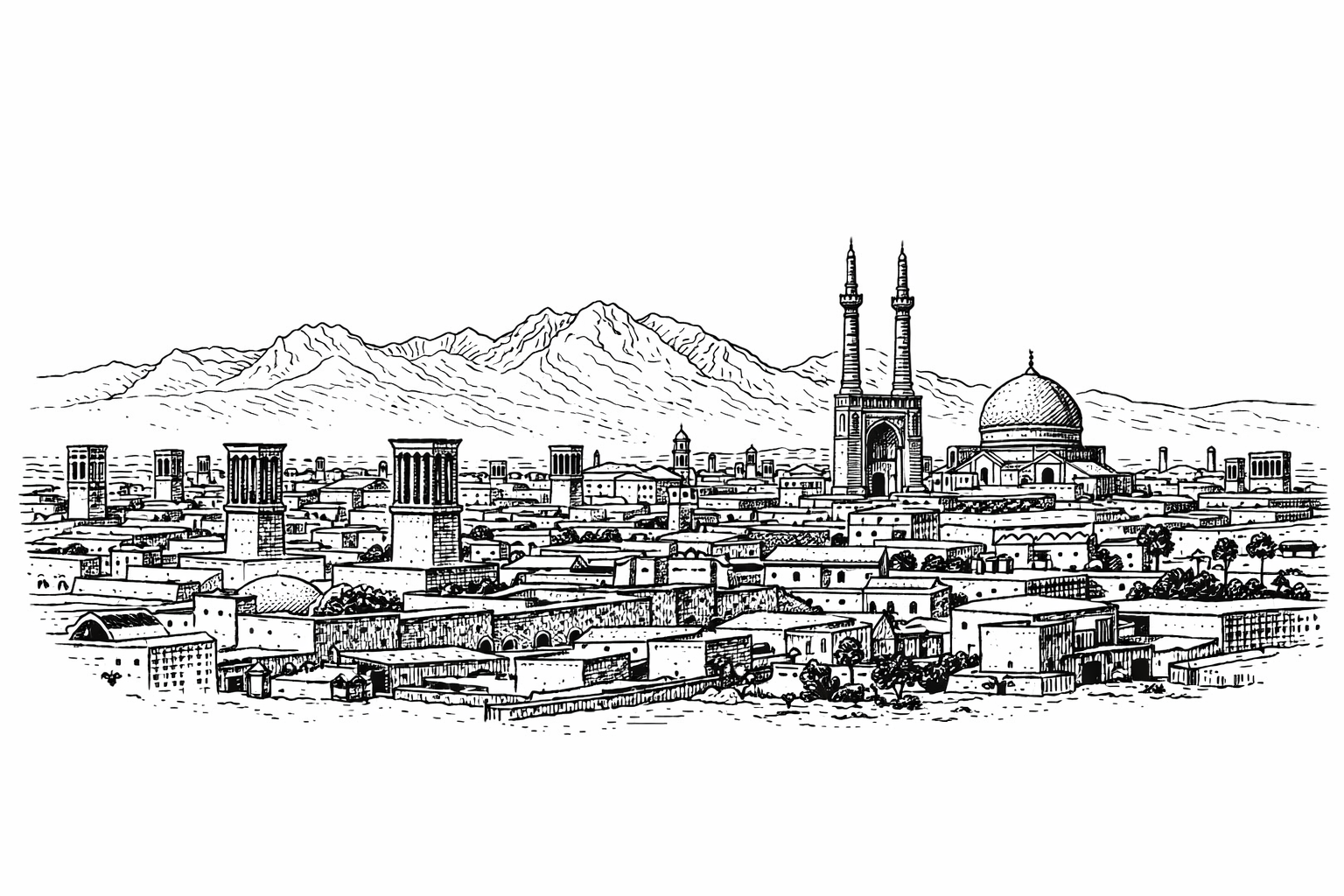
Yazd’s prominence is rooted in its qanat irrigation systems, windcatcher architecture, and role as a waypoint on internal trade routes. In the modern period, its central position gained renewed importance through industrialisation and energy-related development in surrounding provinces.
History
Yazd’s survival at the heart of the Iranian desert depended on its qanat irrigation system, which drew water from distant mountain aquifers through underground channels to sustain agriculture and urban life across an otherwise inhospitable plateau. The city was settled well before the Islamic period and has sustained a Zoroastrian community to the present, making Yazd the global centre of the faith and home to its most important fire temples.
In the medieval period Yazd was a prosperous caravan hub connecting central Iran to the Persian Gulf and Central Asian trade networks, renowned for its fine textiles and its distinctive mud-brick windtower architecture. Today Yazd is a UNESCO World Heritage Site, but like much of the Iranian plateau it faces severe groundwater depletion from overextraction.
Present Day
Today Yazd hosts textile, ceramics, mining-related industries, and logistics facilities. Its proximity to missile, aerospace, and nuclear-related sites in central Iran elevates its indirect strategic relevance despite limited population size.
Future Outlook
Map
Articles
No results found.
Event Timeline
No results found.


