
Second Opium War
1856-1860
escalation–imperial-intervention–War
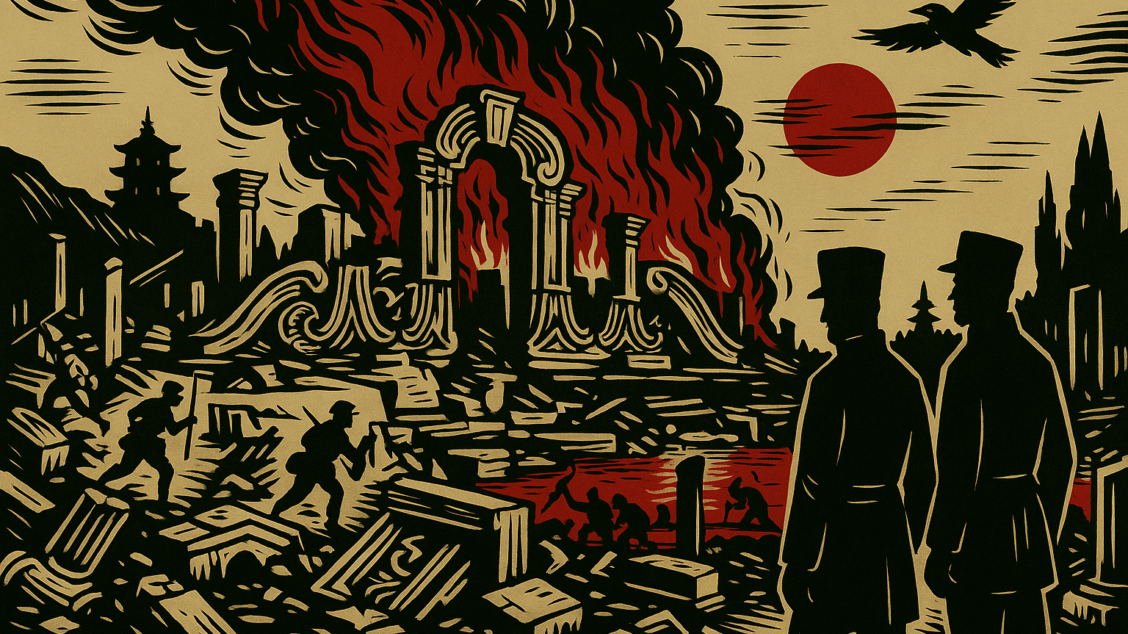
The Second Opium War expanded Western military pressure on Qing China, resulting in deeper treaty concessions, legalized opium trade, and intensified foreign presence in imperial affairs.
Background
Following the Treaty of Nanking, unresolved disputes over diplomatic equality, trade
access, and enforcement led Britain-joined by France-to renew hostilities. Using
superior naval and expeditionary forces, the allies attacked Qing positions along the
coast and advanced toward Beijing. The Qing court struggled to coordinate defense amid
internal unrest and institutional weakness.
Legacy
– Legalized the opium trade and expanded treaty-port access
– Established permanent foreign legations in Beijing
– Further eroded Qing sovereignty and legitimacy