
Shiraz
Intro
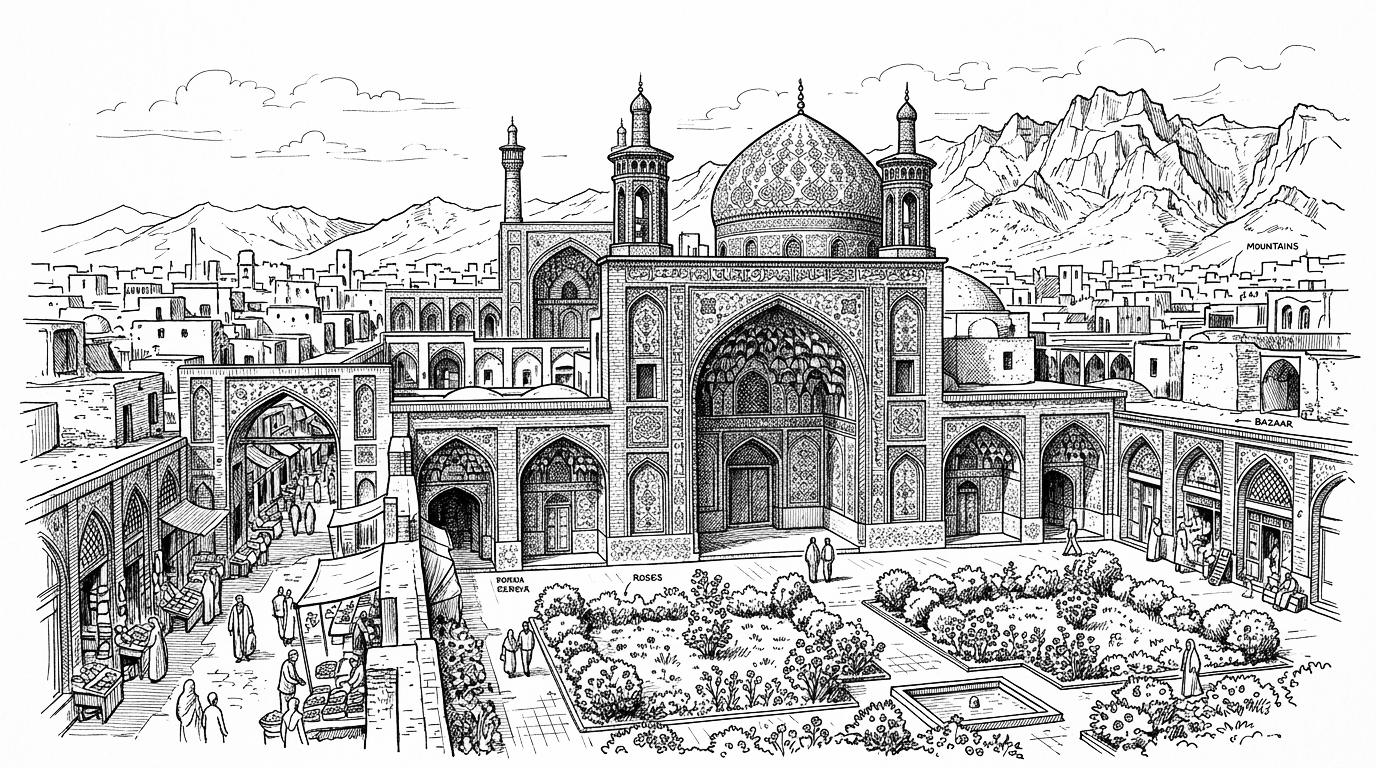
Located in the southern plateau at the edge of the Zagros Mountains, Shiraz has served as a provincial capital and cultural hub for centuries. Its position offers access to routes linking central Iran to the Persian Gulf hinterlands, making it an important regional connector.
Background
Shiraz flourished during the Zand dynasty in the 18th century, when it briefly served as Iran’s capital. It remained influential under the Qajar and Pahlavi governments, known for education, trade, and cultural production. Its proximity to Persepolis and Pasargadae situates it within the heritage landscape of ancient Persia.
History
Historically, Shiraz played roles in local governance, administrative reforms, and regional cultural development. While less central to national-level political movements than Tehran, Tabriz, or Isfahan, it consistently served as a stabilising urban core for southern Iran. Its educational institutions became reference points in Iran’s modern intellectual life.
Present Day
Today, Shiraz is a key administrative centre for Fars Province and a major regional economy. It supports industries related to petrochemicals, agriculture, education, and tourism. Its urban growth and cultural heritage continue to shape its strategic profile within Iran’s internal geography.
Future Outlook
Map
Articles
No results found.
Event Timeline
No results found.


