
Hamun Wetlands
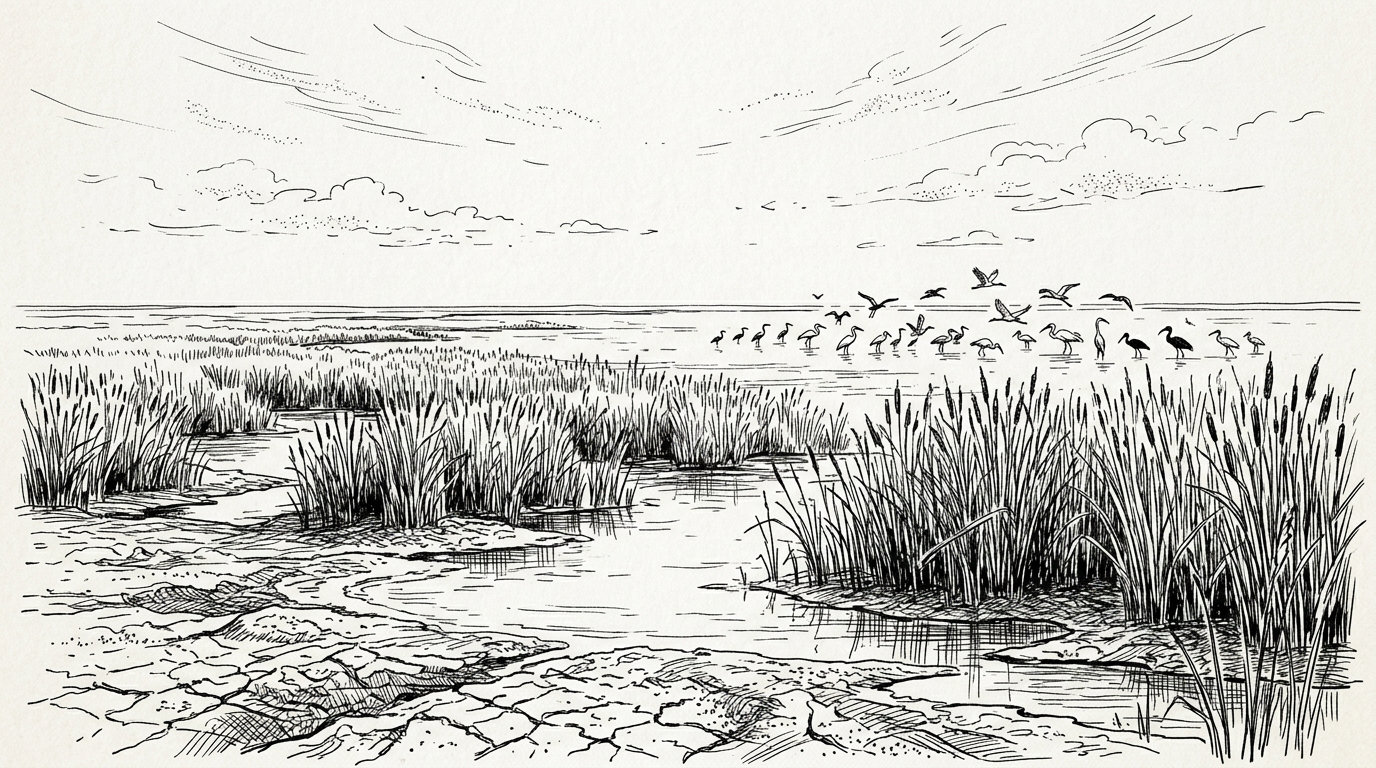
Intro
The Hamun wetlands are a system of shallow lakes in the Sistan Basin on the Iran-Afghanistan border. Historically one of the largest wetland complexes in Asia, they depend on the Helmand River flowing from Afghanistan. Prolonged drought and upstream water management have caused near-total collapse of the wetland ecosystem.
Background
History
The Hamun wetlands were among the most productive ecosystems in eastern Iran for thousands of years, supporting fishing, hunting, pastoralism, and agriculture along the shores of the shallow lakes. Ancient Sistan was one of the most densely settled regions of the Iranian world, and the Bronze Age city of Shahr-e Sukhteh on the Hamun’s western edge was one of the largest urban centres of its time. Persian, Arab, and later Mongol and Safavid rulers all recognised Sistan as a valuable agricultural and strategic region. The lakes fluctuated dramatically with the Helmand River’s seasonal flows, and periods of drought or upstream diversion caused periodic collapses of the regional economy.
Present Day
The Hamun wetlands are in a state of near-total ecological collapse. The combination of upstream dam construction in Afghanistan – particularly the Kajaki Dam and numerous smaller structures – and severe multi-year drought has reduced water flows in the Helmand to a fraction of historical levels. The lakes dried almost completely in the early 2000s and have only partially recovered in wet years. The Wind of 120 Days, a strong seasonal wind from Central Asia, drives dust storms across the dried lake beds throughout the summer, making the area around Zabol one of Iran’s most environmentally stressed regions. Rural depopulation has been extensive.
Future Outlook
Map
Articles

Логіка імперії: Як Росія використовує кордони, ідентичність та затримку
Росії не потрібно окупувати країну, щоб контролювати її. Їй потрібно лише не допустити вирішення конфлікту. Від Придністров’я до Криму, від наративної війни до фінансових систем, “Логіка імперії” показує, як утримується сучасна влада – не через завоювання, а через структурне заперечення.

Повернення до Вавилону: Мова, ідентичність та приналежність
По всій Європі мовні права гарантовані на законодавчому рівні. Але як щодо життя? Від освіти до громадянства – мова, якою ви розмовляєте, все ще може визначати вашу приналежність. Ця стаття досліджує, як обіцяють плюралізм – і як його непомітно фільтрують, ранжирують або відкидають.


Event Timeline

Polish-Lithuanian Rule over Ukraine
Before Moscow, there was Lublin. The Polish–Lithuanian Commonwealth laid the groundwork for Western Ukrainian identity — and for centuries of contested rule.


