
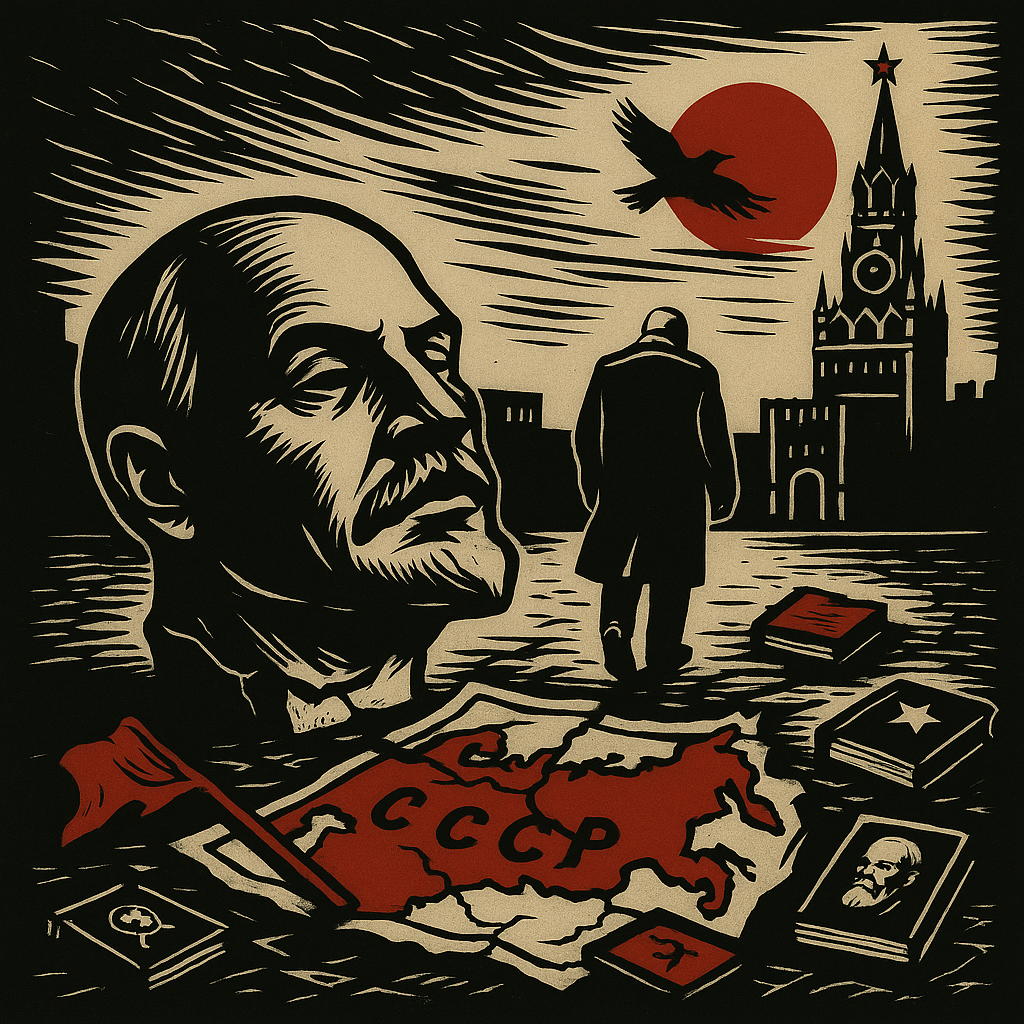
1991-12-25
On December 25, 1991 – Mikhail Gorbachev announced his resignation as president of the Soviet Union in a televised address. Following by the Soviet hammer-and-sickle-flag being lowered from the Kremlin. It marked the end of the Soviet Union.
Background
By the late 1980s, the Soviet Union was unraveling. Gorbachev’s reforms – perestroika and glasnost – opened public dissent, economic hardship, and nationalist demands. The failed August 1991 coup further eroded central authority. On 1991-12-08, leaders of Russia, Ukraine, and Belarus signed the Belavezha Accords, dissolving the USSR and forming the CIS. On 1991-12-25, Gorbachev resigned; the red flag was lowered over the Kremlin.
The collapse of the Soviet Union resulted in a new situation with 15 (independent) countries. Russia, Ukraine, Belarus, Estonia, Latvia, Lithuania, Moldova, Armenia, Azerbijan, Georgia, Kazakhstan, Kyrgyzstan, Tajikistan, Turkmenistan and Uzbekistan.
test
Legacy
– Formal end of the Cold War
– Rise of newly independent post-Soviet states
– Beginning of Russian Federation under Yeltsin
– Transition from bipolar to unipolar world order
Key Moment
Perspective & Relations
Narratives
| European Union | A geopolitical victory — the peaceful end to a decades-long standoff. A moment of unipolar triumph. | |
| Russia | A moment of loss and humiliation for some; a chance for renewal and freedom for others. Russia inherited the Soviet seat at the UN but entered a period of chaos. | |
 | Ukraine | Independence, long suppressed, finally realized. The 1991 referendum showed overwhelming support for a sovereign Ukrainian state. |