
Nationalisation of Iranian Oil and the Mossadegh Crisis
1951-1953
Economic Policy–Political Transformation
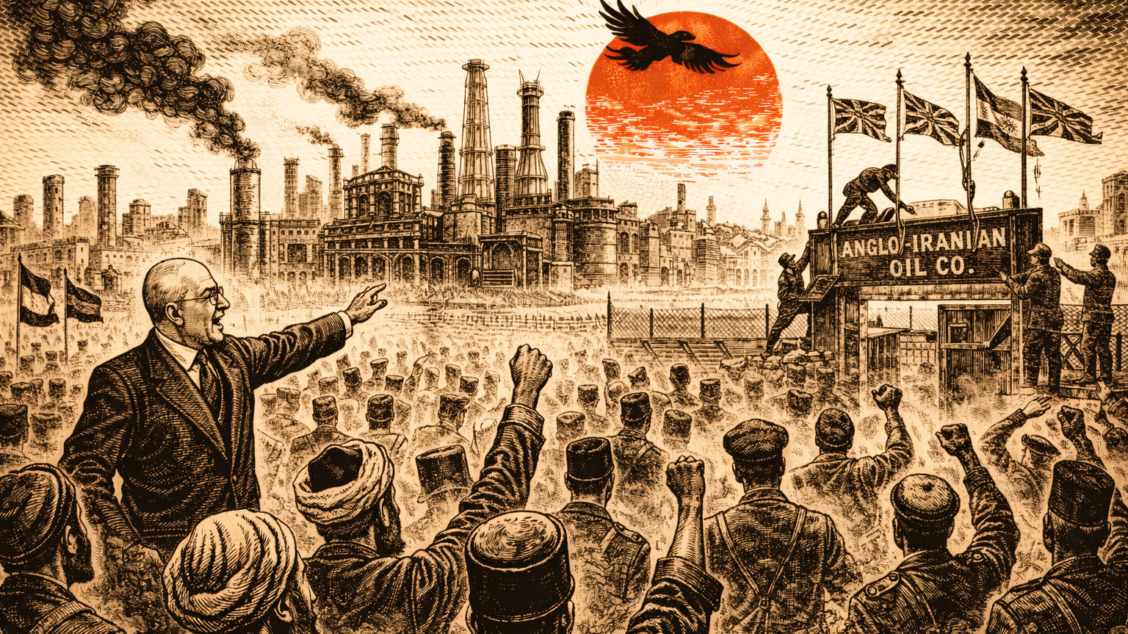
Mossadegh’s government nationalised the Anglo-Iranian Oil Company, asserting national control over strategic resources. This policy triggered economic confrontation, international tension, and internal political conflict.
Background
Long-standing concerns over foreign concessions, economic inequity, and limited sovereign control over oil revenues made nationalisation a central political demand. Mossadegh’s coalition drew on nationalist parties, professional groups, and segments of the clergy. International opposition from Britain and the United States shaped the ensuing crisis.
Legacy
The nationalisation attempt became a symbol of Iranian sovereignty and remains central to national memory. The coup influenced public attitudes toward foreign influence and shaped later revolutionary narratives.
Key Moment
Perspective & Relations
Narratives
| iran-historiography | Interprets nationalisation as a defining assertion of sovereignty. |