
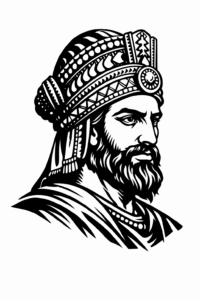
- 530 BCE — Death
Died in battle, leaving behind one of the world's largest early empires and a model of governance that influenced later Persian, Hellenistic, and Islamic administrations. - 539 BCE — Conquest of Babylon
Captured Babylon, expanding the empire and securing cultural corridors. The Cyrus Cylinder documents his policy of tolerance and local autonomy. - c. 547 BCE — Conquest of Lydia
Defeated Croesus of Lydia, expanding the empire westward and securing strategic trade corridors. - c. 550 BCE — Defeated Astyages of Media
Overthrew Median rule, reorienting political power across the Iranian plateau and consolidating Persian tribes. - c. 600 BCE — Born
Born into the Achaemenid lineage of Persis, within a regional geopolitical environment dominated by the Medes.
1. Origins & Formation
Cyrus emerged from the Achaemenid lineage of Persis, rising within a regional geopolitical environment dominated by the Medes. His consolidation of the Persian tribes created the initial power base necessary for challenging Median authority.
2. Rise to Influence
By defeating Astyages of Media, Cyrus reoriented political power across the Iranian plateau. His subsequent campaigns against Lydia and Babylon expanded the empire and secured strategic trade and cultural corridors.
3. Worldview & Drivers
Cyrus employed a pragmatic system of imperial integration, allowing conquered territories significant autonomy. Sources such as the Cyrus Cylinder indicate a policy framework focused on maintaining local governance structures and religious tolerance.
4. Exercise of Power
His rule combined military strategy with administrative innovation. Cyrus established governance systems that allowed long-distance coordination across diverse populations, laying the groundwork for Persian imperial administration.
5. Conflicts & Opponents
Cyrus confronted powers such as Media, Lydia, and Babylon. His campaigns demonstrated a balance between military force and diplomatic negotiation.
6. Achievements & Failures
His achievements include founding one of the world’s largest early empires and institutionalising practices that influenced later Persian, Hellenistic, and Islamic governance. Failures are difficult to determine due to limited contemporary sources.
7. Historical Position & Legacy
Cyrus is regarded as the architect of Persian imperial identity. His model of governance influenced both ancient and modern understandings of Iranian statecraft.