
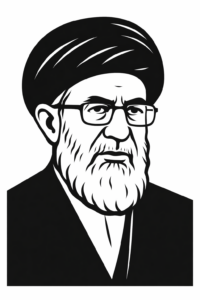
- 1939-07-17 — Born
Born in Mashhad, Iran. - 1981 — President of Iran
Served as President until 1989. - 1989-06-04 — Supreme Leader
Elevated to Supreme Leader after Khomeini's death. - 2022 — Mahsa Amini protests
Oversaw the state's response to the Woman, Life, Freedom uprising. - 2025-06 — Twelve-Day War
Israel and the US waged a twelve-day air war on Iran; ceasefire followed. - 2025-12 — Protest wave
Mass protests over economic collapse and repression spread across Iran. - 2026-02-28 — Killed
Killed in US-Israeli strikes on the leadership compound in Tehran.
1. Origins & Formation
Born in Mashhad into a clerical family, Khamenei was shaped by revolutionary activism under the Shah. His imprisonment and exile before 1979 strengthened a worldview built on resistance, religious legitimacy, and distrust of foreign influence.
2. Rise to Influence
After the 1979 Revolution, Khamenei held roles within the IRGC leadership, Friday prayer establishment, and ultimately became President (1981-1989). Following the death of Ayatollah Khomeini, he was elevated to Supreme Leader despite not being a marja. He consolidated his authority by aligning with the IRGC and restructuring state institutions around the Leader’s Office.
3. Worldview & Inner Logic
Fear driver: Foreign penetration, regime collapse, cultural deviation. Ego driver: Guardian of revolutionary purity and national sovereignty. Belief driver: Absolute necessity of velayat-e faqih as political-theological anchor. Identity driver: Custodian of the revolutionary state and its transnational networks.
4. Exercise of Power
Khamenei controlled key appointments in the judiciary, military, media, and economic foundations. He oversaw strategic decisions through the Supreme National Security Council and relied heavily on IRGC structures for internal and regional projection.
5. Conflicts & Opponents
He navigated power struggles with reformist presidents, technocratic elites, clergy in Qom, and protest movements (1999, 2009, 2019, 2022, 2025-26). The presidency and the IRGC’s growing influence complicated the balance of power.
6. Achievements & Failures
Achievements: consolidation of the Supreme Leader’s institution; expansion of Iran’s regional axis through IRGC and proxy networks; survival of sanctions, wars, and protests. Failures: economic stagnation, generational alienation, deepening reliance on coercion.
7. Final Phase & Death
In June 2025, Israel and the US waged a twelve-day air war on Iran’s nuclear and missile infrastructure; Khamenei oversaw the response and the fragile ceasefire that followed. Late 2025 and early 2026 saw mass protests over economic collapse and repression. On 28 February 2026, US and Israeli strikes hit the leadership compound in Tehran; Khamenei was killed, along with senior security figures. His death marked the end of his 37-year rule and triggered a high-stakes succession process.