
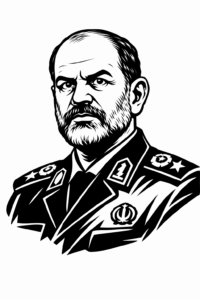
- 1958-06-27 — Born
Born. - 1979 — Joined IRGC
Joined the Islamic Revolutionary Guard Corps shortly after the 1979 Revolution, emerging as part of the first generation of commanders shaped by ideological mobilisation. - 1980s-1990s — First Quds Force Commander
Became the first official commander of the Quds Force, playing a key role in structuring Iran's regional networks in Lebanon and Afghanistan. - 2021-08-25 — Appointed Interior Minister
Appointed Interior Minister under President Raisi, giving him responsibility for protest suppression, provincial governance, and internal security forces. - 2022 — Oversaw 2022 Protests
Oversaw protest suppression during the 2022 unrest as Interior Minister.
1. Origins & Formation
Vahidi joined the IRGC shortly after the 1979 Revolution, emerging as part of the first generation of commanders shaped by ideological mobilisation and the Iran-Iraq War. His early exposure to cross-border operations informed his later role in external strategy.
2. Rise to Influence
Vahidi became the first official commander of the Quds Force (late 1980s-1990s), playing a key role in structuring Iran’s regional networks in Lebanon and Afghanistan. He later held senior defence positions and was appointed Interior Minister in 2021 under President Raisi, giving him responsibility for protest suppression, provincial governance, and internal security forces.
3. Worldview & Inner Logic
Fear driver: Internal fragmentation and foreign-backed unrest. Ego driver: Protector of revolutionary state foundations. Belief driver: Security-first governance; deterrence through strength. Identity driver: Military-political operator loyal to the Supreme Leader.
4. Exercise of Power
As Interior Minister, Vahidi oversees the national police, intelligence coordination, protest management, and crisis response. He maintains strong ties to IRGC leadership and enables the blending of military logic into civilian governance. His tenure has involved high-intensity crackdowns during demonstrations.
5. Conflicts & Opponents
Vahidi faces friction with reformist political circles, civil-society groups, and international actors who accuse him of human-rights violations. Internal elite opposition is limited due to his entrenched IRGC networks.
6. Achievements & Failures
Achievements:
- Structuring early Quds Force operations
- Strengthening internal security mechanisms
- Reinforcing coordination between Interior Ministry and IRGC
Failures:
- Domestic unrest intensified under his command
- Limited administrative reform capabilities
- International isolation due to past allegations
7. Historical Position & Legacy
Vahidi stands as one of the most influential internal-security leaders of the Islamic Republic’s second phase. His blend of military pedigree and ministerial authority makes him a pivotal figure in crisis management and protest control.