
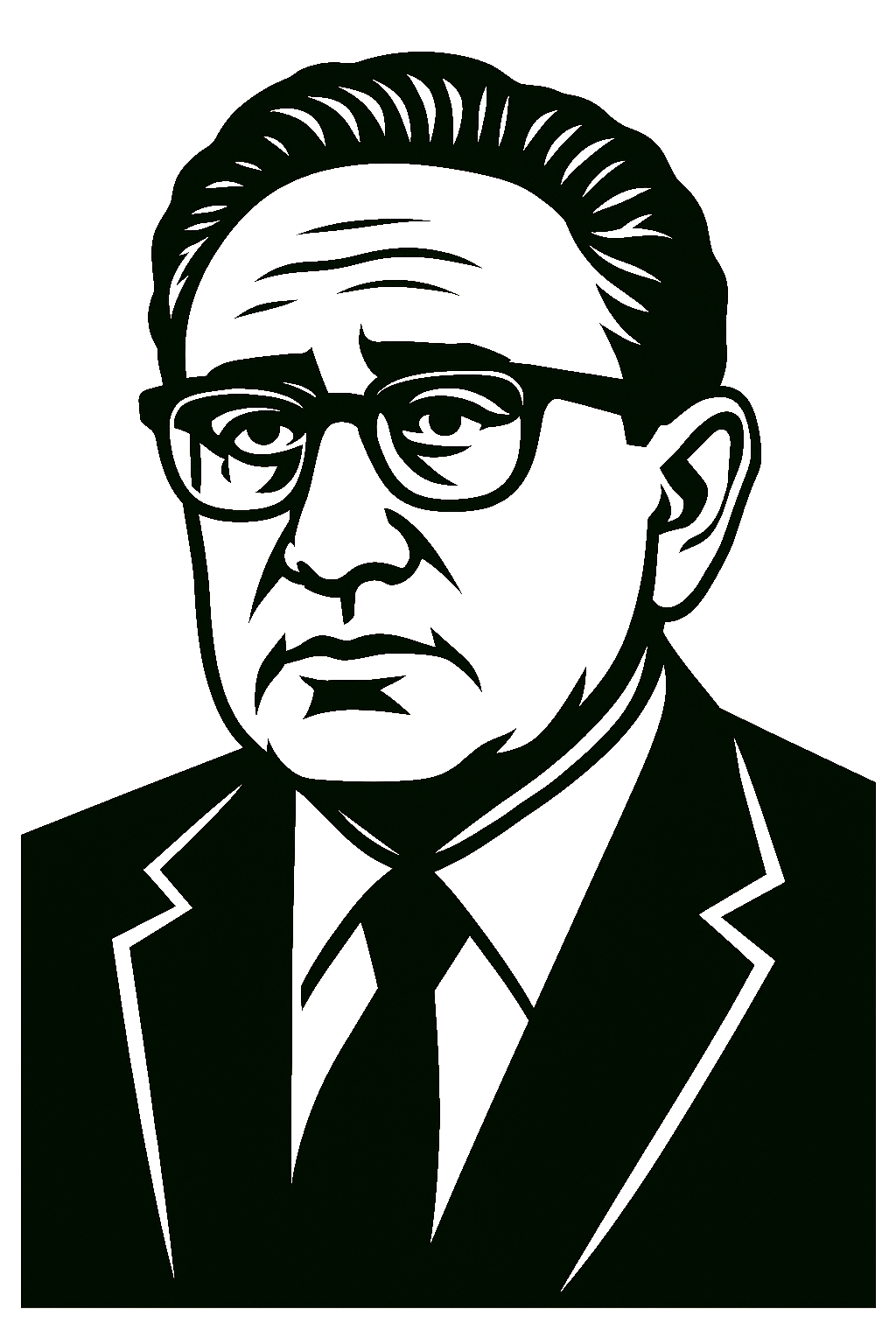
a master of backchannel diplomacy. He engineered détente with the USSR, the China
opening, and negotiated U.S. disengagement from Vietnam.
Born in Germany and fleeing Nazi persecution, Kissinger became a leading scholar of international relations before entering U.S. government service. As National Security Advisor (1969-1975) and Secretary of State (1973-1977), he exerted unmatched influence under Presidents Nixon and Ford.
Kissinger pioneered backchannel diplomacy, favoring controlled balance-of-power strategies over ideological confrontation. His shuttle diplomacy in the Middle East, détente with the Soviet Union, and breakthrough with China demonstrated his unique geopolitical acumen.
His secret trip to Beijing in 1971 laid the groundwork for Nixon’s historic 1972 visit, effectively ending China’s international isolation. He also negotiated the Paris Peace Accords (1973), aiming to secure “peace with honor” in Vietnam.
Criticized for U.S. support of authoritarian regimes in Chile, Pakistan, and elsewhere, Kissinger remains a controversial figure – equally admired for strategic foresight and condemned for realpolitik trade-offs.
Even into his 90s, he remained active in writing, diplomacy, and advising global leaders.