
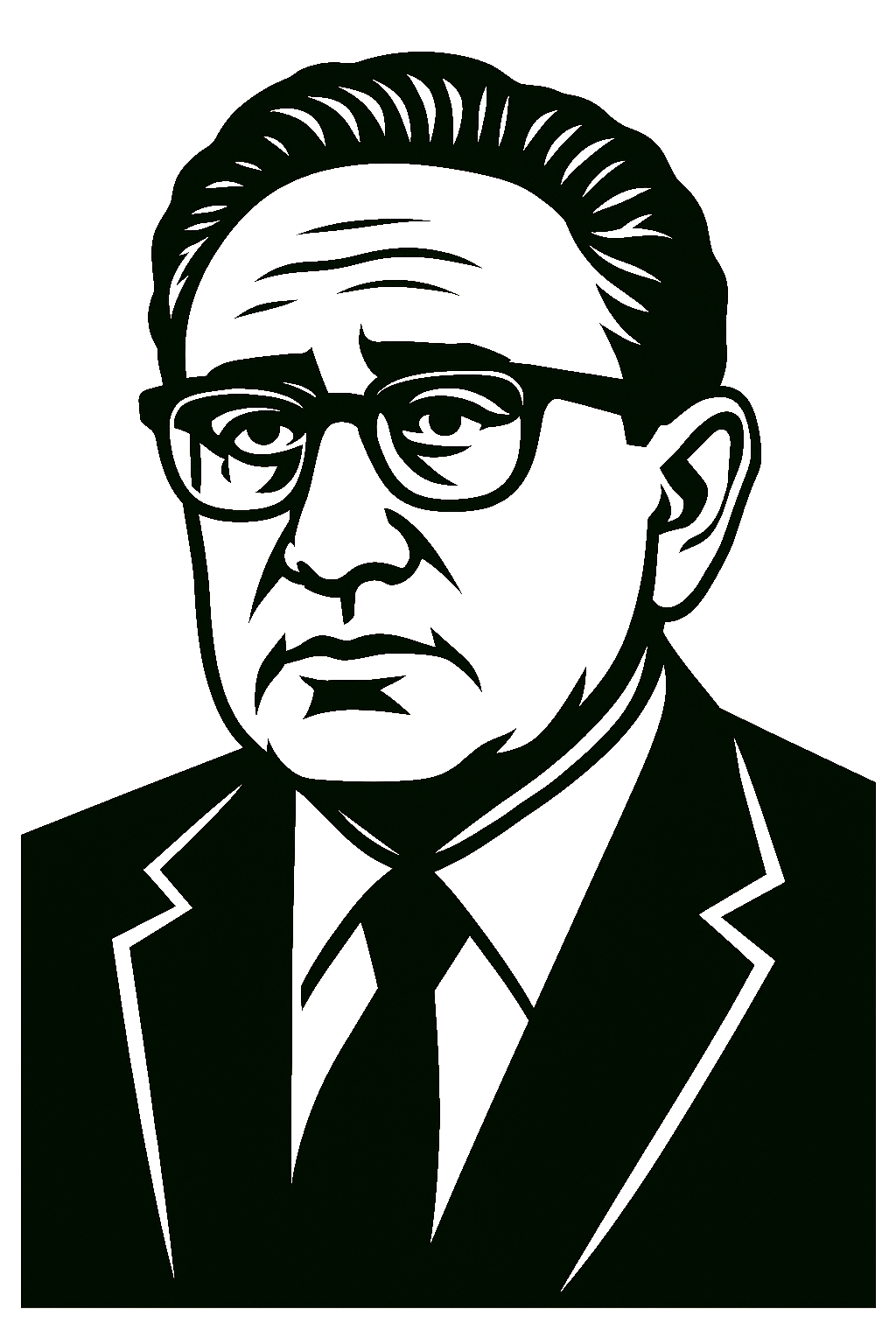
- 1923-05-27 — Born
Born Heinz Alfred Kissinger in Fürth, Bavaria, Germany. - 1938 — Emigration
Emigrated to the United States with his family to escape Nazi persecution. - 1943-06-19 — Naturalized Citizen
Became a naturalized U.S. citizen and was drafted into the U.S. Army, serving in the 84th Infantry Division during World War II. - 1950 — Education
Graduated summa cum laude from Harvard College with a Bachelor of Arts degree. - 1954 — Education
Earned a Ph.D. in political science from Harvard University and joined the faculty, serving until 1969. - 1969 — National Security Advisor
Appointed National Security Advisor by President Richard Nixon, serving until 1975. - 1971 — Key Event
Conducted secret negotiations with China, leading to President Nixon's historic visit to Beijing in 1972 and the opening of diplomatic relations. - 1973 — Award
Awarded the Nobel Peace Prize alongside Le Duc Tho for their efforts in negotiating the Paris Peace Accords, which aimed to end U.S. involvement in the Vietnam War. - 1973-09-22 — Secretary of State
Appointed U.S. Secretary of State, becoming the first person to hold both National Security Advisor and Secretary of State positions simultaneously. - 1982 — Founded
Founded Kissinger Associates, an international geopolitical consulting firm. - 2023-11-29 — Death
Passed away at his home in Connecticut at the age of 100.
scholar of international relations before entering U.S. government service. As National Security Advisor (1969-1975) and Secretary of State (1973-1977), he exerted unmatched influence under Presidents Nixon and Ford. Kissinger pioneered backchannel diplomacy, favoring controlled balance-of-power strategies over ideological confrontation. His shuttle diplomacy in the Middle East, détente with the Soviet Union, and breakthrough with China demonstrated his unique geopolitical acumen. His secret trip to Beijing in 1971 laid the groundwork for Nixon’s historic 1972 visit, effectively ending China’s international isolation. He also negotiated the Paris Peace Accords (1973), aiming to secure “peace with honor” in Vietnam. Criticized for U.S. support of authoritarian regimes in Chile, Pakistan, and elsewhere, Kissinger remains a controversial figure – equally admired for strategic foresight and condemned for realpolitik trade-offs. Even into his 90s, he remained active in writing, diplomacy, and advising global leaders. ‘