
Hamun Wetlands
Intro
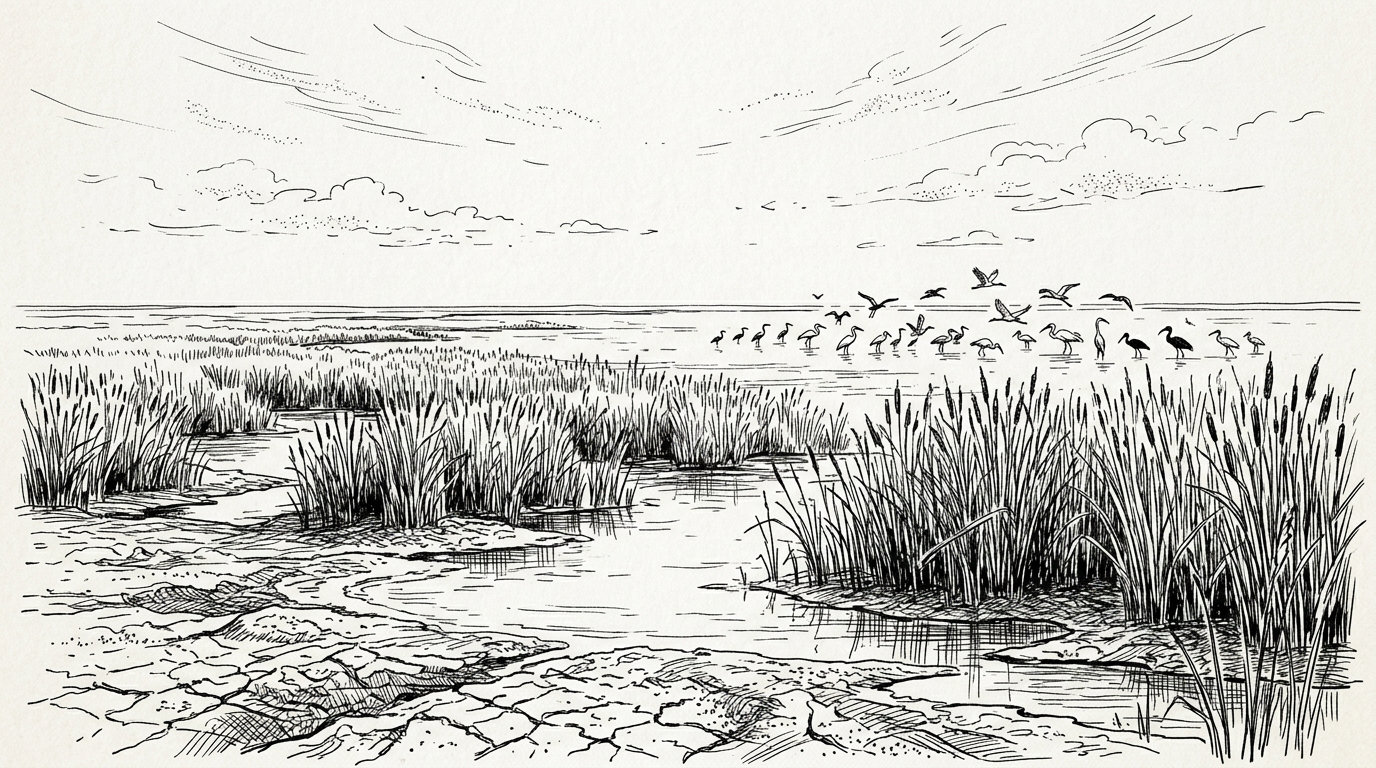
The Hamun wetlands are a system of shallow lakes in the Sistan Basin on the Iran-Afghanistan border. Historically one of the largest wetland complexes in Asia, they depend on the Helmand River flowing from Afghanistan. Prolonged drought and upstream water management have caused near-total collapse of the wetland ecosystem.
Background
History
The Hamun wetlands were among the most productive ecosystems in eastern Iran for thousands of years, supporting fishing, hunting, pastoralism, and agriculture along the shores of the shallow lakes. Ancient Sistan was one of the most densely settled regions of the Iranian world, and the Bronze Age city of Shahr-e Sukhteh on the Hamun’s western edge was one of the largest urban centres of its time. Persian, Arab, and later Mongol and Safavid rulers all recognised Sistan as a valuable agricultural and strategic region. The lakes fluctuated dramatically with the Helmand River’s seasonal flows, and periods of drought or upstream diversion caused periodic collapses of the regional economy.
Present Day
The Hamun wetlands are in a state of near-total ecological collapse. The combination of upstream dam construction in Afghanistan – particularly the Kajaki Dam and numerous smaller structures – and severe multi-year drought has reduced water flows in the Helmand to a fraction of historical levels. The lakes dried almost completely in the early 2000s and have only partially recovered in wet years. The Wind of 120 Days, a strong seasonal wind from Central Asia, drives dust storms across the dried lake beds throughout the summer, making the area around Zabol one of Iran’s most environmentally stressed regions. Rural depopulation has been extensive.
Future Outlook
Map
Articles

Waarom je deze week moet stemmen bij de verkiezingen voor het Europees Parlement
Europarlementariërs vertegenwoordigen inwoners van EU-lidstaten en adresseren belangrijke onderwerpen die te maken hebben met jouw dagelijks leven. Lees meer hoe en waarom.
Event Timeline

U.S. arrests Nicolás Maduro
U.S. forces arrest Nicolás Maduro in Caracas, removing him from power through external intervention.
British Occupation of Hong Kong Island
British forces landed on Hong Kong Island and claimed it in the name of the Crown following the First Opium War.

Treaty of Nanking Signed
The Treaty of Nanking ended the First Opium War and ceded Hong Kong Island to Britain, formalizing its colonial status.
Kowloon Peninsula Ceded to Britain
The Convention of Peking ceded the southern part of the Kowloon Peninsula to Britain, extending colonial Hong Kong beyond the island.
British Lease of New Territories
Britain signed a 99-year lease with the Qing Empire, adding the New Territories and islands to colonial Hong Kong.
Kowloon Walled City Preserved
Britain leases the New Territories for 99 years but allows China to retain nominal control of the Kowloon Walled City.
Japanese Invasion of Hong Kong
Japan invades British Hong Kong, launching a bloody battle and three years of occupation.
Return to British Control
British forces retook control of Hong Kong from Japan after Japan’s surrender in World War II.


