
Kievan Rus
ca. 880–1240
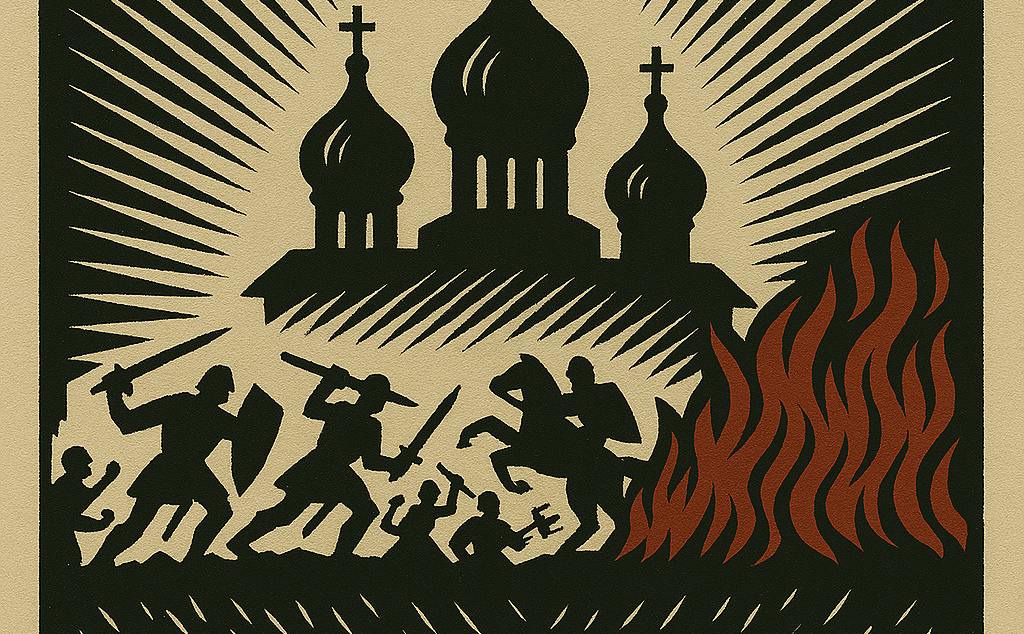
Founded by Varangian prince Oleg, the federation of Slavic tribes developed into Kievan Rus with Kyiv as its capital. Under rulers like Yaroslav the Wise, it became a powerful, literate Christian realm. Key Figures Prince Oleg (founder) Prince Volodymyr (converted to Christianity) Yaroslav the Wise Legacy Ukraine claims Kyiv as its ancient capital, rejecting Moscow’s later appropriation of Kievan identity. Modern disputes often hinge on this foundational moment.
Background
In the late 9th century, Slavic tribes across Eastern Europe were fragmented and vulnerable. Into this power vacuum entered Norse traders and warriors — the Varangians — who, under Prince Oleg of Novgorod, conquered and unified key territories along the Dnieper River. Around 882, Oleg seized Kyiv and declared it the capital of a new realm: Kievan Rus. Over the next centuries, this loose federation of principalities became the most powerful and culturally advanced state in Eastern Europe. Kievan Rus adopted Eastern Orthodox Christianity in 988 under Prince Volodymyr (Vladimir the Great), aligning itself with Byzantium rather than Rome — a decision that shaped religious and cultural identity for centuries.
Legacy
Key Moment
Perspective & Relations
Narratives
 | Ukraine | Viewed as the beginning of Ukrainian statehood and independence. |
| Russia | Seen as the origin of Russian statehood and civilization. | |
| Europe | A key moment in Christianizing Eastern Europe. Foundational to both Russian and Ukrainian national identities. |