
Bandar Imam Khomeini
Intro
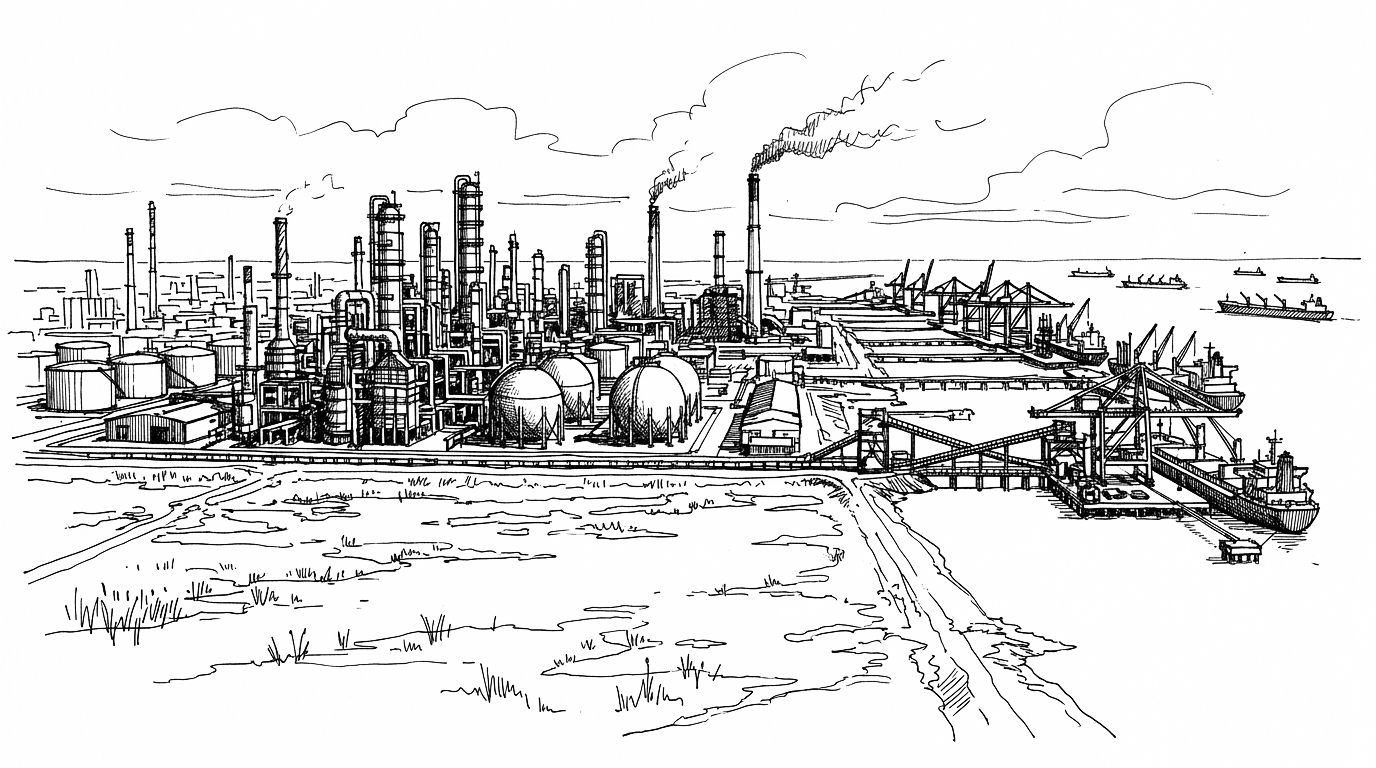
Located in Khuzestan province near the Iraqi border, Bandar Imam Khomeini anchors Iran’s largest port complex for bulk goods, grain, petrochemicals, and industrial exports. It functions as a strategic interface between inland production zones and maritime routes.
Background
Developed as part of Iran’s 20th-century oil and industrial expansion, the port was designed to handle large volumes of raw materials and energy-related cargo. Its rail and road links connect directly to Khuzestan’s oil fields and industrial centers.
History
The port was developed in the 1960s as Shahpur Port, part of Pahlavi-era ambitions to build modern deep-water infrastructure on the northern Persian Gulf coast. During the Iran-Iraq War its position near the Shatt al-Arab made it strategically exposed and it sustained damage from Iraqi attacks.
After the war, reconstruction expanded port capacity and the development of the Imam Khomeini Special Economic Zone integrated it into petrochemical export supply chains. Today the port handles a significant share of Iran’s petrochemical exports.
Present Day
Today Bandar Imam Khomeini handles a substantial share of Iran’s non-container maritime trade. Its role in energy exports and food imports makes it a critical economic asset and a high-value strategic vulnerability in any Gulf conflict.
Future Outlook
Map
Articles
No results found.
Event Timeline
No results found.


