
First Opium War
June 1839
coercive-diplomacy–imperial-intervention–trade–War
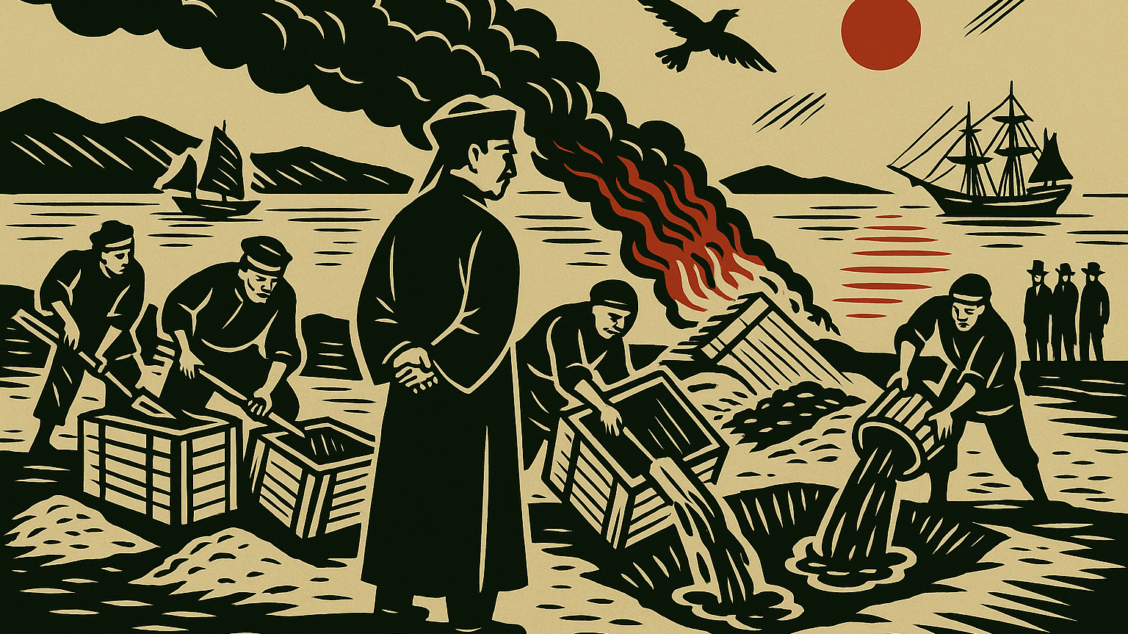
The First Opium War marked the transition from failed diplomacy to military coercion, resulting in Qing defeat and the opening of China to treaty-based Western intrusion.
Background
British traders had for decades sold opium in China to offset trade imbalances caused by tea imports. The Qing government resisted the narcotic’s social and economic impact, with Commissioner Lin Zexu taking direct action in Canton. His crackdown provoked a military response from Britain.
Legacy
– Weakened Qing sovereignty and exposed military inferiority.
– Led to the Treaty of Nanjing, ceding Hong Kong and opening treaty ports.
– Marked the beginning of China’s “Century of Humiliation.”
Key Moment
Perspective & Relations
Narratives
| United Kingdom | British traders and political leaders saw the opium trade as a necessary commercial right, with military force justified to defend national interests. | |
 | China | A turning point in Chinese sovereignty, with national memory framing the war as the beginning of semi-colonial humiliation and foreign incursion. |