
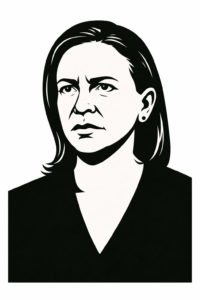
- 1967-10-07 — Born
Born in Caracas, Venezuela, into a business family. - 2002 — Political Emergence
Gains national attention during the Chávez era as a civic and political activist. - 2010 — National Assembly
Elected to the National Assembly as an opposition legislator. - 2023 — Opposition Primary Victory
Wins opposition primary by a large margin. - 2024 — Disqualification
Barred from running for president by government institutions.
María Corina Machado emerged as a political figure during the consolidation of Chavismo, positioning herself as an uncompromising critic of authoritarianism and state capture. Unlike many opposition figures, she rejected accommodation and negotiation as substitutes for institutional restoration.
Her political style combined moral clarity with organizational persistence. Machado framed Venezuelan politics not as a left-right struggle but as a conflict between democracy and systemic abuse of power. This framing resonated deeply in a society exhausted by economic collapse and repression.
Machado’s overwhelming victory in the opposition primaries demonstrated her popular legitimacy. Yet that same legitimacy triggered her exclusion. The Maduro government’s decision to disqualify her confirmed her centrality: she was not merely an opposition politician but a structural threat to regime continuity.
Rather than fragment the opposition, Machado redirected her mandate. By endorsing Edmundo González, she converted personal support into collective strategy. This decision preserved unity while reinforcing her role as the movement’s moral and strategic center.
Machado’s influence now exceeds formal office. She represents a form of leadership rooted in legitimacy rather than position. Whether Venezuela transitions or stagnates, her role marks a shift from transactional opposition politics toward long-term democratic reconstitution.