
Dasht-e Lut
Intro
Dasht-e Lut is a large salt flat in southeastern Iran, recognised as a UNESCO World Heritage Site. It is one of the hottest places on Earth with recorded surface temperatures exceeding 70°C. The desert covers approximately 51,800 square kilometres across Kerman and South Khorasan provinces.
Background
History
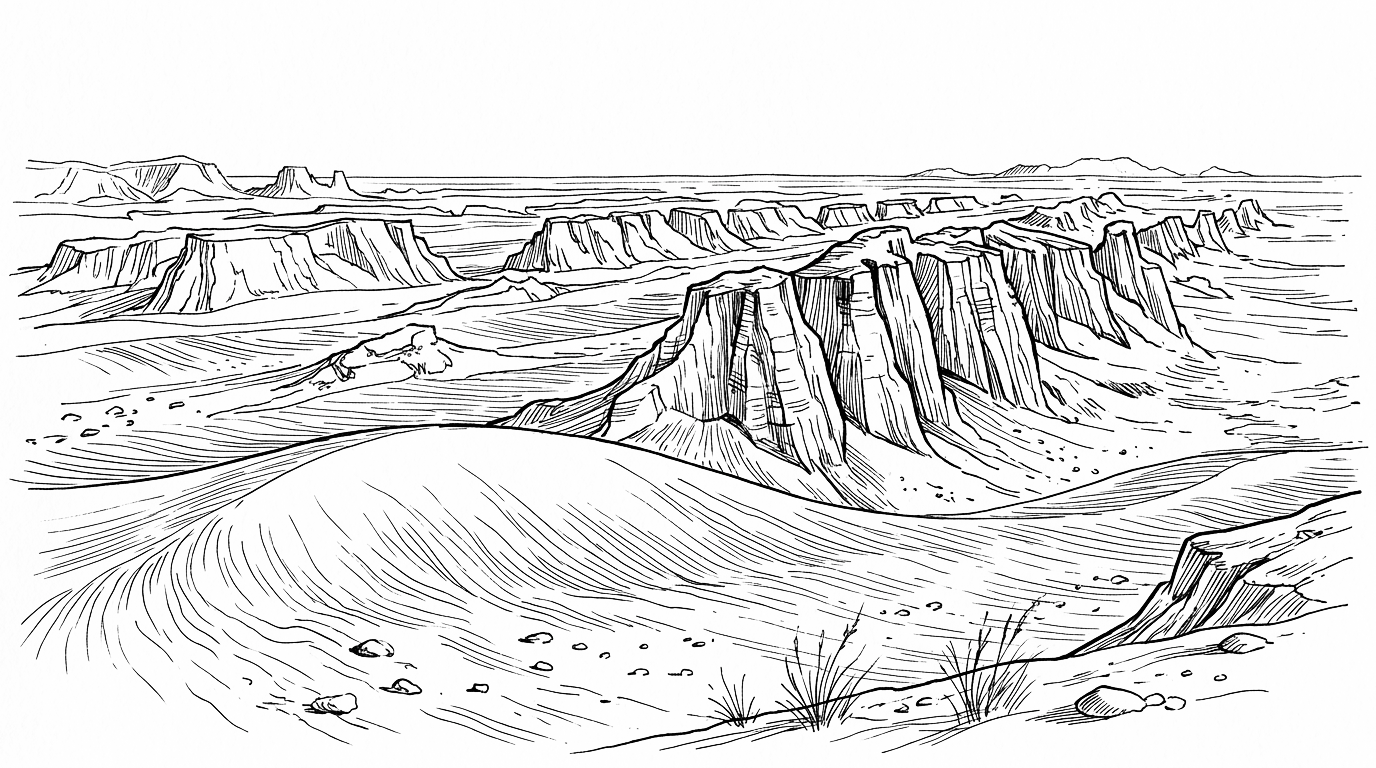
The Dasht-e Lut, known in Arabic as the Empty Quarter of Iran, has been effectively uninhabited throughout recorded history. Its extreme heat – surface temperatures have been measured at over 70 degrees Celsius in summer, among the highest ever recorded on Earth – made permanent settlement impossible. Ancient trade routes bypassed it entirely. The geological formations of the Lut, including the massive yardang fields known as the Kaluts, were shaped by millions of years of wind erosion acting on soft sedimentary rock, creating some of the most dramatic desert landforms on the planet.
Present Day
The Dasht-e Lut is a UNESCO World Heritage Site recognised for its outstanding geological and geomorphological values. It remains essentially uninhabited. Satellite thermal imaging has identified it as one of the hottest surfaces on Earth. Its extreme environment makes it useful for remote sensing calibration and astrobiological research into life at temperature extremes. The surrounding provinces of Kerman and Sistan-Baluchestan are affected by dust storms originating in the Lut’s dried salt flats.
Future Outlook
Map
Articles

Return to Babel: Language, Identity, and Belonging
How identity is filtered — not by law, but by design – and what it means to belong

Russia’s War Machine: How It Fights Without Winning
As negotiations flicker in the background of a grinding war, Russia’s ability to sustain its military effort in Ukraine depends on a fragile web of foreign supply, internal mobilization, and retrofitted Soviet stockpiles. This report examines the current state of Russia’s armed forces in Q2 2025, revealing a system stretched but still operational — and why that matters.


Don’t Bet on the Bully: Why Europe Must Stop Investing in the U.S.
As European firms like Daimler, Volkswagen, and Siemens expand their investments in the U.S., they risk tying their futures to a volatile partner. Short-term economic incentives and a temporarily favorable exchange rate obscure deeper structural risks: political instability, panic-driven corporate culture, and growing protectionism. Europe is not dependent on the U.S. — not for gas, not for markets, and certainly not for leadership. Strategic autonomy begins with saying no.

How Donald Trump Could Win the Nobel Prize for Peace
Donald Trump, the dealmaker, the disrupter — could he still become a man of peace? What would it take? Humility!


After the War: The Eurasian Covenant
“After the War: The Eurasian Covenant” is not a deal, nor a surrender — but a framework. A vision for lasting peace between Europe, Ukraine, and Russia rooted in dignity, realism, and historical awareness. As old alliances shift and global power balances evolve, this proposal outlines a European-led path forward: balancing security, rebuilding trust, and preparing for a post-hegemonic world. A beginning — before it’s too late.
Event Timeline
Collapse of the Safavid Order and Afghan Conquest of Isfahan
In 1722, Afghan forces from Kandahar captured Isfahan, ending effective Safavid rule and opening a prolonged phase of political fragmentation across Iran.


Collapse of the Soviet Union – The End of an Empire
A red flag lowered, a new world born. The collapse of the Soviet Union ended the Cold War and reshaped the global order.
Budapest Memorandum – Ukraine’s Nuclear Gamble
In 1994, Ukraine surrendered the world’s third-largest nuclear arsenal in exchange for security assurances. The Budapest Memorandum was a milestone in post-Soviet diplomacy – and later, a haunting example of broken promises.


Battle for Pokrovsk
Pokrovsk has become the central pressure point on the eastern front. Russian forces apply sustained pressure on the city’s flanks under foggy, drone-limiting conditions, while Ukraine holds a shrinking but functional logistics hub essential to the defence of Donetsk.

British Occupation of Hong Kong Island
British forces landed on Hong Kong Island and claimed it in the name of the Crown following the First Opium War.

The Maidan Revolution – Dignity and Defiance
The Maidan uprising — known in Ukraine as the **Revolution of Dignity** — erupted when President Yanukovych abandoned an EU agreement under Kremlin pressure. What began as a protest for European integration became a national revolt against corruption, repression, and foreign domination.

The Orange Revolution – Ukraine’s Peaceful Uprising
In late 2004, tens of thousands of Ukrainians filled the streets of Kyiv to protest a rigged presidential election. The Orange Revolution marked a turning point in Ukraine’s democratic identity and exposed the geopolitical tug-of-war between Russia and the West.

Warsaw Pact Formation – The Eastern Bloc Unites
In May 1955, the Soviet Union and seven Eastern European states signed a mutual defense treaty in Warsaw, creating the Warsaw Pact. It solidified the division of Europe and institutionalized the Soviet bloc in direct opposition to NATO.


The Sumy Attack: Beyond Violence, Towards Understanding the Message
On Palm Sunday, Russia attacked the Ukrainian city of Sumy in an act that went beyond war — a message of hatred that struck civilians and sacred meaning alike.