
Dasht-e Lut
Intro
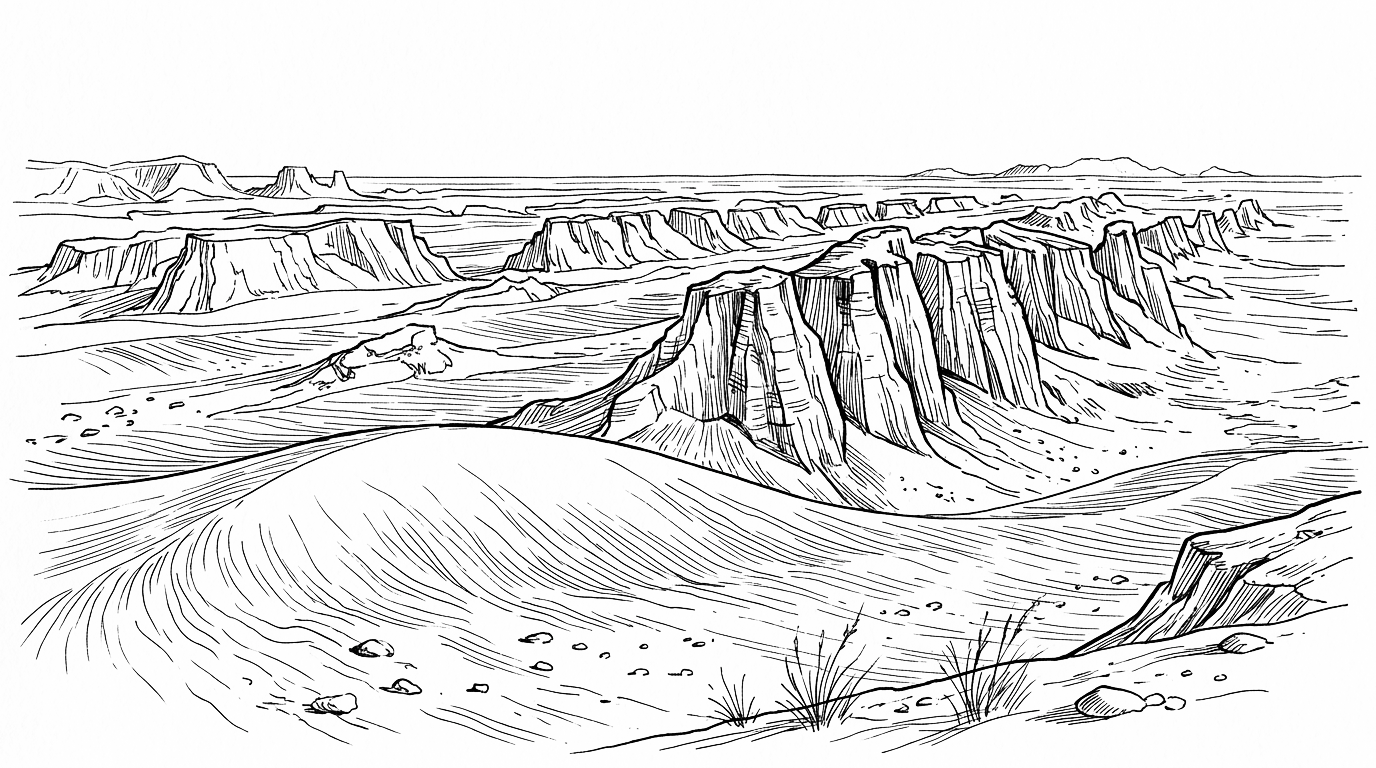
Dasht-e Lut is a large salt flat in southeastern Iran, recognised as a UNESCO World Heritage Site. It is one of the hottest places on Earth with recorded surface temperatures exceeding 70°C. The desert covers approximately 51,800 square kilometres across Kerman and South Khorasan provinces.
Background
History
The Dasht-e Lut, known in Arabic as the Empty Quarter of Iran, has been effectively uninhabited throughout recorded history. Its extreme heat – surface temperatures have been measured at over 70 degrees Celsius in summer, among the highest ever recorded on Earth – made permanent settlement impossible. Ancient trade routes bypassed it entirely. The geological formations of the Lut, including the massive yardang fields known as the Kaluts, were shaped by millions of years of wind erosion acting on soft sedimentary rock, creating some of the most dramatic desert landforms on the planet.
Present Day
The Dasht-e Lut is a UNESCO World Heritage Site recognised for its outstanding geological and geomorphological values. It remains essentially uninhabited. Satellite thermal imaging has identified it as one of the hottest surfaces on Earth. Its extreme environment makes it useful for remote sensing calibration and astrobiological research into life at temperature extremes. The surrounding provinces of Kerman and Sistan-Baluchestan are affected by dust storms originating in the Lut’s dried salt flats.
Future Outlook
Map
Articles

Why Ukraine Cannot Lose This War
And why Russia, in a deeper sense, already did

24 Hours in Tbilisi and Mtshketa
Citadel views, sulfur steam, silent prayers — and a capital caught between memory and movement.

The Geographical Pivot of Constraints
How supply chains and constraint, will shape the global struggle

Events that led to the war in Ukraine – a timeline
A 1.000 Years Struggle for An Autonomous National Identity.

Picturing the Past – Postponed Peace in Transnistria
A view inside, in 2010. It’s mainly Smirnov, Sheriff and Medvedev that you see

24 Hours in Vilnius
Baroque echoes, Jewish memory, Soviet scars — and a city that stands without spectacle.

The Baltic’s Burden
What a Nation Remembers in the Morning.

Empire Logic: How Russia Uses Borders, Identity, and Delay
Russia does not need to occupy a country to control it. It only needs to prevent resolution. From Transnistria to Crimea, from narrative warfare to financial systems, Empire Logic shows how modern power is held — not through conquest, but through structural denial.
Event Timeline

Polish-Lithuanian Rule over Ukraine
Before Moscow, there was Lublin. The Polish–Lithuanian Commonwealth laid the groundwork for Western Ukrainian identity — and for centuries of contested rule.


