
Historical State, Europe
Date: 1654
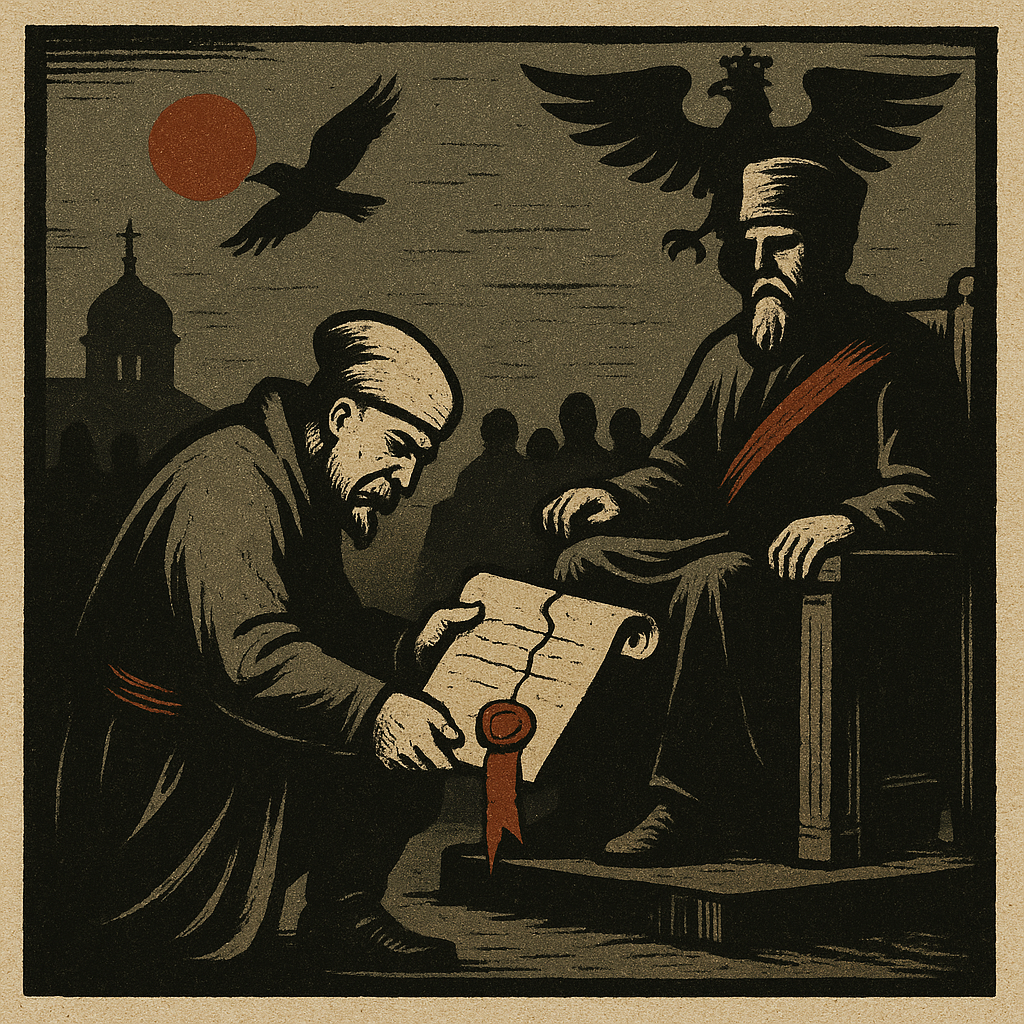
The Pereyaslav Agreement between the Cossack Hetmanate and Tsarist Russia marked the beginning of Ukraine’s alignment with Russia, which would evolve into centuries of political, military, and cultural influence.
Background
In 1648, the Khmelnytsky Uprising led to the creation of a semi-independent Cossack state in Ukraine. However, the Cossacks faced ongoing pressure from the Polish-Lithuanian Commonwealth and sought an alliance with Russia to secure their autonomy. The Pereyaslav Agreement formalized this union, bringing Ukraine under the protection of the Russian Tsar.
Key Moment
In 1654, the Pereyaslav Agreement was signed, where the Cossack leader, Bohdan Khmelnytsky, swore allegiance to the Russian Tsar, hoping to maintain Ukraine’s autonomy while seeking Russian protection from Poland. However, the agreement led to the gradual erosion of Ukrainian independence, as Russia began asserting more control over the region.
Legacy
While the agreement initially preserved some Ukrainian self-governance, over time it led to the Russification of Ukrainian culture and the gradual integration of the Cossack Hetmanate into the Russian Empire. The agreement is often viewed as the beginning of Ukraine’s long struggle for independence from Russia.
Narratives
Western Europe
Russia
Ukraine
References
Related
Key Figures
- Prince Oleg (founder)
- Prince Volodymyr (converted to Christianity)
- Yaroslav the Wise
Related Locations
- Countries: Belarus, Russia, Ukraine
- Cities: Kyiv
Related Timeline Items
- Khmelnytsky Uprising (1648)
- Founding of the Cossack Hetmanate (1648)
Sources & Quotes
- Zhukovskyi, Mykhailo. Ukrainian History: From the Early Beginnings to Modern Times.
- “The Pereyaslav Agreement laid the foundation for Ukraine’s entanglement with Russian power, a theme that would dominate its history for centuries.” — Historian.
Narratives
- Russian: Seen as the unification of Ukraine with Russia, marking the beginning of Ukrainian ties to the Russian state.
- Ukrainian: A moment of lost autonomy, as the agreement gradually led to Russian dominance over Ukraine.
- EU: Reflects the complex relationships in Eastern Europe, where powers sought strategic alliances to balance regional conflicts.
- US: A significant historical point in the relationship between Ukraine and Russia, which would shape future geopolitical dynamics.
- Dutch: Recognizes the ongoing tension in Eastern Europe, where states like Ukraine navigated alliances with larger powers for survival.
Categories
- History of Ukraine
- Geopolitical
Event Type
- Political