
Date: 18 March 2014
In the shadow of Ukraine’s Maidan uprising, Russian forces seized control of Crimea. What followed was a swift, illegal annexation — a violation of international norms that shattered post–Cold War assumptions and launched a new era of geopolitical confrontation.
Background
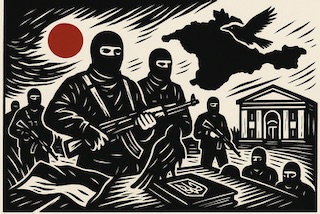
On 27 February 2014, unmarked troops — later confirmed as Russian — occupied key infrastructure in Crimea. Local authorities were replaced. Russian flags appeared overnight.
A hastily organized referendum followed, under heavy military presence. Moscow claimed overwhelming support for annexation. Kyiv, the West, and the UN called it a breach of Ukrainian sovereignty and the Budapest Memorandum (1994), in which Russia had guaranteed Ukraine’s borders in exchange for nuclear disarmament.
Despite global condemnation, Crimea was absorbed into the Russian Federation. It became both a military stronghold and a symbol of the new power game.
Key Moment
18 March 2014 – Putin signs the treaty to formally annex Crimea into the Russian Federation.
Legacy
- Marked the first armed annexation in Europe since WWII
- Undermined global trust in security assurances
- Set the stage for hybrid warfare in Donbas and beyond
Narratives
🇪🇺 Europe
An outright violation of sovereignty, international law, and the European order.
🇷🇺 Russia
A historic homecoming, correcting a “mistake” of Soviet borders. Strategic and cultural restoration.
🇺🇦 Ukraine
A national wound and international betrayal — Crimea was taken while Ukraine mourned its dead.
References & Quotes
Related
Key Figures
- Vladimir Putin, Angela Merkel, Barak Obama
Related Locations
- Russia, Ukraine, Germany, United States