
How states exploit minorities, mandates, and maps to hold ground
Transnistria: A Beginning
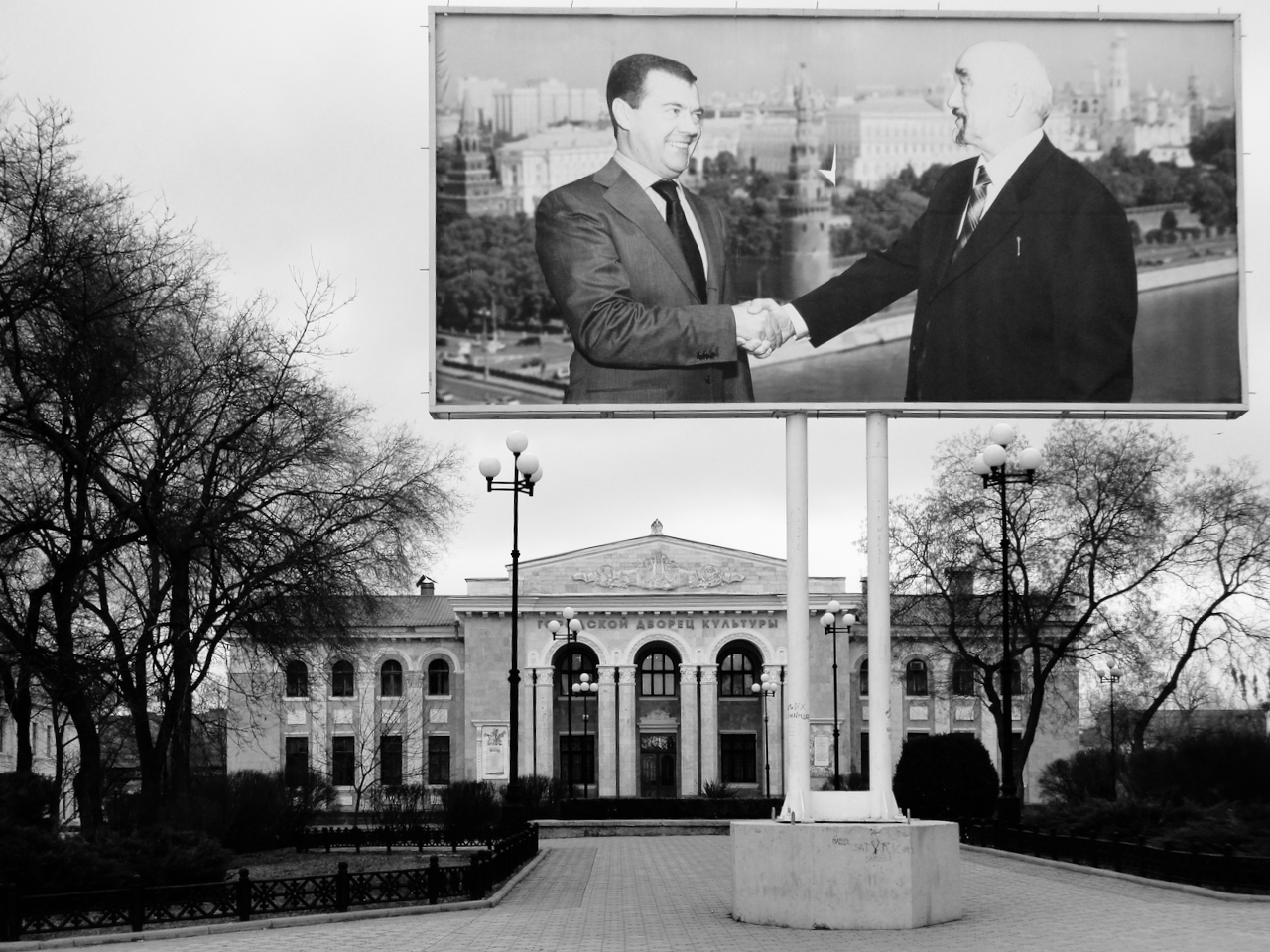
In 2010 I travelled through Transnistria. I had flown into Chișinău and planned to exit through Odessa. I knew there might be an issue — I just didn’t expect it to be this kind. When I reached the Ukrainian airport, I was pulled from the passport line. No Moldova exit stamp. I had entered Ukraine, yes — but via a place that doesn’t officially exist. And they made a remark on it.
Yet everything had functioned. The road was paved. The checkpoints stood. The peace army was present. Transnistria has no recognition — but it operates. It exists in a status quo. Moldova cannot join NATO or the EU while this unresolved territory remains. That is the method: create a problem that has no solution. Hold a zone open, not to win it, but to make others lose time.
What looked like absence was presence. That was the lesson.
Russia’s Method, Habit, Doctrine
Russia’s recent behavior is not erratic. It is structured. Since the early 2000s, and with accelerating clarity since 2014, Russian foreign and military policy has operated according to a set of internal rules — shaped by history, adapted to weakness, and expressed through calculated action. This is not nostalgia for empire. It is the reactivation of a usable method.
The doctrine emphasizes strategic depth over fixed borders, influence zones over alliances, and control by ambiguity rather than declaration. While European leaders often speak in terms of law, order, and deterrence, the Kremlin speaks — and acts — in terms of reach, denial, and narrative advantage. The result is not chaos, but a reasserted logic of power rooted in imperial habit.
Influence Over Space
In the Russian system, security is not defined by distance, but by influence over space. A friendly neighbor is not enough if it can act independently. States that refuse alignment are seen as threats by definition. This explains the enduring friction with Ukraine, Georgia, and Moldova — not because they threaten Russia militarily, but because they refuse to belong.
Where Western models define sovereignty by law and borders, the Russian doctrine defines it by control. The space between Russia and its perceived adversaries must remain flexible, influenceable, and, when necessary, contested. A fully independent Ukraine aligned with the West is not just unwanted. It is impermissible.
Narrative as Precondition
Long before troops enter a contested space, the Russian state constructs the rationale. The role of narrative is not reactive. It is preparatory. Themes like antifascism, Slavic unity, Western decadence, or “protection of compatriots” are part of a long-term vocabulary designed to justify any future move. The words come first. Then the map changes.
These narratives are repeated across channels: MFA press briefings, presidential speeches, local referendum justifications, and educational materials. Over time, they create not only legitimacy but a sense of inevitability. By the time an area is annexed or recognized, the justification has already been rehearsed into doctrine.
In time, it becomes a self-fulfilling prophecy. An accusation of nazism, corruption or Western decadence can easily be reversed-engineered afterwards.
Identity as Instrument
Russian-speaking populations abroad are not treated as diaspora — they are treated as latent assets. Across Ukraine, the Baltics, Central Asia, and the Caucasus, language and cultural affiliation are activated when geopolitically useful. Moscow presents itself not merely as a state, but as a guardian of a transnational identity.
This structure follows a recurring pattern: assert concern, offer protection, generate presence. In Crimea and Donbas, it was citizenship and media. In Transnistria and South Ossetia, peacekeeping forces and local parliaments. The people on the ground may or may not support integration — but the identity card makes them part of a broader strategic map.
Anchoring, Not Conquering
The full-scale invasion of Ukraine in 2022 was not a return to traditional warfare. It was an extension of anchoring behavior. Even as Russian forces failed to capture Kyiv or secure rapid gains, they achieved structural disruption: seizing land corridors, controlling water access, undermining energy infrastructure, and fracturing Ukraine’s reconstruction timeline.
Victory is not the only outcome the system values. Anchoring — the act of making reintegration, EU accession, or NATO alignment impossible — is often sufficient. This explains why Russia is willing to absorb enormous costs for limited territorial gain. The strategic effect lies in shaping the possible, not just in claiming ground.
And exactly this – is a frightening perspective for Ukraine. To avoid at all costs.
Toolkit: A Pattern of Control
Russia’s empire logic is not an ideology. It is a repeatable method.
| Method | Function | Example |
|---|---|---|
| Recognize | Highlight identity to justify attention or presence | Crimea, Donbas (pre-2014) |
| Protect | Frame military posture as humanitarian or civilizational | Georgia (2008), Ukraine (2022) |
| Destabilize | Use proxies, cyber, media to weaken domestic cohesion | Moldova, US elections (2016) |
| Anchor | Seize or deny critical corridors, infrastructure | Crimea land bridge, Zaporizhzhia |
| Legitimize | Use referenda or legalism to consolidate partial control | Donetsk, Luhansk votes (2022) |
| Normalize | Shift education, media, bureaucracy toward Russian state | Russian curriculum in Crimea |
| Project | Export narrative via media, diplomacy, digital proxies | RT, MFA.ru, X/Twitter amplification |
| Freeze | Sustain unresolved conflict zones | Transnistria, Abkhazia, South Ossetia |
Timeline of Applied Empire Logic (1989–2025)
| Year | Location | Russian Action | Empire Method |
|---|---|---|---|
| 1992 | Transnistria | Conflict sustained post-intervention | Freeze, Influence |
| 1994–1999 | Chechnya | Two wars, full reintegration | Suppress, Normalize |
| 2003 | Georgia | Rose Revolution rejected Russian-aligned path | Strategic setback |
| 2004 | Ukraine | Orange Revolution blocked pro-Kremlin return | Narrative collapse |
| 2006 | Ukraine/Georgia | Energy cutoffs, coercion | Leverage, Destabilize |
| 2007 | Estonia | Cyberattack after Soviet monument removal | Deter, Disrupt |
| 2007–2008 | Bulgaria | Russian espionage and political pressure | Influence, Spy |
| 2008 | Georgia | South Ossetia war, recognition of territories | Protect, Freeze |
| 2010–2024 | Hungary | Energy dependence, EU vetoes, illiberal ties | Influence, Client State |
| 2013–2014 | Ukraine | Euromaidan, fall of Yanukovych | Pretext for territorial method |
| 2014 | Crimea/Donbas | Annexation and proxy war | Anchor, Legitimize |
| 2015 | Syria | Military base, regime support | Project, Sustain |
| 2016 | US/EU | Election interference, disinfo | Destabilize |
| 2016 | Montenegro | Coup attempt by Russian-linked agents | Destabilize |
| 2020 | Belarus | Lukashenko supported post-election | Buffer maintenance |
| 2021–2023 | Bulgaria | Spy ring, energy pressure, diplomatic tension | Intelligence, Pressure |
| 2022 | Ukraine | Full invasion, referenda, occupation | Corridor denial, Normalize |
| 2023–2025 | Moldova | Gagauzia unrest, Transnistria pressure | Influence, Fragmentation |
Relational Power: Autocracy and Financial Systems
Empire logic doesn’t only move through armies or referenda. It also moves through money.
Across autocratic systems — Russia, China, Hungary, North Korea, Venezuela, Serbia, the UAE, even the United States — networks exist to protect wealth, bypass accountability, and preserve rule. These include money laundering systems, offshore vehicles, media alliances, and legal insulation.
Referring to Anne Applebaum: she calls this structure Autocracy Inc. The name is not essential, though it helps understand. The mechanism is what matters.
When power is coordinated across borders without democratic checks, when systems are bent to protect concentrated interests, and when narratives are aligned without transparency — the structure is no longer national. It is cooperative denial. That is empire logic applied across systems.
Unaccountable Power
What links Russia, Trump, Musk, Orban, and others is not allegiance. It is structure.
Power becomes personal. Decisions are made without oversight. Platforms replace institutions. Leaders act without being corrected. When Musk disables satellite coverage in wartime, when Trump cancels international aid in a single move — the results are not theoretical. Programs stop. People die. No one is held accountable.
This is not rhetoric. It is structural behavior. It operates outside process and beyond reversal. And it is no less dangerous when cloaked in democracy than when driven by Kremlin methods.
That, too, is empire logic.