
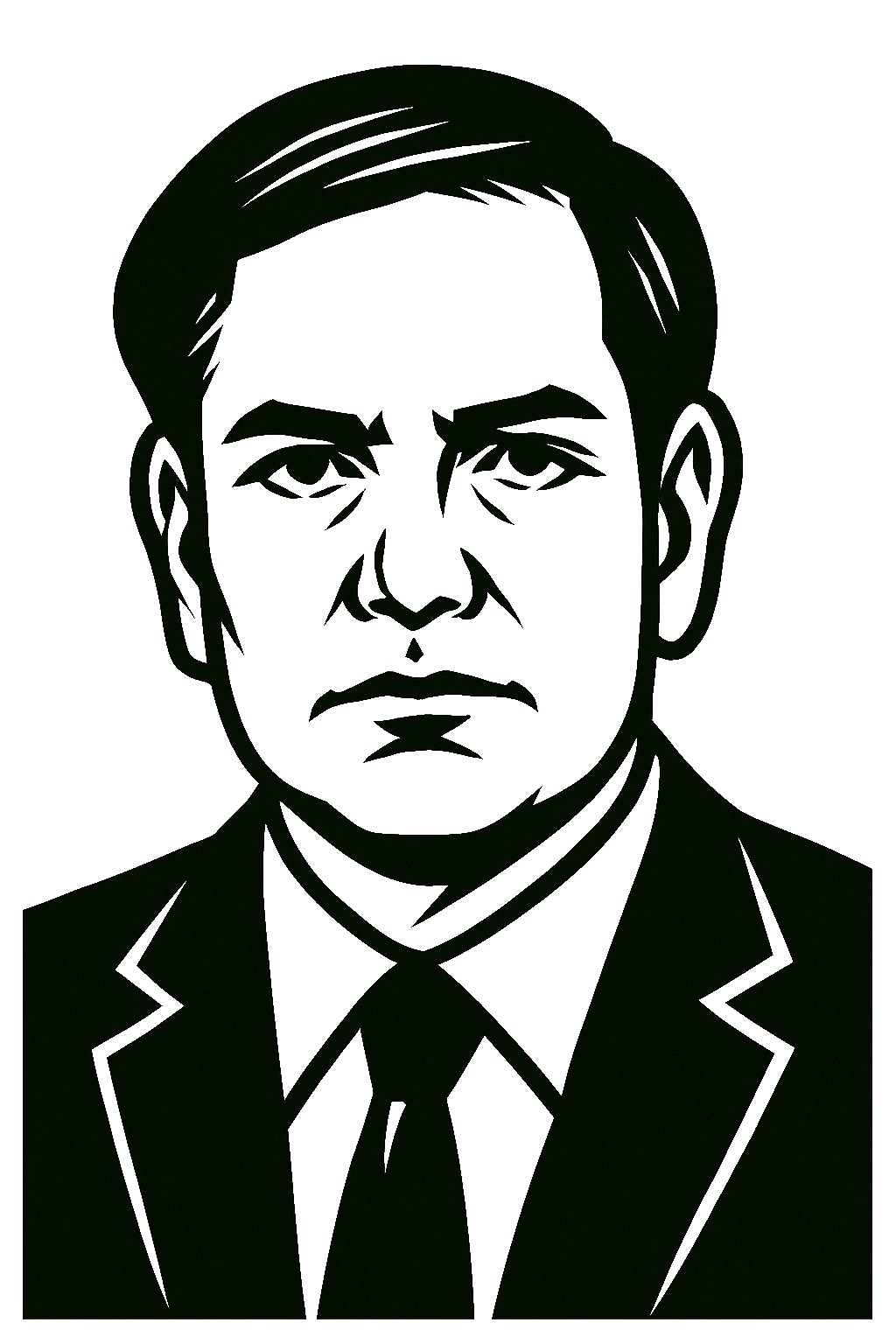
U.S. Senator from Florida and prominent Republican voice on foreign policy, China, Latin America, and democratic governance, combining moral rhetoric with hardline strategic positions.
Marco Rubio’s political identity is shaped by exile politics, Cold War memory, and American exceptionalism. Raised in a Cuban diaspora environment, he internalized a moralized view of global politics centered on freedom versus authoritarianism.
In the Senate, Rubio positioned himself as a foreign policy specialist rather than a domestic technocrat. His focus areas-China, Latin America, human rights, and authoritarian regimes-reflect a belief that U.S. power must be used to shape global norms, not merely protect interests.
Rubio blends moral language with institutional leverage. He operates through sanctions legislation, congressional pressure, and narrative framing rather than executive authority. This places him at the intersection of neoconservative interventionism and values-driven realism.
On China, Rubio advocates systemic confrontation, viewing Beijing not as a competitor but as a civilizational challenge to liberal democracy. On Latin America, his stance is shaped by regime memory, particularly toward Cuba, Venezuela, and Nicaragua.
Rubio’s influence lies less in policy execution than in agenda-setting. He helps define what the Republican Party treats as unacceptable behavior by states and leaders, anchoring foreign policy debate in ethical terms while accepting coercive tools as legitimate.