
Hamun Wetlands
Intro
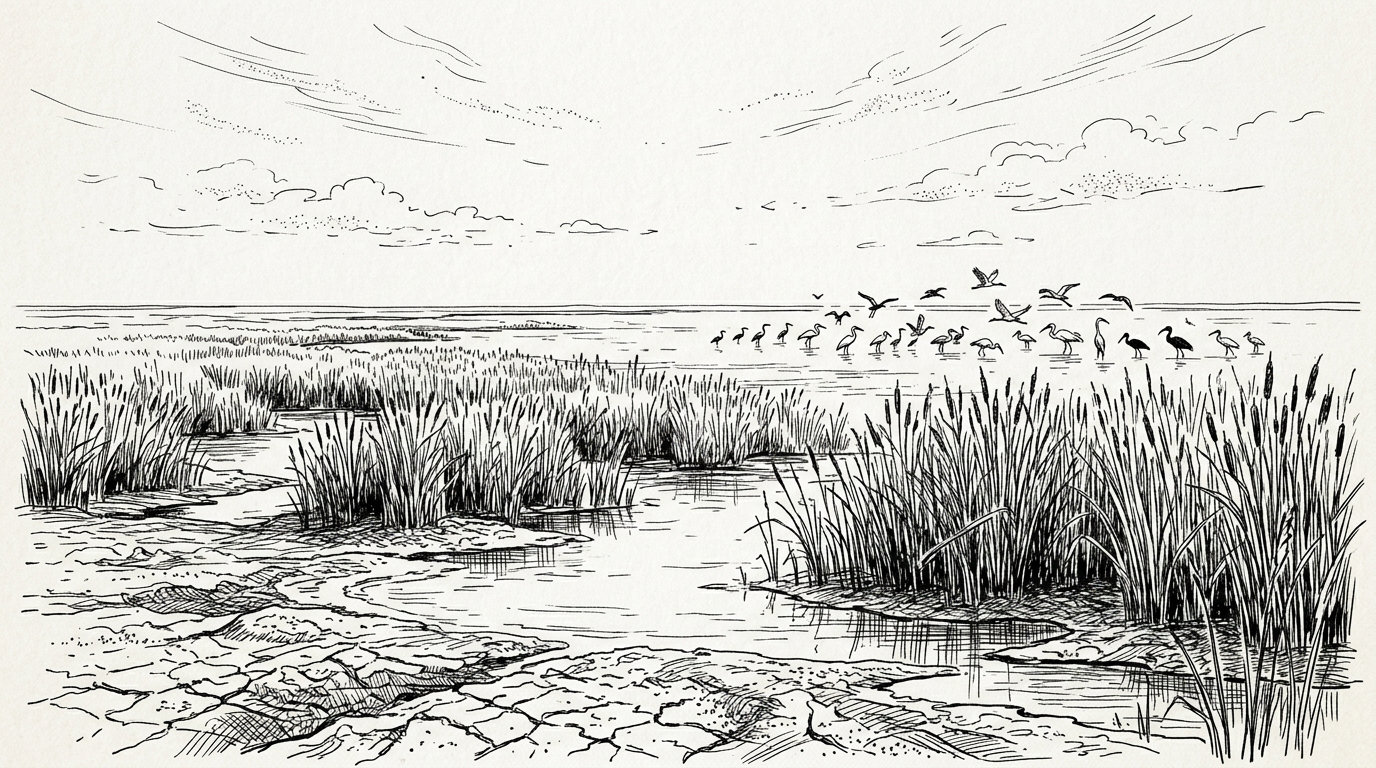
The Hamun wetlands are a system of shallow lakes in the Sistan Basin on the Iran-Afghanistan border. Historically one of the largest wetland complexes in Asia, they depend on the Helmand River flowing from Afghanistan. Prolonged drought and upstream water management have caused near-total collapse of the wetland ecosystem.
Background
History
The Hamun wetlands were among the most productive ecosystems in eastern Iran for thousands of years, supporting fishing, hunting, pastoralism, and agriculture along the shores of the shallow lakes. Ancient Sistan was one of the most densely settled regions of the Iranian world, and the Bronze Age city of Shahr-e Sukhteh on the Hamun’s western edge was one of the largest urban centres of its time. Persian, Arab, and later Mongol and Safavid rulers all recognised Sistan as a valuable agricultural and strategic region. The lakes fluctuated dramatically with the Helmand River’s seasonal flows, and periods of drought or upstream diversion caused periodic collapses of the regional economy.
Present Day
The Hamun wetlands are in a state of near-total ecological collapse. The combination of upstream dam construction in Afghanistan – particularly the Kajaki Dam and numerous smaller structures – and severe multi-year drought has reduced water flows in the Helmand to a fraction of historical levels. The lakes dried almost completely in the early 2000s and have only partially recovered in wet years. The Wind of 120 Days, a strong seasonal wind from Central Asia, drives dust storms across the dried lake beds throughout the summer, making the area around Zabol one of Iran’s most environmentally stressed regions. Rural depopulation has been extensive.
Future Outlook
Map
Articles


Event Timeline
Israeli Strikes in Tehran Killing Larijani
On the night of 16-17 March 2026, Israeli airstrikes in the Tehran area killed Ali Larijani (Secretary of the Supreme National Security Council and de facto leader) and Gholamreza Soleimani (commander of Iran’s internal Basij militia).

Nationalisation of Iranian Oil and the Mossadegh Crisis
From 1951 to 1953, Iran nationalized its oil industry under Prime Minister Mossadegh, leading to an international crisis and the eventual 1953 coup.

Iran Hostage Crisis
In 1979, Iranian students seized the U.S. Embassy in Tehran, holding 52 Americans hostage for 444 days and transforming U.S.-Iran relations.


Taiping Heavenly Kingdom (Taiping Rebellion)
The Taiping Heavenly Kingdom was a large-scale civil war and rival state that challenged Qing rule, resulting in one of the deadliest conflicts in human history and severely weakening imperial authority.
Proclamation of the People’s Republic of China
On 1 October 1949, Mao Zedong proclaimed the People’s Republic of China in Beijing, marking the establishment of Communist rule on the mainland after civil war victory.
First Five-Year Plan and Socialist Transformation
Between 1953 and 1957, China implemented its First Five-Year Plan, restructuring land, industry, and finance along socialist lines and establishing centralized economic planning.
Great Leap Forward
The Great Leap Forward was a nationwide campaign aimed at rapidly industrializing China through mass mobilization and rural collectivization, resulting in severe economic disruption and widespread famine.
Xinhai Revolution
The Xinhai Revolution overthrew the Qing Dynasty and ended over two millennia of imperial rule, leading to the establishment of the Republic of China.


Die EU muss als geopolitische Macht aufsteigen
1.000 traurige Tage des Krieges in der Ukraine. Chinas Einfluss rückt immer weiter vor. Die USA wenden sich nach innen. Es ist Zeit, in Europa zu handeln.