
Lake Urmia
Intro
Lake Urmia is a hypersaline endorheic lake in northwestern Iran. Once the largest lake in the Middle East and sixth largest saltwater lake in the world, it has shrunk by over 80 percent since the 1970s due to dam construction on its tributaries, intensive irrigation, and drought. Its collapse has caused severe dust storms and salt deposition across the northwest.
Background
History
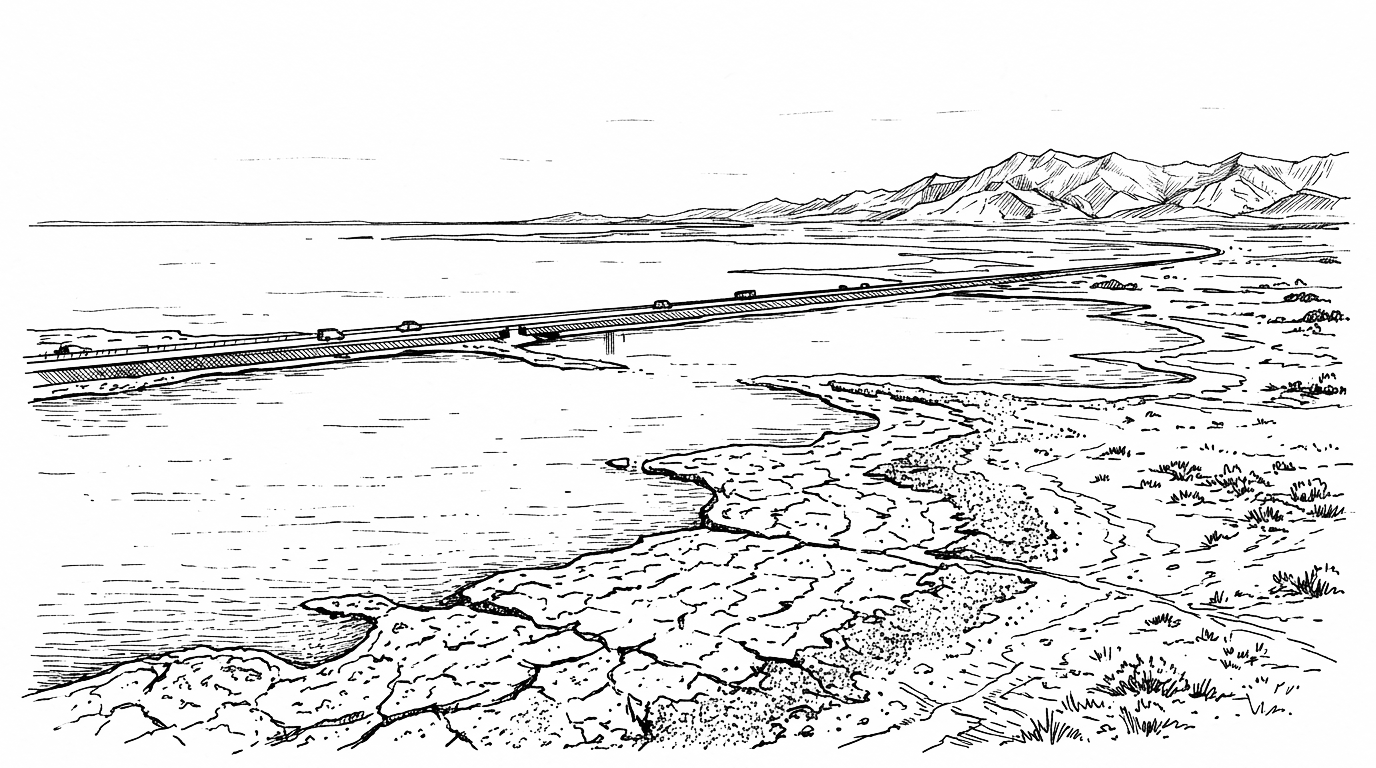
Lake Urmia was the largest lake in the Middle East and the sixth largest saltwater lake in the world at its peak extent in the 1970s. It has been known since antiquity – ancient Assyrian texts reference it, and it appears on early Islamic-era maps. The lake supported a distinctive ecosystem including brine shrimp that sustained millions of migratory flamingos and other waterbirds along the Central Asian Flyway. Its shoreline hosted thriving agriculture irrigated by rivers flowing from the surrounding mountains, and the lake’s salt was commercially harvested for centuries. The causeway dividing the lake, built in the 2000s, physically separated the lake into distinct northern and southern basins with different salinity levels.
Present Day
Lake Urmia has lost over 80 percent of its surface water since the 1970s and is in a state of severe ecological crisis. The lake’s salinity has increased to the point where only brine shrimp and salt-tolerant algae survive in most areas. The exposed salt flats on the dried lake bed generate dust storms that deposit salt across agricultural land in the northwest, reducing crop yields. The causeway has been modified with a bridge to allow some water exchange between the two basins. Government restoration programmes including water transfers from other basins have had limited impact. The lake’s collapse is widely cited as one of the world’s most visible examples of water mismanagement.
Future Outlook
Map
Articles
No results found.
Event Timeline
No results found.


