
SHORT READ |
–
It is almost 2025. There is social unrest. A migration crisis? Foreign influences? A retreat to the national is taking . Border controls are being deployed again. People want to be “in control” again. Will this bring back confidence?
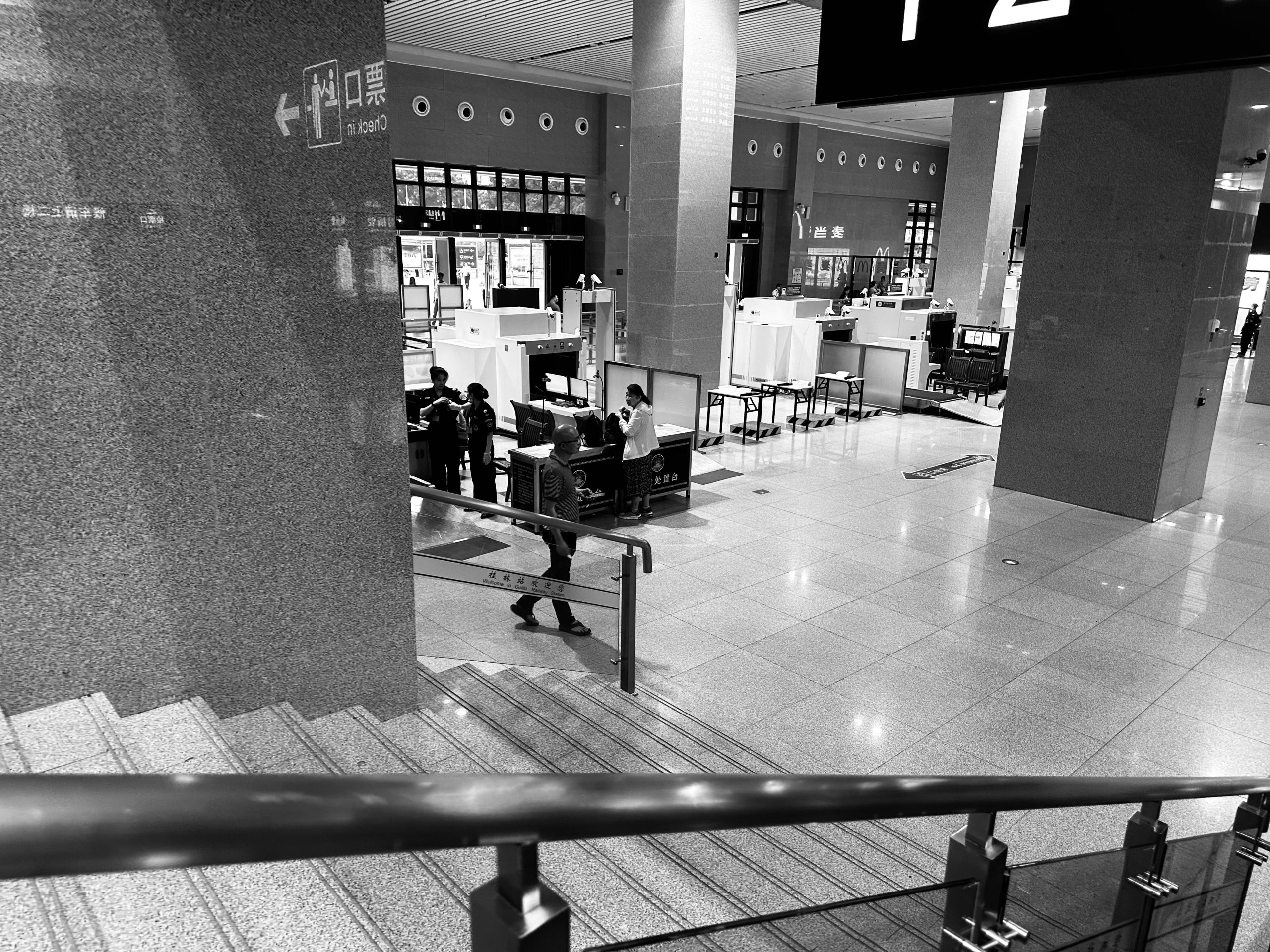
Suppose you are on the intercity to Schiphol Airport. The is fairly crowded. Your suitcase and backpack are safely in front of you on the . But you have a small problem. You desperately need to go to the toilet. However, arrival at Schiphol is still half an hour . And when getting off at the station, you still have to walk a long way before your destination. The toilet on the , at most three compartments away, is nearby …
What do you do, if you the following options:
- You get up, go to the toilet and trust that your fellow travellers will leave your stuff for what it is and keep an eye on it if necessary;
- You ask the passenger sitting next to you to watch your stuff for a while and go to the toilet, assuming he is indeed watching your stuff;
- You take your entire belongings to the , because you never know if your fellow travellers can be trusted. Who knows, maybe they agree together that nobody sees anything and yet everything is gone;
- You weary yourself and decide to out the ride. Anything is better than taking a risk.
Perhaps you would feel comfortable choosing option 1 or 2 when it comes to the train to Schiphol. But now suppose it is the train to Berlin and you are halfway through Germany, there are several passengers in the compartment, but not a single Dutchman. Or the train from Warsaw to Budapest, straight through Poland. You don’t know anyone … do you still trust your fellow man?
Trust
It is just a simple example, but the reaction to the situation described says something about trust. Trust in fellow human beings, trust in society. Social trust, in other words. So we should not underestimate the role of social trust. It says something about how a country is doing. This trust has everything to do with politics, with the economy, in short with everyday life. The factor of trust in society and politics is different in every country. It has to do with culture and origin; with history, with the political situation. Whenever I , I always ask the above ‘train question’. In Scandinavia, the Netherlands, Germany and Belgium, people tend to choose option 1 or 2, so trust is relatively high there. A Moldovan or Russian goes for option 3 or 4 and has no trust whatsoever in his fellow traveller. Without further elaborations, we can say that, on average, for the above: a relatively high level of trust in Western Europe, low trust in Eastern Europe and the Balkans.
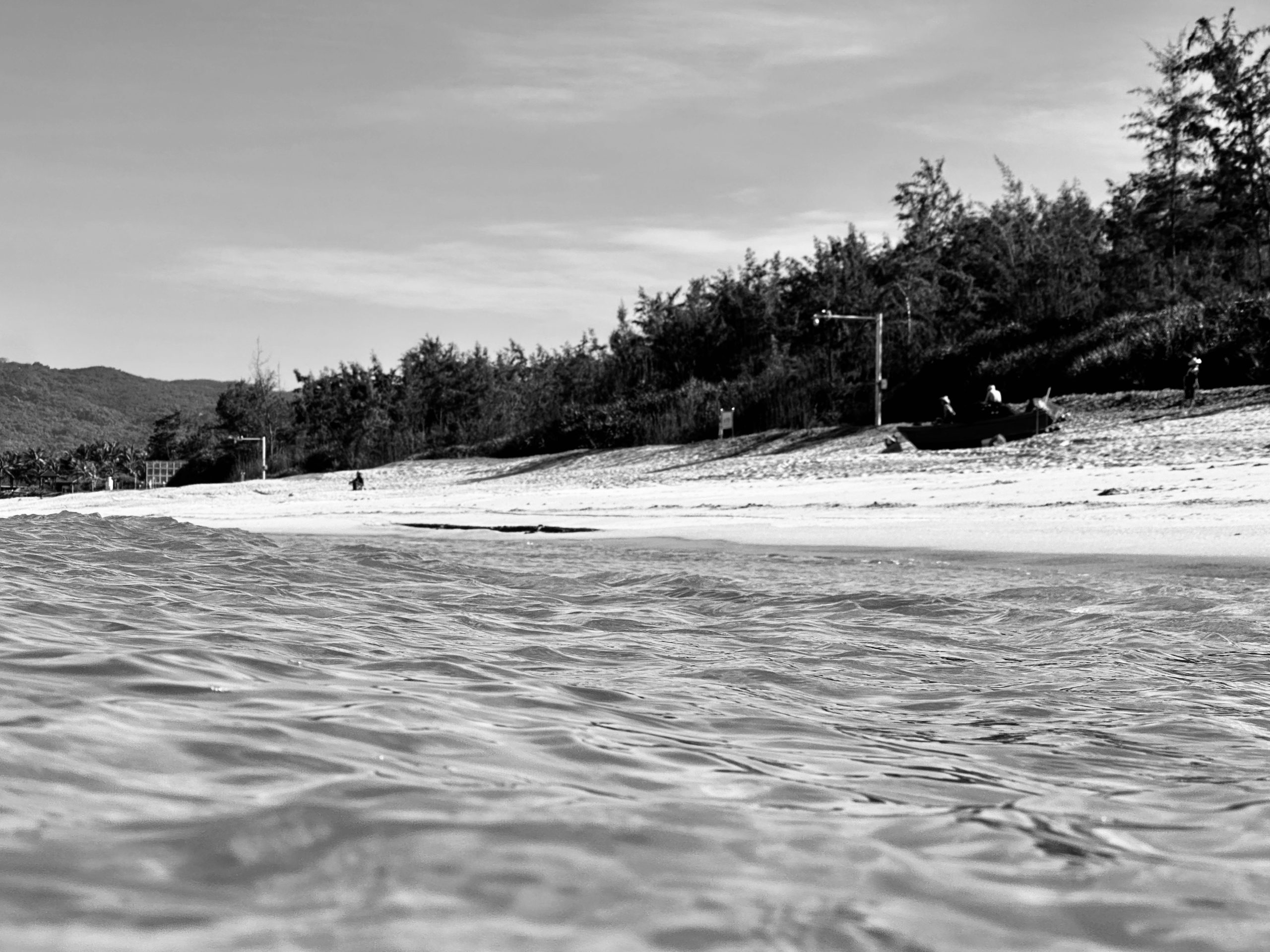
An interesting exception is China: the country falls in the low trust category, but since there are cameras everywhere – in trains, public spaces, on beaches, etc., you can feel free to put your iPhone on your bath towel while you go swimming in the sea. In China, social control has been successfully introduced. So in a control society, you have to take your measurements in a different way.
Power Distance
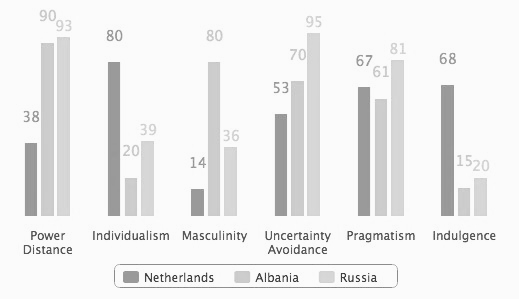
Geert Hofstede, former professor of Anthropology and International Management at Maastricht University, has developed a theory on cultural dimensions. One such dimension is uncertainty avoidance and represents the degree of trust:
‘The dimension Uncertainty Avoidance has to do with the way that a society deals with the fact that the future can never be known: should we try to control the future or just let it happen?’1
In other words, how does society deal with the fact that the future cannot predicted? Do we try to control the future or do we let it happen? Russia and China have high levels of control, while the Netherlands has low. Another dimension power distance paints an inverse picture for these countries.
Power distance indicates the extent to which equality exists between people with little power and people with a lot of power. The greater the power distance, the less equality exists in a society. Countries that score high here are mostly countries with authoritarian regimes. Low scoring, on the other hand, are countries with a democracy. A democracy stands for more equality.
The social convention
Trust in society and politics (trust in society) has philosophers since the Middle Ages. Thomas Hobbes (1588-1697), in his book Leviathan wondered why people cannot work together like ants and bees. These do not compete, but cooperate. Their unanimity is a natural one, in humans an artificial one.2 He sees only one way to establish a community, which is to appoint a supreme power that is sovereign. Even if despotism is involved, it is better than anarchy. Hobbes’ philosophy has a great power distance.
In contrast, John Locke (1632-1704) believes that government is the outcome of an agreement in the form of a social treaty made between citizens and government. The government has to some extent the right to demand obedience, but citizens have the right to oppose this when the government does not comply with the agreement. An agreement comes about by choice of the community.3 This is a more democratic representation, even though in Locke’s time women and the underemployed did not count, however. What matters is that the government is part of the agreement – it is therefore not sovereign. In this case, the government is partly responsible for maintaining the social contract. Both parties benefit.
Jean-Jacques Rousseau (1712-1778) advocated democracy in his book Du contrat social ou principes du droit politique (translated in Dutch as Het maatschappelijk verdrag). This book was the inspiration for the French Revolution. At the same time, his definition of democracy can be interpreted as ‘the theory of the general will’.4
Based on the theories of Locke and Rousseau, in the case of a democratic system, there is a social convention.5 According to this concept, citizens elect their government, which enacts laws; laws that turn should be good for citizens. Society and politics are thus linked. Of course, care must be taken not to create a ‘tyranny of the majority’, as that can lead to a totalitarian regime 6.
Separation of Powers
The foundation of any functioning democracy is not just elections — but structure. Montesquieu’s model of separation of powers — legislative, executive, and judicial — was never meant to produce speed or unity. It was designed to produce resilience through tension. Each power was meant to limit the others. Law would tame the ruler. The ruler would enact law. The courts would protect the line between them.
Over time, many have spoken of a “fourth power”: the media. But without independence, without depth, it risks becoming not a check — but an echo. Journalism that chases polls, speaks in slogans, or aligns itself to parties becomes just another branch of agitation. In a political system increasingly shaped by short-term cycles and campaign optics, we need journalism that restores the balance — not by reinforcing power, but by remembering what it’s for.
The question today is not whether these powers exist — but whether they still restrain each other, or simply mirror the mood of the moment.
Totalitarian mindsets
How you view political philosophy depends very much on the view of man from which you look7. Is that “man is his fellow man to a wolf” (Hobbes) and must curbed by strong rules/leaders. Or more: Man does both good and evil things and needs to be “guided/facilitated” to do more good things (along the lines of Rousseau, Bregman, “most people are virtuous”).
It is tempting to argue that political philosophy leads to dictatorship and oppression. Because it inspired, for example, the regimes of the Soviet Union and Hitler Germany, through Prussian autocracy8. But that does not do justice to the intention of the author who thought about ‘the good society’ in his time and context.
It is always watchful when a regime refers to an inspiration, as in many cases it is interpreted and applied as it sees fit. There are more examples in this line of thinking9:
- via Hume to authoritarian leadership (dictator / one )
- via Rousseau to utilitarianism of Jeremy Bentham, John Stuart Mill to “power of the majority” (excluding minorities)
- via Rousseau to Hegel to aristocracy or autocracy (totalitarian regime emerged from a democracy), or via Hegel – Marx to aristocracy or oligarchy (the communist becomes capitalist/oligarch)
- via Ratzel, Kjellén, Haushofer the geopolitical line of thinking of Lebensraum (social Darwinism, countries/nations as bodies that grow or die and thus conquering neighbouring countries is a necessity)
No doubt there are more lines to be drawn from concept to corrupt, so it remains paying attention from what ground and context certain thought emerges.
It would be an interesting experiment in this context (if it were not so deadly scary), to analyse the period 2030-2034 with President Elon Musk as America’s major shareholder10. It is unprecedented in recent history for big business, business, government and regulation, media and imaging to be in the hands of one person in this way.
Government and trust
Based on the idea of a social convention, the role of the government is very important in achieving its objectives. How does the government go about this? Past and present examples show that in a totalitarian regime, control is high and trust in society is low. The communist regime in Russia can be placed under Rousseau’s theory of the General Will. In it, citizens are completely dependent on the government. Everything and everyone was controlled. Nobody trusted his neighbor any more, who might have worked for the KGB (the secret service).
Still this undermining influence is felt in Eastern European countries. The former communists are today’s capitalists – and so, in effect, they are still in power. There is a lot of corruption and little transparency. This results in low trust in society. Countries like Iran and North Korea have authoritarian regimes, a government that is, as Locke calls it, above the social convention and unaccountable for its behavior. Again, there is low trust in society. When there is no trust, it makes mutual cooperation difficult. After all, everyone is self-reliant and the government is also self-reliant. At the same time, we can say that when there is low trust, such a country is not doing well, or is doing much less well, socially and economically.11 After all, when trust is high, the speed goes of processes (through well-run cooperation) up. When trust is low, the process is slowed down by the need for all kinds of checks and controls.
The border crossings
Have you ever stood in front of a border crossing between, say, Romania and Moldova? The wait here can be hours – it is, after all, the EU’s external border. You would expect Moldovans to be the most annoying. But nothing could be further from the truth. The customs officials vie for who can exercise the most power, carry out the best checks. In our experience, Moldova is far away from the Netherlands. But we have to realize that some twenty-five years ago, this happened just as much on the border between the Netherlands and Germany. We had a time when we thought it could also be done differently and better. Cooperation and joint border controls on the external borders of the Schengen area. Free movement of people and goods within those borders. No more long queues, an example of high trust.
These days, we know better. After the 9/11 attacks, people were so enormously shocked that all airports pretty much went potty. We should check much more, it was felt. With dire consequences. For a simple flight from Schiphol Airport to London (flight time of less than an hour), you have to set aside almost half a day, especially for customs checks. A typical example of low trust.
When the borders close again soon – because imagine an asylum seeker being overlooked. What benefits will that bring. And what will you notice? Perhaps longer delivery times on international shipments. Price increases for imported goods. And will we be queuing up for our holiday destinations again12.
By the way, with the above examples, I am not giving any substantive approval or disapproval. It is purely about process. We can therefore say that the greater the trust in society, the greater the efficiency of that society. The same applies the other way round, of course. Less trust, less cooperation, less efficiency. It is sometimes said: ‘Trust is good, but control is better …’ I dare say argue that the opposite is true. ‘Control is good, but trust is better…’ You had to know how painful it is to not dare to go to the toilet on the train …
Footnotes
- The Hofstede Centre: https://geert-hofstede.com/ ↩
- Thomas Hobbes, Leviathan (Amsterdam 1995), p. 174 ↩
- Bertrand Russell, Geschiedenis der Westerse Filosofie (Katwijk 1984), p. 568 ↩
- He describes the General Will as ‘Every citizen places his person and forces with those of others under the supreme guidance of the general will, and as a corporation we accept each member as an inseparable part of the whole.’ Jean-Jacques Rousseau, The Social Contract, the social compact ↩
- The Dutch Constitution for example, does not incorporate the principle of popular sovereignty ↩
- This derived line of thought can also include the utilitarianism (contribution to general utility) of thinkers like Bentham, Mill et al, the geopolitical philosophy of Kjellén and Haushofer, or the economic-social line of Marx/Engels. ↩
- As a rule, your view of man is (partly) shaped by the subculture or tradition in which you grow up and adjusted or confirmed by study or experience. Synonyms for subculture are “pillar” or “bubble”. ↩
- Russell, Bertrand (1948). History of western philosophy (7th ed.). Servire B.V. Katwijk. P. 630 makes this link via Rousseau – Hegel quite emphatically. ↩
- Please note that such lines of thinking are “short cuts” and serve as examples, not truths. ↩
- Since Elon Musk is not a “natural born citizen of America”, he cannot become president. Unless the constitution is amended. ↩
- Economically, because of natural resources like oil, a country like Saudi Arabia is an exception. ↩
- Like the trucks carrying your new clothes bought from Amazon or Zalando, for example. Of course, you do expect next-day delivery, as the House of Representatives recently voted on that. PostNL should use old-fashioned postal times. ↩
Further Reading
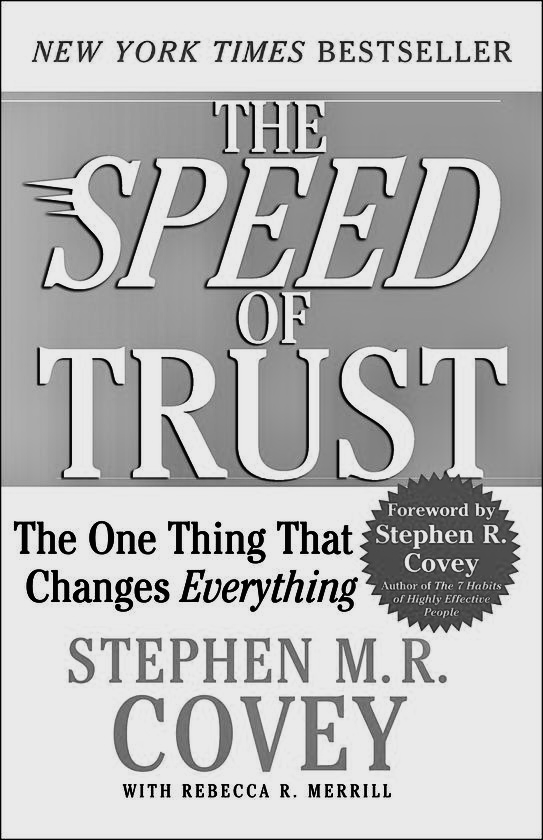
| The Speed of Trust Stephen M.R. Covey In this book, Covey explains how trust is a key catalyst for personal and organizational success in the 21st century. It is a guide for business people that shows how to build trust while overcoming bureaucratic obstacles. Link: Bol.com – The Speed of Trust |
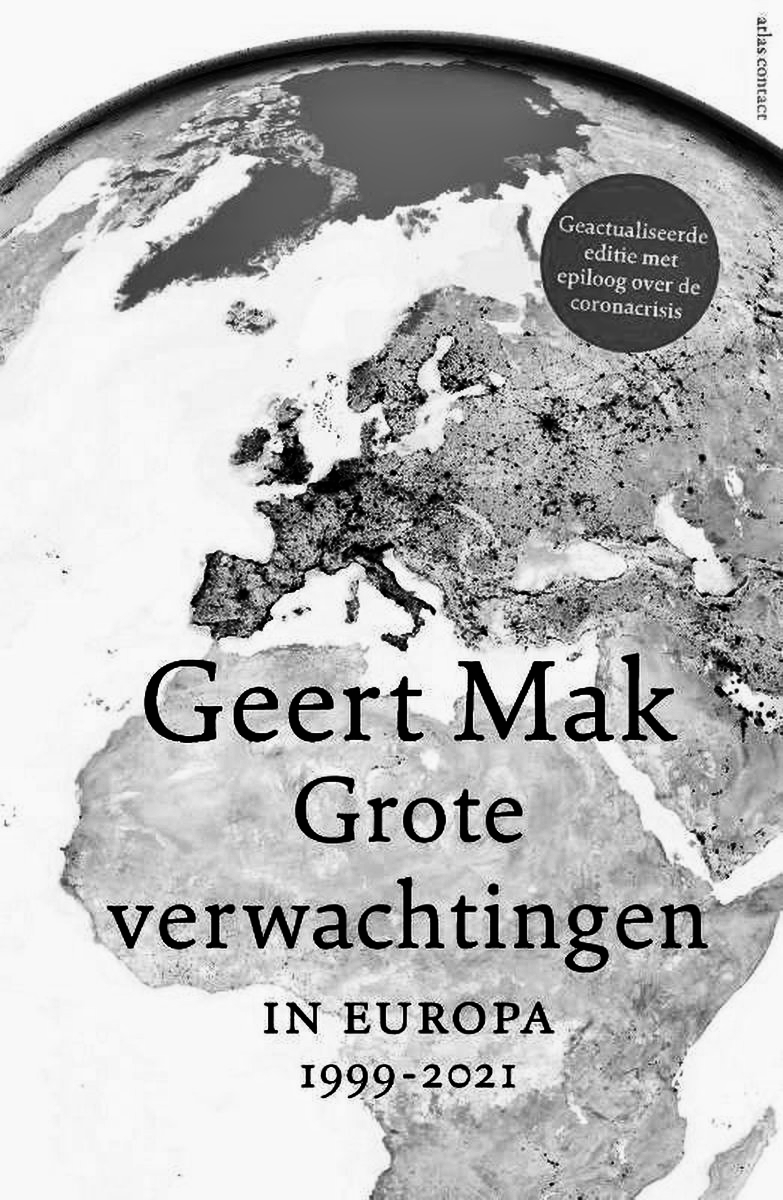
| Grote verwachtingen – Geert Mak In Great Expectations, Geert Mak analyses the past 20 years, with the theme of trust being given ample coverage on topics such as the financial crisis, the European migration crisis and the Brexit. Link: Bol.com – Grote verwachtingen |
Voorzie ons van feedback of commentaar.