
Lake Urmia
Intro
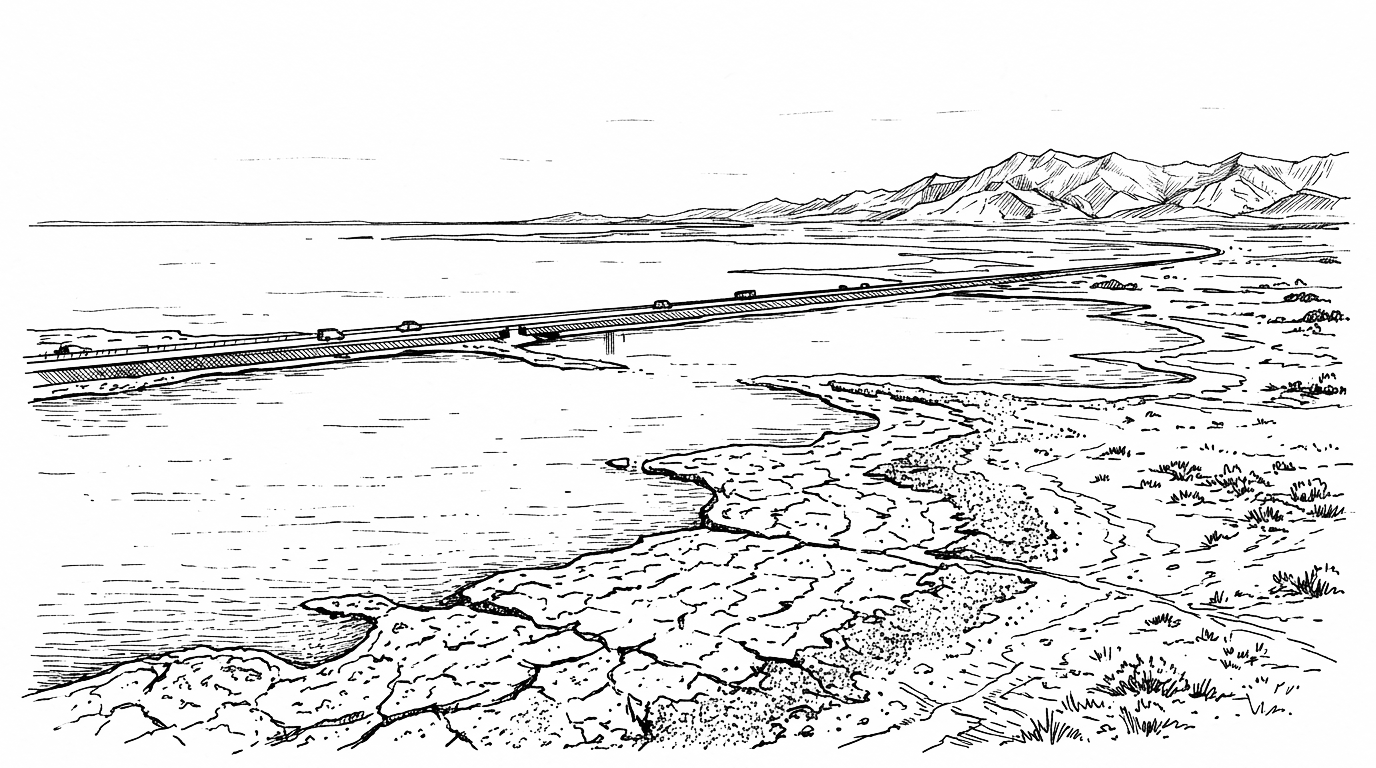
Lake Urmia is a hypersaline endorheic lake in northwestern Iran. Once the largest lake in the Middle East and sixth largest saltwater lake in the world, it has shrunk by over 80 percent since the 1970s due to dam construction on its tributaries, intensive irrigation, and drought. Its collapse has caused severe dust storms and salt deposition across the northwest.
Background
History
Lake Urmia was the largest lake in the Middle East and the sixth largest saltwater lake in the world at its peak extent in the 1970s. It has been known since antiquity – ancient Assyrian texts reference it, and it appears on early Islamic-era maps. The lake supported a distinctive ecosystem including brine shrimp that sustained millions of migratory flamingos and other waterbirds along the Central Asian Flyway. Its shoreline hosted thriving agriculture irrigated by rivers flowing from the surrounding mountains, and the lake’s salt was commercially harvested for centuries. The causeway dividing the lake, built in the 2000s, physically separated the lake into distinct northern and southern basins with different salinity levels.
Present Day
Lake Urmia has lost over 80 percent of its surface water since the 1970s and is in a state of severe ecological crisis. The lake’s salinity has increased to the point where only brine shrimp and salt-tolerant algae survive in most areas. The exposed salt flats on the dried lake bed generate dust storms that deposit salt across agricultural land in the northwest, reducing crop yields. The causeway has been modified with a bridge to allow some water exchange between the two basins. Government restoration programmes including water transfers from other basins have had limited impact. The lake’s collapse is widely cited as one of the world’s most visible examples of water mismanagement.
Future Outlook
Map
Articles

Closing the Strait of Hormuz: The Card Iran Holds — and What Holding It Cost
And there is no prediction on who’s winning this “Card Game,” is it?

The Cost of War: Hunting Mice with an Elephant
“An elephant which kills a rat is not a hero.” — How Iran’s asymmetric cost trap turned America’s strategic power into a financial liability.

Why Iran Is Running Out of Water
Iran’s water crisis is driven by groundwater depletion, inefficient agriculture, and climate stress.

Iran’s Retaliation in Cold War Mode
How Tehran could turn confrontation in the Gulf into a strategic cost trap.
Event Timeline
Israeli Strikes in Tehran Killing Larijani
On the night of 16-17 March 2026, Israeli airstrikes in the Tehran area killed Ali Larijani (Secretary of the Supreme National Security Council and de facto leader) and Gholamreza Soleimani (commander of Iran’s internal Basij militia).

Nationalisation of Iranian Oil and the Mossadegh Crisis
From 1951 to 1953, Iran nationalized its oil industry under Prime Minister Mossadegh, leading to an international crisis and the eventual 1953 coup.

Iran Hostage Crisis
In 1979, Iranian students seized the U.S. Embassy in Tehran, holding 52 Americans hostage for 444 days and transforming U.S.-Iran relations.


Iranian Revolution
In 1979, a mass movement removed the Pahlavi monarchy and established the Islamic Republic, redefining Iran’s political and ideological system.

Reform Movement and the Khatami Presidency
From 1997 to 2005, Iran experienced a reform era focused on civic openness, political participation, and institutional debate.

The Green Movement
In 2009, large-scale protests challenged the presidential election outcome, marking one of the most significant political mobilizations since 1979.
Collapse of the Safavid Order and Afghan Conquest of Isfahan
In 1722, Afghan forces from Kandahar captured Isfahan, ending effective Safavid rule and opening a prolonged phase of political fragmentation across Iran.


