
Kicker Title
Boxer Rebellion
1899-1901
anti-foreign–foreign-intervention–uprising
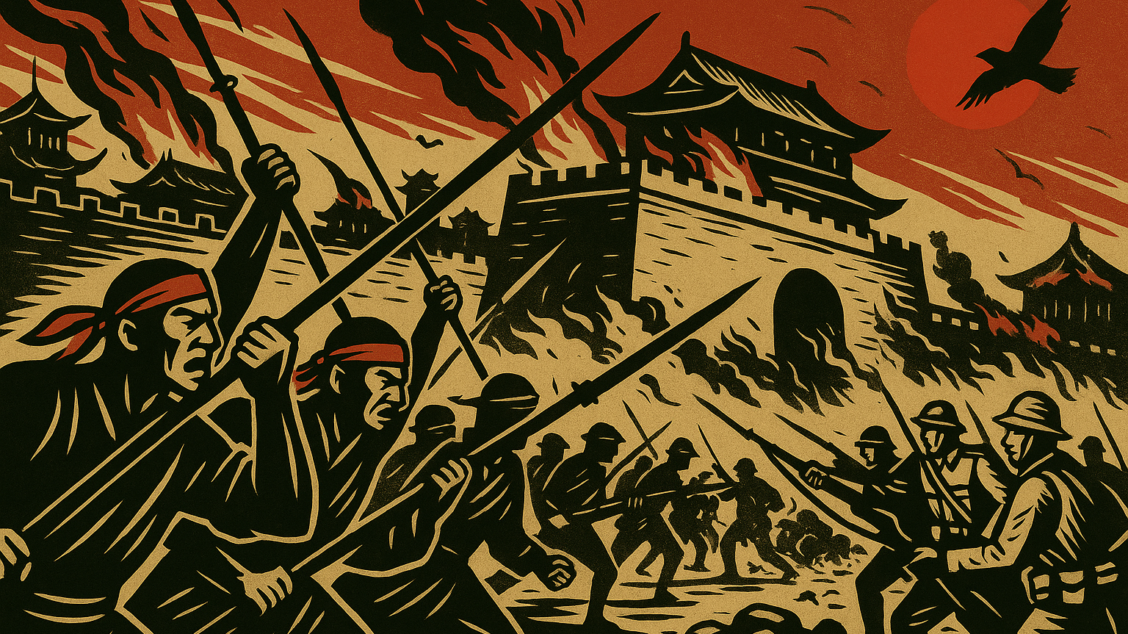
The Boxer Rebellion was a violent anti-foreign and anti-Christian uprising that drew direct military intervention by multiple foreign powers and further undermined Qing sovereignty.
Background
Economic hardship, drought, missionary expansion, and resentment toward foreign
privileges fueled the Boxer movement, whose adherents believed in spiritual protection
against modern weapons. Initially opposed by Qing authorities, elements within the
court later aligned with the Boxers in an attempt to expel foreign influence. An
eight-nation alliance intervened militarily, occupying Beijing and imposing punitive
terms on China.
Legacy
– Resulted in massive indemnities and permanent foreign military presence
– Further delegitimized the Qing court
– Accelerated reform efforts and revolutionary sentiment