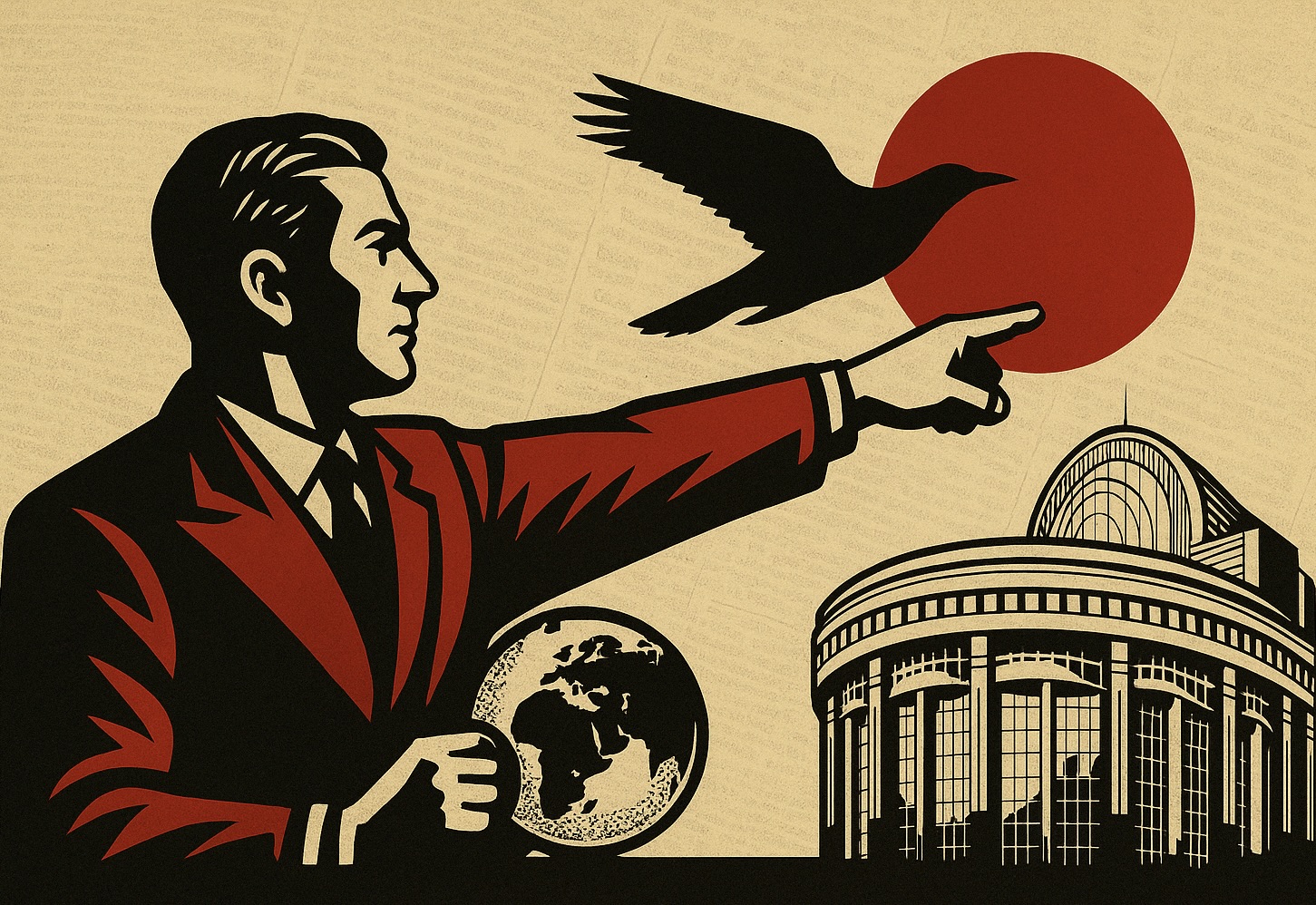
Geopolitics & Power
“I should get the Nobel Peace Prize. But they’ll never give it to me.”
— Donald J. Trump, seated beside Benjamin Netanyahu
When President Trump made that remark, it sounded — depending on your perspective — like a boast, a grievance, or a genuine question.
Let’s treat it as a real question:
What would it actually take to deserve the Nobel Peace Prize? Not just to want it. Not just to strike a deal. But to act in a way that truly moves the world closer to peace — not further away from it.
That question leads us deeper: What is peace, really? And what makes someone fight for it? Is it just a handshake and a headline? A legacy deal, “good for both, better for me”? Or is it something more enduring, more difficult — something rooted not in ego or calculation, but in conviction?
Because peace, unlike profit, demands something from the soul. It doesn’t start with applause. It starts from within — from a leader’s heart.
The Wrong Signals
This reflection turned sharper after watching the interview between Steve Witkoff and Tucker Carlson.
The tone was familiar: confident, dismissive, transactional. Ukraine was accused of arrogance and disrespect. Its defense likened to terrorism. Russia’s aggression reframed as a rightful reclamation. The threat of nuclear escalation was treated not as a moral crisis, but as a financial risk — weighed against the risk of a stock market crash — as if people didn’t matter.
Steve Witkoff made it clear: “I’m not elected. I’m doing a job — and honored to do it. We follow the President.” They were the voice of Trump. And the message was clear: we will do what benefits us — and call it peace.
It was chilling. Not because they lacked intelligence, but because they had lost the plot. Peace was no longer sacred. It was a transaction. A brand. A tactic. Or true believe in this worldview or narrative.
That is not leadership. That is strategy without soul.
Leadership
True leadership is not about dominance, control, or ego — but about responsibility, clarity, and vision, especially when others hesitate.
Those who disagree with you are not your enemies. They are your mirrors. They don’t just reflect — they sharpen. A strong leader surrounds himself with those who see differently, not just those who agree.
True leadership is restraint. The power to build, not break. The wisdom to listen, not silence. The strength to kneel — not in surrender, but in service. It’s vision that sees beyond the next election — to the next generation.
Most of all, it is humility.
It’s the awareness that you are not here forever, that power fades, and that the only legacy worth leaving is one that serves something greater than yourself.
Understanding the Game
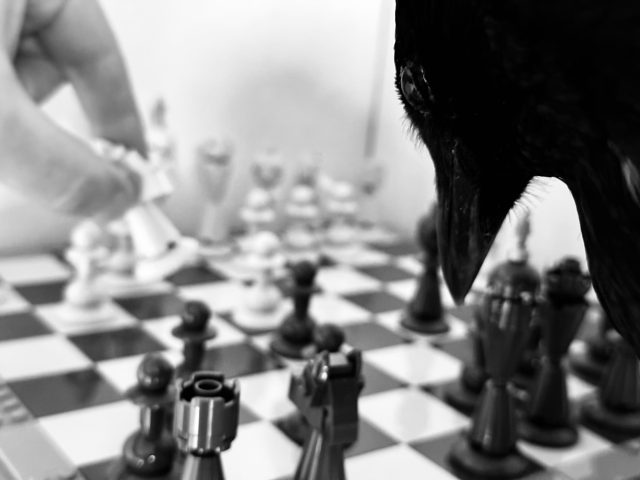
A leader doesn’t just act — he sees. Not only the move on the board. The eyes that are watching. The weight of each decision.
Power isn’t just in the hand that moves the piece, but in knowing why it’s moved — and what it says. The meaning behind the move. It’s not about winning the game — but knowing why you play.
Given by Example
There’s a story told in John 13 — one that turns every assumption about power upside down. During dinner, Jesus saw His disciples arguing about who among them was the greatest.
He didn’t give a speech. He didn’t assert His authority. He didn’t give a speech. He got up, tied a towel around his waist, poured water into a basin, and knelt down to wash their feet — a task reserved for the lowliest servant.
And when He finished, He said: “You call me Lord — and rightly so. Now that I have washed your feet, you should wash one another’s feet.”
He knew Judas would betray Him. He knew Peter would deny Him. He washed their feet anyway. That is greatness. Not just moral. Not just symbolic. Unexpected. World-changing.
And I began to wonder: what if a political leader did the same? What if the President would do it?
Picture it
Imagine the signal it would send.
Not with weapons. Not with speeches. Not with a deal signed behind closed doors — but with a basin of water in the Oval Office.
Twelve chairs in a semicircle. Twelve world leaders — rivals, allies, adversaries. And the President of the United States, kneeling before them. Not in surrender, but in strength. In leadership.
A towel over his shoulder. A gesture of humility. No one would expect it. And that’s precisely what would make it powerful. That is leadership.
The image would become unforgettable. It would set a new example.
Who could sit in those chairs? Volodymyr Zelensky, Vladimir Putin, Xi Jinping, Ali Khamenei, Ursula von der Leyen, Narendra Modi, Recep Tayyip Erdoğan, Mohammed bin Salman, Luiz Inácio Lula da Silva, Shigeru Ishiba, Hakainde Hichilema, and Mark Rutte.
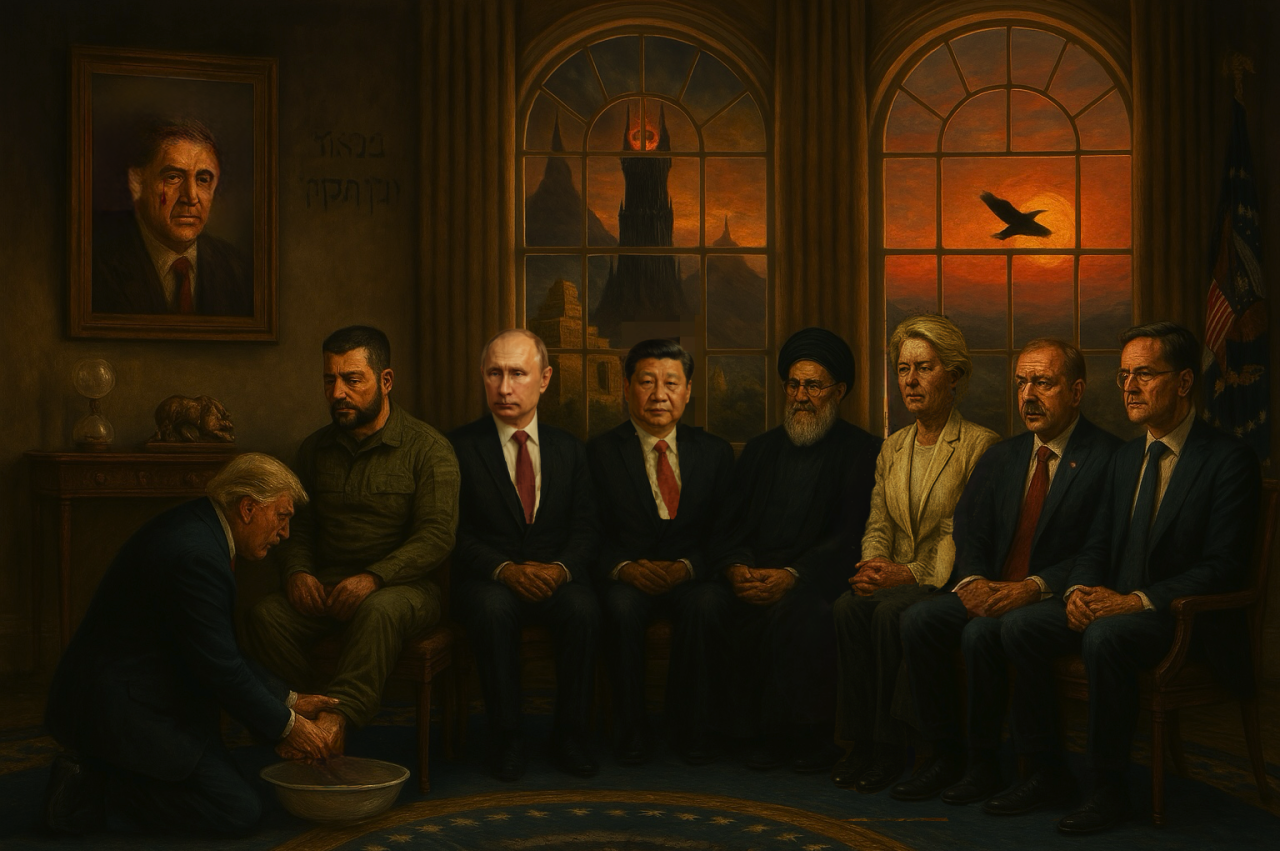
Each one carries history into the room. Each one represents not only a nation, but a narrative. Each one brings tension — and opportunity.
Together, they become more than individuals. They become a statement: That peace is not built by those who agree, but by those willing to face one another — and kneel.
What if
What if this moment changed the conversation? What if the image — of a man kneeling in service — stayed in the hearts of millions?
Would it win the Nobel Peace Prize? Maybe. Maybe not.
But more importantly — it would win something deeper: a place in history, not just as a man of power, but as a leader of peace.
Easter marks the moment that the world remembers the act of Jesus. Now is a perfect moment to walk that path. To set a new example — and lead the world.
Therefore I want to ask you, Mr. President. Take up the gesture and set the example. And if you feel you cannot do it — if it feels too humble, too vulnerable, too strange — then that is exactly why you must.
I’d be happy to set the example.
—
References and Further Reading
- Trump hints at winning the Nobel Peace Prize
- Tucker Carlson interview with Steve Witkoff
- The Nobel Peace Prize – Official Website
- John 13 – Jesus Washes His Disciples’ Feet
- Russian Orthodox Church on Easter
Like this Content? Support Us